Follow Us on Google

• CAPRIGHTS-VP, NAPTIP, others move to protect child domestic workers from abuse
By Adebowale Johnson
For some children brought from rural communities to Lagos in the hope of securing better opportunities, life in the city can become a painful experience of exploitation, deprivation and abuse. Instead of enjoying access to education, healthcare and a safe environment, some find themselves trapped in domestic servitude, subjected to excessive household chores and denied the basic rights every child deserves.
Concerned by this reality, the Centre for the Advancement and Protection of the Rights of Vulnerable People (CAPRIGHTS-VP), in collaboration with the National Agency for the Prohibition of Trafficking in Persons (NAPTIP) and other child protection organisations, has intensified efforts to safeguard vulnerable children against maltreatment, trafficking and exploitative labour.

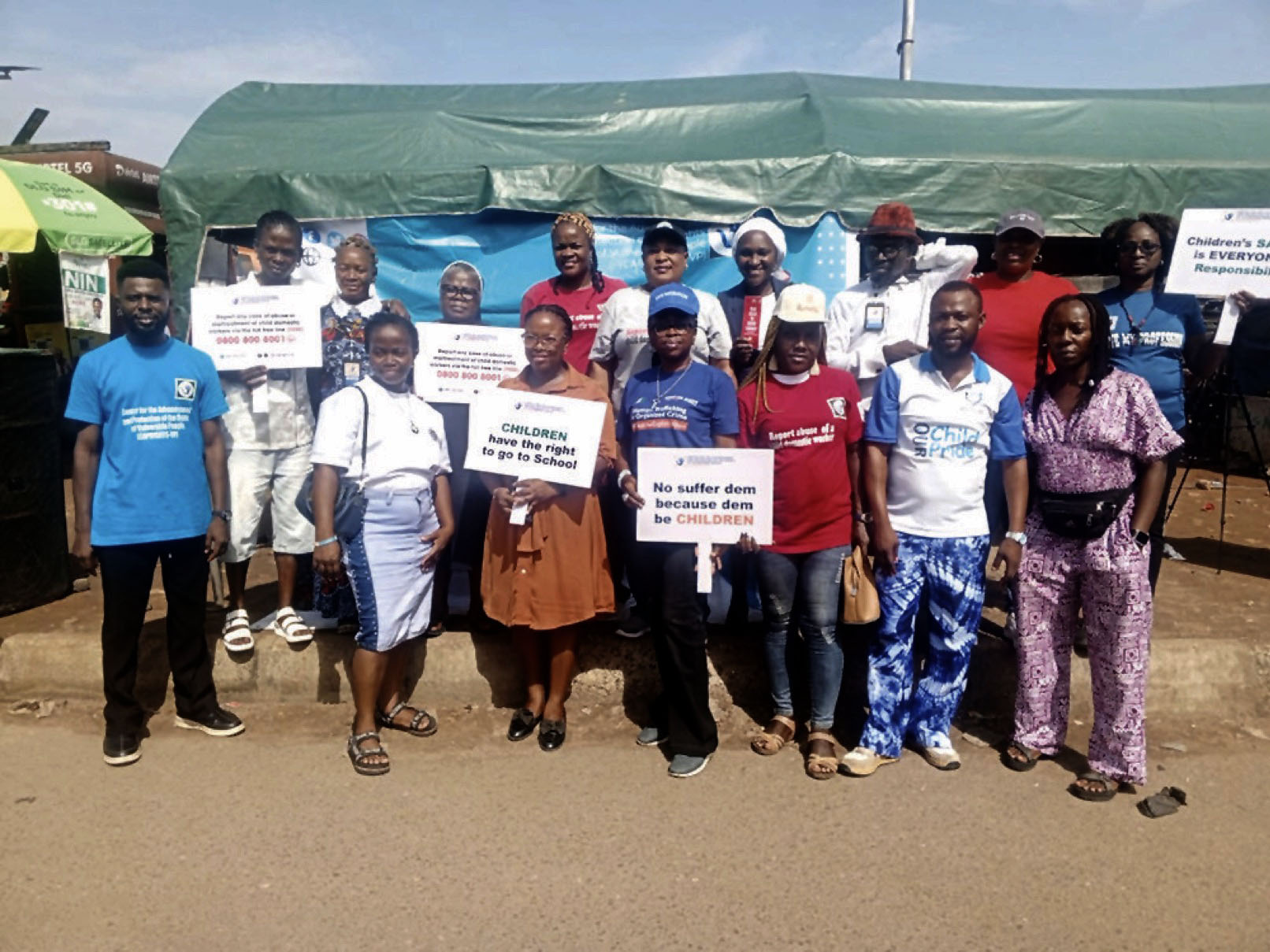
The renewed campaign took centre stage at Iyana Ipaja Market, Lagos, during a sensitisation and market outreach programme organised under the project, Protecting Child Domestic Workers from Maltreatment in Lagos, Nigeria.
The initiative brought together government agencies, civil society organisations, market stakeholders and members of the Child Protection Network to raise awareness about children’s rights and the collective responsibility of communities in preventing abuse.
Other participating organisations included NACTAL, Street Project Foundation, Cece Yara Child Advocacy Centre and MAEJT Nigeria, with support from The Freedom Fund and funding from the United States Department of State.
Speaking during the outreach, the Executive Director of CAPRIGHTS-VP, Clara Kanu, urged market traders not to turn a blind eye to the abuse and exploitation of children working as domestic helpers.
She maintained that protecting vulnerable children was not the responsibility of government agencies and non-governmental organisations alone, but a collective duty requiring the active participation of families, individuals and community members.
Kanu encouraged traders to report suspected cases of maltreatment through the reporting platforms provided under the project, stressing that community members were strategically positioned to identify warning signs and help prevent abuse.
For TheGift Chikere, Field Officer of Street Project Foundation, one of the troubling practices requiring urgent attention is the movement of children from rural communities to live with relatives or family acquaintances in urban centres.
She explained that such children, commonly described as houseboys and housegirls, were entitled to the same fundamental rights and protection as children living with their biological parents.
According to her, taking a child from a village to Lagos under the promise of providing better opportunities should never become an excuse for domestic servitude or the denial of education.
She particularly cautioned against the practice of making children work in shops and family businesses during school hours, insisting that their education must not be sacrificed for commercial activities.
While acknowledging that children could assist in family businesses after school, Chikere stressed that such responsibilities must not interfere with their academic development.
She also drew attention to the importance of adequate feeding, healthcare, rest and recreation, noting that children engaged as domestic helpers should not be treated as inferior to their employers’ biological children.
She condemned situations in which domestic workers were made to perform household chores late into the night while other children in the same household enjoyed adequate rest.
Chikere further urged employers and guardians to seek appropriate medical attention whenever children under their care fell ill, rather than relying exclusively on pain-relieving drugs.
She warned that people who denied children their basic rights could face the consequences of the law, urging residents to treat every child with dignity and compassion.
The Head of the Public Enlightenment Unit of NAPTIP, Mrs Elizabeth Ajeseni, who represented the Lagos Zonal Commander, Mrs Comfort Modupe Agboko, also described child exploitation and abuse as serious offences.
She warned against employing underage children as domestic workers and exposing those below 18 years to hazardous activities, physical abuse and other forms of exploitation.
Ajeseni expressed concern over reports of children being subjected to sexual molestation and other forms of maltreatment by individuals expected to provide them with care and protection.
She observed that some children brought to Lagos with promises of better living conditions were instead deprived of adequate food, education and other basic necessities.
Other News
According to her, every child has the right to life, education, recreation, adequate sleep and protection from all forms of abuse.
She urged children experiencing maltreatment to report their circumstances to NAPTIP or relevant non-governmental organisations capable of intervening and ensuring their safety.
Ajeseni also called on members of the public to support efforts to eliminate human trafficking, domestic servitude and child labour, stressing that children should not be subjected to work beyond their age and physical abilities.
Similarly, the Lagos State Coordinator of the Network of Civil Society Organisations Against Child Trafficking, Abuse and Labour (NACTAL), Mrs Abosede Oyeleye, highlighted the importance of existing laws in protecting children against child labour, domestic abuse, sexual exploitation and other forms of violence.
She expressed concern that children were still being used to sell goods in markets during school hours, describing the practice as a violation of their rights.
Oyeleye urged traders and other employers to ensure that children under their care were enrolled in school and allowed to attend classes before assisting with legitimate activities after school.
She also cautioned against bringing children from neighbouring countries or other communities to work without ensuring that their rights, welfare and entitlements were protected.
According to her, some children were trafficked without their consent and subsequently made to work for people who failed to pay them directly for their services.
She advised market traders to establish the backgrounds of children brought to them for domestic work and ensure that the arrangements did not involve exploitation or trafficking.
Oyeleye maintained that ignorance of the law was no excuse, urging traders to take responsibility for the welfare of children living and working with them.
She added that organisations involved in child protection advocacy were willing to guide families who required assistance with enrolling children in school.
The dangers associated with trafficking and the movement of children across borders also featured prominently in the campaign.
Reverend Sister Clara Azubuike, Project Manager of Bakhita Empowerment Network, described human trafficking as a criminal practice that continued to expose Nigerian children, particularly girls, to serious dangers.
She warned parents against surrendering their children to individuals who promised to provide them with better opportunities in Lagos or neighbouring African countries without first verifying their intentions.
According to her, some children taken outside the country under such arrangements were allegedly subjected to exploitation, sexual abuse and other forms of trafficking.
Azubuike said some victims encountered difficulties returning home because of the trauma they experienced, while others required rehabilitation and support before they could reconnect with their families.
She commended NAPTIP and NACTAL for their efforts in identifying and responding to trafficking cases, urging parents and community members to cooperate with relevant agencies.
She also appealed to parents to protect their children’s dignity and avoid exposing them to circumstances where they could be abused or deprived of their fundamental rights.
The Project Manager of CAPRIGHTS-VP, Mrs Ngozi Mirian Arinze, said the campaign was specifically designed to address the exploitation of children engaged in domestic work, particularly those living with people other than their biological parents.
She emphasised that such children were entitled to adequate food, education, healthcare, freedom and opportunities for recreation.
Arinze urged residents to ensure that children brought from their communities or families were not turned into domestic servants at the expense of their development.
She maintained that children should be allowed and encouraged to acquire basic education, adding that they could pursue vocational training and other skills after junior secondary education rather than being pushed into labour or activities that interfere with their schooling.
As the sensitisation campaign draws attention to the vulnerability of children in domestic settings, its message extends beyond the market environment to households, families and communities where such children live and work.
Ultimately, protecting child domestic workers requires more than public awareness. It demands vigilance, responsible parenting, respect for children’s rights and the willingness of community members to report suspected cases of abuse.
For children taken away from their homes in search of a better future, the promise of opportunity should never become a sentence to exploitation. Every child deserves protection, education, care and the freedom to grow into a future of their own choosing.