Follow Us on Google
By Bimbola Oyesola, [email protected]
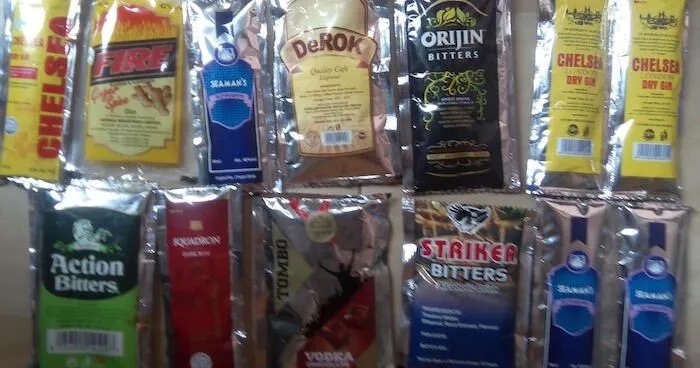
Nigeria may witness mass exodus of companies and loss of over one million direct and indirect jobs in the food and beverage sector of the economy as a result of the recent ban on alcoholic drinks in sachets and small bottles by the National Agency for Food and Drug Administration and Control (NAFDAC).
NAFDAC last week commenced enforcement of the ban, an action which the Nigeria Employers’ Consultative Association (NECA) has described as an act of economic sabotage.
The National Union of Food Beverage and Tobacco Employees (NUFBTE) has also warned that the policy on sachet products will destabilize investment and constitute dangerous threat to job security.
The president of NUFBTE, Garba Ibrahim, lamented that the “despicable and undesirable” implementation of the policy on instant phasing out of sachet drinks has come with a devastating and unbearable impact on investors and Nigerian workers in the food and beverage sector.
“Without mincing words, this policy implementation at this critical time of economic turbulence is tantamount to government’s insensitivity to the excruciating pains ravaging the entire economy and employment horizon across the length and breadth of the country,” he said.
Noting that the inevitable negative impacts of the policy implementation, which he said was “wrongly timed” would be humongous as it would lead to relocation of production factories out of Nigeria to neighbouring countries where cost of production is more profitable, he listed “loss of more than 1,000,000 direct and Indirect jobs in food and beverage companies alone.”
Garba reasoned that it would result in unhealthy consumption of locally-made, unregulated and hazardous alternative products, with attendant negative impacts on the health of vulnerable Nigerians.
Another problem, he warned, that NAFDAC may not foresee is the fact that the policy will create the opportunity for dumping of substandard products in Nigeria’s open markets through the unwholesome activities of smugglers.
The policy, he added, would equally impact negatively on government’s diminishing revenues from taxes and duties from the affected companies.
Solutions
The NUFBTE president said Federal Government should put on hold the implementation of this policy and rather engage the producers of sachet drinks with the aim of arriving at an acceptable moratorium period that will allow adequate planning before the policy can be implemented eventually.
“Federal Government should reappraise the monitoring and control mechanism that will effectively prevent the abuse of unresisted sales and consumption of Sachet Products particularly by the underaged,” he said.
He equally charged government to embark on aggressive campaigns and orientations to create public awareness on the adverse effects of consuming Alcoholic Products by the underaged.
Harping on the importance of the companies to the economy, Garba said government should create a conductive and enabling environment for the production companies to effectively explore the utilization of standard alternative materials to replace products in Sachet.
He said, “Federal Government should expeditiously act by putting a halt to the implementation of this wrongly timed policy which has already led to closure of more than 950 Production Lines and outright closure of more than Five (5) Production Factories within one week of the implementation of the policy across the Country,” he said.
Protest
Emphasizing that what Nigerian investors and workers need now is absolute protection of jobs and enhancement of sustainable livelihood, the union has threatened a mass protest nationwide to draw the attention of the government to the predicament.
The General Secretary of NUFBTE, Mike Olanrewaju said the union condemned the act in strong terms.
“We are condemning it, we are even protesting it. Most of our members work in that sector. It’s wrongly timed.”
Olanrewaju said the union sees it as insensitive to the plights of Nigerians and double standard by the government. “One way government is campaigning for employment and on the other hand destroying the jobs of Nigerians,” he stated.
Meanwhile the Trade Union Trade Union Congress (TUC) and Food, Beverages and Tobacco Senior Staff Association, (FOBTOB), last week staged a protest at the Lagos office of NAFDAC.
The protest followed a two-day enforcement exercise by NAFDAC operatives in Ota, Ogun State, leading to the shutting down of some factories.
The NAFDAC enforcement team has sealed the production lines in companies such as Shash Industries Limited located in Iyesi- Ota, Nigerian Distilleries Limited, Intercontinental Distilleries Limited among others.
According to the President of FOBTOB, Jimoh Oyibo, the protest at NAFDAC’s office in Lagos was a warning and to register organised labour dissatisfaction with the policy.
Oyibo who is also the 2nd Deputy President of TUC, threatened that should government fail to reverse the ban, Labour would declare a nationwide protest among other industrial actions. “We are shocked by the Federal Government and the National Agency for Drug Administration and Control (NAFDAC) outright ban on the production of alcoholic beverage in sachets and small bottles,” he said.
Calling for immediate reversal, Oyibo said the ban has wider implications than what the government is thinking, “what we are saying is that the disadvantages far outweigh the government envisaged advantages.”
He noted that the ban took the union by surprise because there was a discussion between government and other stakeholders on how to address the challenges of under-aged or children having access to alcoholic beverage and the issue of littering of the environment with used sachets and small bottle.
He said, “On the issue of under-aged drinkers, it is the responsibility of the government to enforce the ban. Just like in the case of tobacco, despite the warning that smokers are likely to die young, it has not stopped people from smoking. It is entirely the responsibility of the government or the law enforcement agents to ensure that these products are not sold to children or sold at the motor parks and bus stops as the case maybe.
“The government and the law enforcement agents should live up to their responsibilities and look for a quick fix of throwing away the baby with the bath water.
He also expressed that government could handle the issue of littering in a more sustainable way.
“On the issue of littering of the environment, the government ought to have been creative and put up its thinking cap to convert the waste into wealth generation as done in other climes. Go to Europe and Americas, they are heavier producers of sachets and small bottles. But you can never see used sachets or small bottles flying around or littering the environment. “These wastes are recycled to create wealth. In fact, some people are engaged to gather these wastes and they earn their living as waste collectors. What we are saying is for the government to be creative, invest in recycling of these wastes into wealth generation,Recycling will create employment and provide raw materials for other products.”
The FOBTOB president said, in some countries, waste can be used to generate power.
The labour leader warned that the action would further accentuated insecurity, as more people would be thrown into the unemployment market.
“It is common knowledge that most of the crimes are being perpetrated by able-bodied idle hands. What will happen when over 45,000 persons are thrown into the unemployment market?”
NAFDAC’s position
However, as far as NAFDAC is concerned, the policy implementation has given enough time to the manufacturers . The Director-General of NAFDAC, Prof. Mojisola Adeyeye, last Monday, in Abuja, said NAFDAC had in January 2022 stopped the registration of alcoholic beverages in sachets and small-volume PET and hlass bottles below 200ml.
According to her, the decision was based on the recommendation of a high-powered committee of the Federal Ministry of Health and NAFDAC on one hand, the Federal Competition and Consumer Protection Commission (FCCPC), and the industry, represented by the Association of Food, Beverages and Tobacco Employers and Distillers and Blenders Association of Nigeria, in December 2018.
“As commitment to the decision reached at the end of this committee meeting, producers of alcohol in sachets and small volume agreed to reduce the production by 5 percent with effect from 31st January, 2022, while ensuring the product is completely phased out in the country by 31st January, 2024,” she said.
The NAFDAC boss said the move was aimed at discouraging its consumption by youths who easily accessed the products in such containers at an affordable cost.
The decision, she affirmed aligned with recommendations from the World Health Organisation (WHO), for policy-makers to regulate the marketing of alcoholic beverages to young people, with the goal of controlling and restricting the availability of the products.
She explained that people who are mostly at risk of the negative effect of consumption of the banned pack sizes of alcoholic beverages are the under-aged and commercial vehicle drivers and riders.
She added that WHO had established that children who consume alcohol are more likely to use drugs, get bad grades, suffer injury or death, engage in risky sexual activity, make bad decisions and have health challenges.
The Director General of NECA, Adewale-Smatt Oyerinde, however charged NAFDAC to reverse the ban and advocates for further dialogue with relevant Associations, particularly the Distillers Association, the Road Transport Employers Association of Nigeria (RTEAN), National Union of Road Transport Workers (NURTW) among others in order to avoid the negative economic and social consequences of the ill-advised and ill-timed ban.
Oyerinde stated that the sachet economy led businesses that produces commodities such as detergents, cocoa beverages, powdered milk, sachet drinks (alcoholic and non-alcoholic) etc., came to be as a result of the “declining purchasing power of the citizen in meeting basic needs”.
“Therefore, alcoholic beverages in sachets, pet and glass bottles of 200ml are not targeted at underage children and commercial bus drivers, but a product of failing purchasing power of Nigerians,” he said.
Oyerinde advised that campaign against the drinking of alcohol by underage children and commercial drivers should be intensified in all front, suggesting a stiffer penalty to deter this target groups.