Follow Us on Google
By Bianca Iboma -Emefu
A growing crisis in Nigeria’s primary healthcare system has come under fresh scrutiny, as stakeholders warn that a severe shortage of basic medical equipment is undermining service delivery at the grassroots.
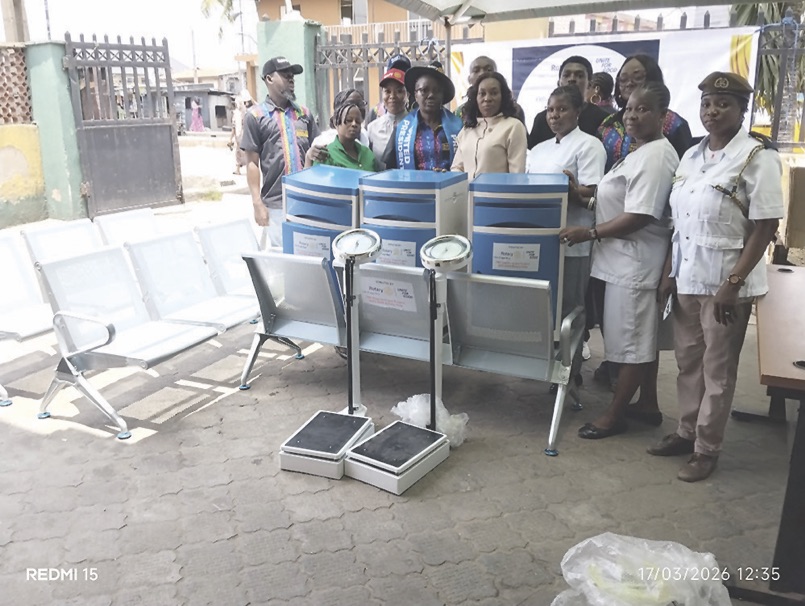
This concern was amplified by the Rotary Club of Lagos West during the donation of medical equipment to Amukoko Primary Health Centre in Ifelodun Local Government Area of Lagos State. The items were chairs, cupboards, cabinets, weighing scales and other essentials provided by the club to support the facility’s operations and improve patient care.
Speaking at the handover, Zonal Coordinator, Zone 3, Past Assistant Governor Kefe Adedibu, who represented District Governor Prince Henry Akinyele, said the intervention was in response to a “crippling shortage” of essential equipment across primary healthcare centres Although it is a District grant project but the goal is to impact and touch lives.
Health advocates warn that the lack of diagnostic tools, vaccines, and emergency devices continues to weaken frontline healthcare services, often resulting in misdiagnosis, delayed treatment, and avoidable referrals to higher-level hospitals—situations that can prove fatal in critical cases.
Public health experts note that the challenge extends beyond infrastructure, reflecting a deeper systemic gap affecting millions of Nigerians who depend on primary healthcare as their first point of contact.
“When primary healthcare centres cannot function effectively, the entire health system becomes overstretched,” a stakeholder noted.
President of the Rotary Club of Lagos West, Ndidi Ted-Ezike, said findings from the club’s needs assessment revealed that many facilities, especially in rural and semi-urban communities, operate with obsolete or completely absent equipment.
Other News
“Although there have been some upgrades in recent years, many centres still lack the essential tools required for effective service delivery,” she said, adding that the donation was based on the immediate needs identified by the health centre’s management.
Ted-Ezike called on government, private individuals, and service organisations to intensify support for primary healthcare facilities, stressing that shortages of essential delivery kits and non-functional diagnostic tools continue to erode public confidence in the system.
Also speaking, Senior Nursing Officer at the facility, Oladele Olufunke, commended the Rotary Club for the intervention but highlighted the scale of unmet needs.
“We are expecting more donations because the needs of this health centre are vast,” she said.
Olufunke urged government officials to conduct regular site visits to better understand the challenges faced by healthcare workers and patients, noting that improved basic amenities are critical to enhancing service delivery.
Stakeholders are now calling for urgent, coordinated action, including increased funding for medical equipment, structured training for healthcare workers, and sustainable maintenance systems to ensure long-term functionality of facilities.
They also emphasised the role of partnerships with non-governmental organisations, the private sector, and development agencies in bridging existing gaps.
As Nigeria grapples with persistent public health challenges, experts agree that revitalising primary healthcare—starting with adequate equipment—remains a crucial step toward improving national health outcomes.