Follow Us on Google
• As Kaduna women fruit sellers seek Tinubu, Uba- Sani’s wives interventions
From Sola Ojo, Abuja
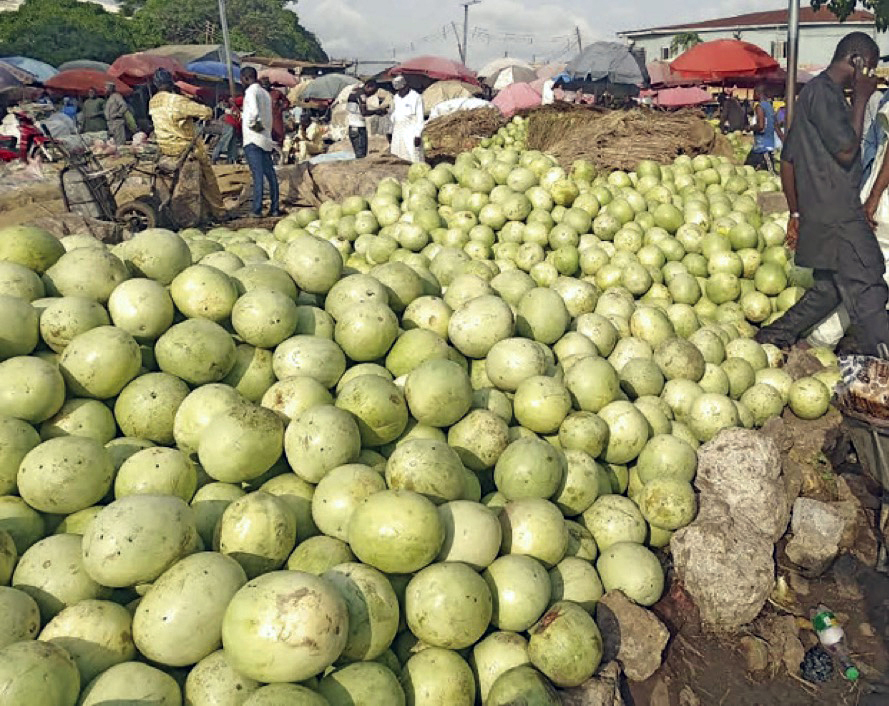
On a typical trading day at Bakin Dogo, the expanded fruit section of Kaduna Central Market, located near the Government House, Kaduna Local Government area of Kaduna State, the careful display of watermelons, bananas and pineapples attracts curious buyers despite the current economic realities in the country.
For the traders who depend on the market for survival, business has become less about making profit and more about staying alive.
Each watermelon, pineapple, banana, orange seen in this market represents soaring transport costs, multiple informal charges, post-harvest losses and declining purchasing power among Nigerians struggling with the country’s prolonged economic hardship.
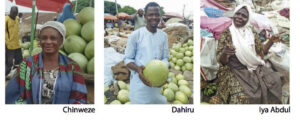
For 27-year-old Musbahu Dahiru, fruit trading is not merely an occupation but a family inheritance. Having grown up in the business with his father, he has witnessed dramatic changes in just a few years.
“We buy watermelons from Sokoto, Jigawa, Niger, Kogi and Oyo states. Sokoto produces the sweetest ones, but we now buy more from Jigawa because doing do is cheaper,” he explained.
According to him, transportation has become the biggest challenge.
“Transporting the fruiys via a light truck, popularly called Kanta, now costs between N370,000 and N390,000 per trip. Doing so in a J5 vehicle costs between N230,000 and N250,000. These same vehicles cost less than N200,000 before,” he decried.
The rising logistics cost, he said, is compounded by the perishability of the fruits he sells.
“Watermelon does not wait for anybody. During the rainy season, many get spoiled before they are sold.
“Along the road, you still have to settle different people. All these expenses eventually show in the final price,” he said.
He added that good-sized watermelons now sell for between N1,200 and N3,500 compared to the same season last year, when the biggest one sold for about N1,500.
Unfortunately, consumers whose incomes have remained largely stagnant cannot keep up.
To him, “Sales are very low. People come, ask for prices and walk away. Retailers even collect goods on credit because they don’t have enough capital. We wait until they finish selling before collecting our money.
“People preferred mangoes because N1,000 worth of mangoes could feed an entire family. Watermelon became a luxury.”
Not far away, s fruit retailer popularly called Iya Abdul, who has spent decades in the business, believes the government has not listened enough to traders’ cries.
“The biggest problem is transportation. Many journalists have interviewed us, and we have complained to the government repeatedly but nothing has changed,” she stressed.
While pointing to stacks of pineapples which she brought from Edo and Imo states, she explained: “A medium-sized pineapple now sells for about N2,500. Before, we bought a dozen for between N600 and N1,200, depending on the size. The one that used to cost N1,200 now costs about N5,000.”
The result, she said, is shrinking business capital, “Today I couldn’t even buy any. Some of my colleagues managed to buy just six pieces for the whole day’s sales.”
According to her, in addition to purchasing fruits, they must also pay market levies, feed their families, and meet social responsibilities.
“Many women here by the railway line are widows who are trying to help themselves. Many of us owe debts. We have not benefited from all the government interventions people keep talking about,” she claimed.
She, however, appealed to the First Lady, Senator Oluremi Tinubu, and Kaduna State First Lady Hajiya Hafsat Uba Sani to design programmes specifically targeting women fruit traders and other micro-business owners.
For Ufuoma Chinweze, who has traded in the market for nine years, survival has replaced prosperity.
She said: “We are just managing now. I used to sell only pineapples, but because business has become difficult, I added watermelons. Still, the returns remain disappointing.
“It is frustrating. We believe in God that things will improve.”
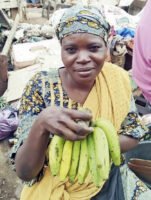
Another trader, Omobolanle AbdulAzeez, who specialises in bananas transported from Ekiti State, described how poor infrastructure continues to destroy livelihoods.
To many in the North, it is either South-West bananas or nothing. Even though there are improved seedlings with bigger fruits grown in the North, the majority prefer the ones from Ekiti, Ondo and Osun.
That makes traders like Omobolanle push for better days.
“Transporting a full J5 load of bananas from Ekiti used to cost about N215,000. Today it costs around N450,000.
“The journey itself creates further losses. You gather the bananas and wait for transport. Some are already ripening on the trees.
“Then you encounter bad roads and traffic around Lokoja, Zuba and the Abuja-Kaduna highway.
“By the time the vehicle arrives, many have already gone bad,” she lamented.
The struggles of these traders reflected the realities facing millions of Nigerians operating within the country’s informal and micro-enterprise economy.
According to the National Bureau of Statistics (NBS) and the Small and Medium Enterprises Development Agency of Nigeria (SMEDAN), Nigeria has over 39 million micro, small and medium enterprises, with micro-enterprises accounting for more than 95 per cent of the total.
These businesses employ tens of millions of Nigerians and contribute close to half of the country’s Gross Domestic Product (GDP).
Most fruit sellers, food vendors, artisans and neighbourhood retailers fall within this category.
Yet they remain the most vulnerable to inflation, high transportation costs, unstable exchange rates and poor infrastructure because they have limited savings, almost no insurance and little access to affordable credit.
International crude oil prices attributed to the current pains have moderated compared to previous peaks, a development that would ordinarily ease transportation and production costs in many economies. However, Nigerians are yet to experience corresponding relief.
Analysts attribute this disconnect to several domestic factors, including the removal of petrol subsidy, exchange rate depreciation, high logistics costs, insecurity affecting food production, poor road infrastructure and inflationary pressures that continue to push up the prices of essential goods.
For traders at Bakin Dogo, and maybe, in other Nigerian everyday markets, these macroeconomic realities translate into daily losses.
So far, the Federal Government is making efforts by introducing several programmes aimed at supporting small businesses.
For example, the Presidential Conditional Grant Scheme, which provides grants to nano businesses, and the Bank of Industry’s Rural Area Programme on Investment for Development (RAPID) alongside other MSME financing initiatives designed to improve access to affordable loans.
Similarly, state governments have introduced empowerment programmes, cooperative financing and women-focused enterprise support schemes.
However, many traders interviewed at Bakin Dogo insist they have never benefited from any of these interventions.
Some say they lack information about the programmes. Others complain about cumbersome application procedures, political influence or inability to meet eligibility requirements.
Experts believe Nigeria can draw useful lessons from countries that have successfully supported small traders.
In Kenya, organised trader cooperatives enable farmers and market women to negotiate cheaper transportation, access affordable loans and collectively market their produce.
In India, cold-chain infrastructure, refrigerated storage facilities and warehouse support significantly reduce post-harvest losses for fruits and vegetables.
Rwanda has also invested in feeder roads connecting rural farms to urban markets, reducing transportation costs and increasing farmers’ incomes.
To Dahiru, Nigeria could adapt similar models by investing in rural roads, expanding cold storage facilities in major markets, supporting transport cooperatives, simplifying access to microcredit and strengthening agricultural logistics.
Until inflation eases, logistics improve and targeted support genuinely reaches grassroots entrepreneurs, the country’s vast informal economy will continue to carry a disproportionate share of Nigeria’s economic burden.
For the women and men of Bakin Dogo, survival has become the new definition of success, and, they hope that one day, government promises would travel the same road as the fruits they sell and finally arrive.