Follow Us on Google
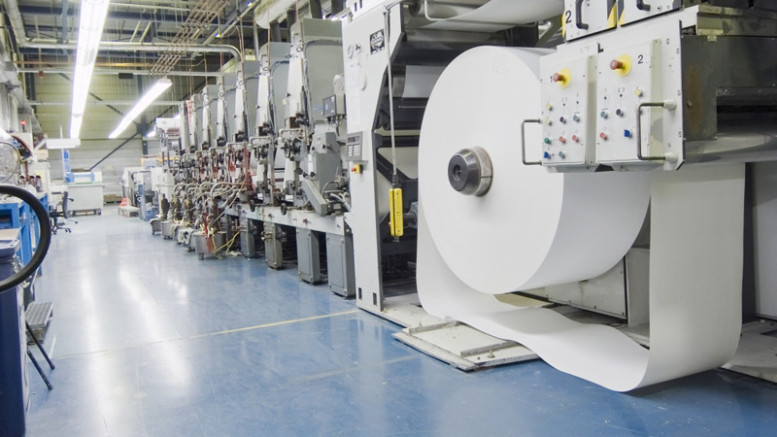
The reported loss of about N647 billion annually to foreign producers of paper mills due to the collapse of local producers some decades ago is not encouraging. It is also sad that the reliance on imported papers has led to the loss of about 300,000 jobs every year. Available data show that Nigeria’s paper import bill jumped from N238.9billion in 2021 to N1.11trillion in 2023 due to high demand for printing and packing papers. By 2025, Nigeria’s paper importation bill has risen to N3.37 trillion, the highest annual figure so far.
Unfortunately, local manufacturers now meet less than 10 per cent of demand in a sector in which Nigeria used to be a major player in Africa. At independence and some years after, Nigeria had functional paper mills such as the Nigerian Paper Mill (NPM) in Jebba, Kwara State, Iwopin Pulp and Paper Company in Iwopin, Ogun State, and Nigeria Newsprint Manufacturing Company (NNMC), Oku-Ibokun, Akwa Ibom State. With the establishment of these paper mills, Nigeria was positioned to be one of the biggest producers of paper in Africa. Regrettably, these companies collapsed due to mismanagement and the shift to importation of imported papers.
Presently, Nigeria imports 91 per cent of its paper needs mostly from China, India, Indonesia and the United States. This indicates that the local paper industry has almost collapsed.
We lament the collapse of the local paper mills and the dependence on imported papers for most of our printing and packing needs. In this period of ‘Nigeria First’ initiative of the Bola Tinubu administration, we call on the federal government to revive our domestic paper mills, especially the NNMC located in Oku-Ibokun, Akwa Ibom State. It is ironical that we now spend the money that would be used in other sectors to import papers. No doubt, the paper mills play significant roles in the economy and contribute to the Gross Domestic Product (GDP). Since the crisis in the industry started, its GDP contribution has drastically reduced to 0.14 per cent.
Nigeria is unarguably one of the largest paper consumers in Africa, but there is a structural gap between the high demand for paper in the country and the capacity of local paper mills to meet this demand. The local paper mills are not able to meet the three million metric tonnes demand annually. The failure of the local paper mills to meet local demands led to the exponential rise of paper imports. When the paper mills in Nigeria were vibrant and working optimally, they produced several thousands of tons of paper annually and in fact, supported exports to international markets, Ghana and other African countries.
By 2000, all the three paper manufacturing industries had ceased to operate due to policy inconsistency and other factors. This led to heavy reliance on imported paper materials. The cost of importing a ton of paper has risen from N600, 000 to N2 million in recent years. This has led to the high cost of books and other printed materials for educational purposes. By extension, the high cost of books has contributed to the dearth of reading materials and poor reading culture. Nigeria’s sudden wealth through oil boom also contributed to the neglect of the local paper mills in preference for imported ones.
This is the time to begin to revamp the abandoned paper mills in the country and save the country the billions of naira spent yearly on importation of papers. We have the raw materials and the expertise to produce enough papers for our domestic use and even for export. If Nigeria’s paper mills are revived, books and other printed educational materials will be cheaper. There are abundant raw materials in Nigeria for pulp production which have not been harnessed and tapped for maximum use. Materials like bamboo, kenaf, rice straw, sugarcane bagasse and other forest resources remain largely underutilised.
The increasing demand for paper materials will undoubtedly help the local paper mill industry to flourish. While the federal government is encouraged to revive the country’s paper mill industries for maximum output, state governments should also share in the responsibility. The loss of thousands of jobs due to the collapse of the paper mills does not bode well for the country. The private sector can also contribute to the revival of the domestic paper mills. The growing demand for paper materials in the country attests to the investment potential in the sector. The federal and state governments can jointly revive the extant paper mills and even establish new ones.