Follow Us on Google
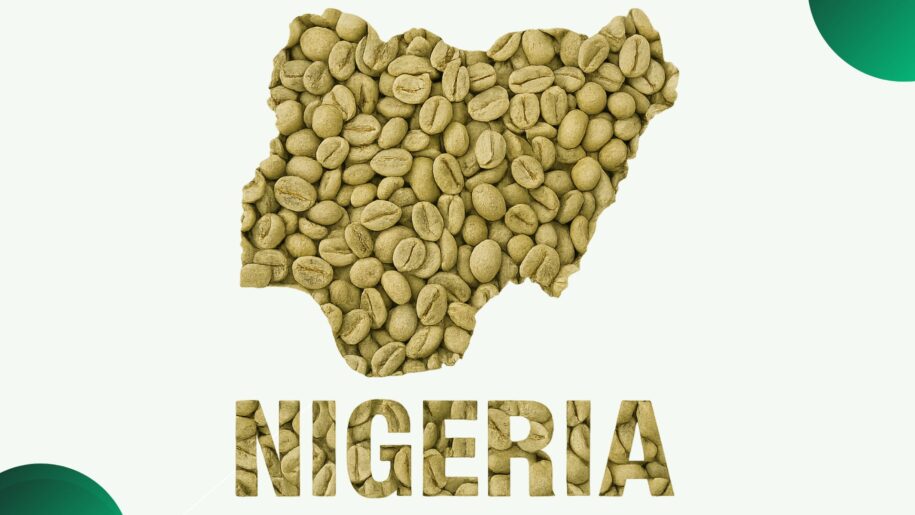
Recently, the Food and Agriculture Organisation (FAO) projected that Nigeria’s coffee production would decline from 40,800 bags to 39,900 bags annually by 2028 if the current cultivation and market trends persist. This projection does not bode well for the development of the non-oil sector, which the present administration is pursuing with vigour. It will also affect the government’s plan to earn $200billion in foreign exchange from the non-oil sector.
Consequently, members of Cocoa and Coffee Farmers’ Association (COCEFAA) have identified the absence of a national coffee framework, market access gap, quality gap and others as some of the structural gaps hindering coffee production. They stated that up to 90 per cent of small-scale farmers in 14 coffee producing states in the country cite poor pricing as a reason for abandoning coffee trees in favour of reliably cash crops like cocoa.
Similarly, the President of COCEFAAA and National Project Coordinator, Nigeria Coffee Revival Initiative, Comrade Adeola Adegoke, recently observed that “Africa accounts for roughly 12.5 per cent of global coffee production – down from 27.2 per cent in the 1970s. That 14.5 – percentage-point collapse did not happen by accident. It happened because African coffee farmers were abandoned by policy, investment, and institutional representation.”
Over 64 per cent of coffee farmers identified post-harvest processing as a major loss source and only five per cent are aware of international export standards. This notwithstanding, Nigeria has the potential to increase its coffee production and reap bountifully from the soaring global coffee prices, which range between $3,000 and $3,500 per metric ton. If the nation’s coffee production is revived, Nigeria stands to gain enormously from the estimated $2billion export potential.
Earlier, stakeholders in the country had called for more African participation in the global coffee market. The sector was valued at over $200billion annually. Currently, Ethiopia and Uganda are leading producers of coffee in Africa, accounting for 60 per cent of the continental production. Available statistics showed that they produce approximately 11.1million bags and 6.9 million bags of coffee respectively, and generated over $1.4billion and $2billion, respectively from coffee exports in 2025. Nigeria’s coffee production peaked in the late 1960s, mid-1980s, and in 2006. However, Nigeria has lost ground, and is no longer rated among Africa’s top ten coffee producers.
Other News
Globally, Brazil is the leading coffee producer, accounting for over 66 million 60kg bags annually. It is quickly followed by Vietnam, which accounts for massive share of the world’s Robusta coffee, yielding around 30 million bags per year. Columbia produces high-quality Arabica beans, yielding about 13 million bags annually.
We bemoan the decline in coffee production in the country and urge the government and other stakeholders to demonstrate much commitment to the revitalisation of the sector, which has the potential of being a huge foreign exchange earner now that the emphasis is on the non-oil sector. Moreover, Nigeria after oil will depend so heavily on agriculture and manufacturing. Agriculture remains the low hanging fruit to diversify the economy beyond crude oil. Apart from creating jobs and ensuring food security, agriculture is a major foreign exchange earner. Unfortunately, many state governments are not showing much interest in agriculture.
We call on the federal government, the coffee producing states and private investors to invest more in coffee cultivation. At the same time, they must engage the youths in coffee farming. There is need to replace old coffee trees with new high-yielding ones. More investments in coffee production would drastically reduce rising unemployment in the country because of the value chain associated with coffee production. No doubt, millions of jobs will be created for the youths, women, and tech entrepreneurs. The emphasis should be on the exportation of processed coffee products. It is going to be a win-win situation for the farmers and the government as well.
There is hope that Nigeria can still regain its status as a major coffee producer, which reached its peak in from 1960s to 1970s, if more efforts are committed to its revival. We believe that with the present impetus by some state governments and individual large-scale farmers in the sector, Nigeria’s coffee farming will be revived. Apart from the 14 states that now produce coffee, we urge other states with prospects of growing the crop to join the crusade to revive our coffee production.
To add more value to our coffee, we urge coffee farmers to liaise with NEPC on how to process and export their products to international markets.