Follow Us on Google
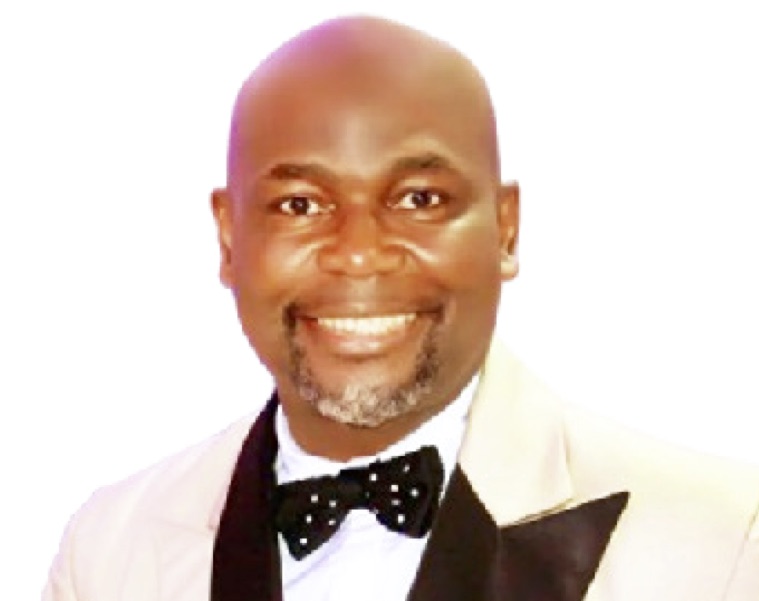
By Vincent Kalu
Rev. Ben Eragbai, the General Overseer of Divine Appointment Ministry in Aja, Lagos, has opened up about his past, recalling how he was a regular face at the Pebble Street, Ikeja shrine of the late music maestro, Fela Anikulapo Kuti. The place was a haven for igbo (marijuana) smokers. This was where Eragbai, then an undergraduate of the University of Benin, chose to make a second abode, a development that nearly separated him from his parents.
In this interview, the minister of God, who recently celebrated in his 60th birthday, narrated his wayward life and how God arrested him. He also highlighted his efforts at taking many drug users and touts out off the streets of Lagos.
You are a minister of God. How did the journey begin?
My story began at the Fela Shrine back in the 80s. In 1985, while I was still at the University of Benin, I frequently visited Pebble Street to smoke marijuana and attend Fela’s Yabis Nights. We would go for Yabis Nights on Fridays and return by Sunday. In fact, that street was the only ‘church’ I knew. That’s where I would go. After smoking on Saturdays, others and I would sleep on car bonnets. I was that bad, and my parents, who were in the village while I was at school, never thought I would amount to anything.
I’m highlighting how grace can transform lives. Grace found me. If anyone has truly experienced grace, it is me. Despite being the least deserving, I was called. Back at UNIBEN, I was a rebel against Christianity, believing everything about it was fake. The reason was that I grew up in the Army Barracks with my elder sister and her husband here in Lagos, from my primary school days onward. We attended Catholic Church services in the morning, but in the evening, a native doctor would be invited to perform rituals and make incisions on our heads. As a young child in primary school, I had many questions. If the church we attended in the morning was truly powerful, why did my guardian resort to these practices in the evening?
Because of that, I became very rebellious against anything related to Christianity as I grew up. When I finally went to the university, I decided to break free; no more church. Churches would often come to evangelise to me, but I thought they were all fake.
One day, however, I was invited to a fellowship. It was with Archbishop Idahosa’s church. I attended his crusade and witnessed genuine power and sincerity, unlike anything I had experienced before. Previously, I felt the church was insincere; we would attend services but I would sometimes sleep all through, because it was early morning mass. But Idahosa’s church was quite different.
But it didn’t end there. I would jump in and out of church sporadically. One day, an aunt of mine took me to a church where the prayers were loud and intense like bullets. I was used to quiet prayers, so this experience was surprising.
I expected my aunt to take me back to that church, but she never did. This left me continuing my pattern of not attending church regularly for some time. While I was in the campus, I avoided anything related to Christianity because of my background. However, over time, things changed. When I was invited to a fellowship, I started to realise that this way of worship was meaningful and genuine.
Finally, I was invited to the New Covenant Gospel Church in Benin. There, I witnessed genuine sincerity in Christianity and realised that it didn’t need to be mixed with anything else, unlike what I was used to. Eventually, I accepted the Holy Spirit.
When I received the fire of the Holy Spirit was a turning point in my life. In fact, the experience was so profound that I didn’t even feel like eating; fearing that doing so might cause the experience to fade.
After that experience, I travelled to Holland. The first place someone took me was a coffee shop, where I saw people wrapping and smoking marijuana. I joined in because I wanted the guy to accept me in his house, and I used to smoke it before. While we were smoking, I suddenly saw two policemen. Having been in Europe for only two weeks, I panicked and wanted to jump out through the window. The guy held me back and told me to sit down, explaining that the policemen had come to smoke too. I was shocked to see the police remove their hats and join in smoking.
I thought they say this is bad, yet policemen are smoking it. That’s how I started smoking again. I kept falling in and out of it until grace found me once more. It’s a long story, a very long one.
How did you become a pastor?
So far, God has been faithful to me. When I gave my life to Christ, I had no intention of becoming a pastor. I just wanted to be a faithful worker, so I continued attending my church.
As I mentioned before, I backslided in Europe. But when God was done dealing with me, He told me to return to Nigeria and attend a Bible school. That night, I cried and asked for forgiveness. God insisted I must go back to attend a Bible school. After I completed Bible school in Benin at New Covenant, I told God that I’ve done what you asked of me.
I relocated back to Lagos and would sit quietly after church services. I never told the pastor that I had completed Bible school because I didn’t want to be asked to become a pastor. I simply wanted to deepen my knowledge of Christianity, and I had achieved that.
One day, while I was sitting in the congregation, Mama Omobude, the wife of Rev. Felix Omobude, spotted me. She said: ‘Isn’t that Brother Ben’? What are you doing there? Don’t you know you’ve been running away from God? You can’t run anymore. My friend, come here and sit behind the pastor. Pastor, this man is an asset. Don’t let him go.’
I went home and cried. I told God that I just wanted to stay in the background. But from then on, one thing led to another. Whenever they asked me to do something, I did it, following Dr Omobude’s advice: ‘Ask what needs to be done, and do it until they beg me to stop.’ So, that’s exactly what I did. I didn’t rush, but I completed every task given to me. This approach helped me grow in my faith. However, the truth is, I didn’t want to be a pastor. But I eventually realised I didn’t have a choice.
How did you start your ministry?
My call to the pulpit dates back to 1993 in Lagos. I initially began ministering at the New Covenant Gospel Church under the guidance of the pastor there. After several years, when it was time to move on, I relocated to Lagos, and that’s where my journey continued. I started at a tall story building, Logemo House, Onipanu Bus Stop, before I built my first church in Fadeyi.
Having been involved in drugs, what efforts are you making to take drug users off the streets?
The current Lagos State Commissioner of Police is a very good gentleman who is known for his strong faith. I know him well because he served in my district here in Ilupeju as the DPO. He can confirm this. He mentioned something significant from the early days. When we were preparing to build our first church at Fadeyi, he recalled saying: ‘I put my men on red alert because that land where you are building the church is notorious for housing troublesome youths.’
It used to be the area’s first motor park, and these boys were involved in various illegal activities and drugs. They even had clashes with the police. Upon hearing that a church had purchased the land, the commissioner anticipated problems and thus had his men on high alert. However, he was amazed after we completed the church construction and there were no issues whatsoever with the church and the local youths. Later, he sent his men to the area and discovered that two of the boys who had been frequent troublemakers were now serving as ushers in our church. He was surprised that he hadn’t seen those boys in his cells anymore. He explained that they used to frequently commit crimes and ended up in his custody until they were bailed out.
How did I manage to do it? One Christmas, I saw a police van delivering bags of rice and other supplies with a message: ‘Oga said, I should give it to you.’ I was hesitant and said I couldn’t accept it right away because I was unsure if it was normal for the police to distribute such items. So, I made a call to confirm. The person on the other end told me: ‘You don’t know how much you’ve helped me in fighting crime in my area.’ He explained that some troublemakers he used to know had become members of our church. He then revealed that he had put his officers on red alert without informing us. He said: ‘I realised there were no fights around. I don’t recognise anyone as anointed until I see the results of their anointing. So, I can tell you that you are anointed.’ Since then, we have become very close. Occasionally, he would call me to pray for the policemen and bless them, which we did from time to time. That’s an example of what I’m talking about. Everything I’m telling you now comes directly from Mr Adegoke. He was the DPO in Ilupeju and is now the state Commissioner of Police.
He can attest to this. In this area, when I hold rallies, I don’t use policemen or road safety officials. It’s the former troublemakers who cleared the road for me, announcing: ‘Our pastor is coming.’ If you run into any trouble in the area, just tell them you’re a member of my church, and they’ll say, ‘the man is our pastor.’
Once upon a time, your mess may become your message. Until you go through your mess, you may not have a message. That’s the truth. Sometimes, that’s just how life is. When we preach, we don’t just preach based on what we’ve read or heard, but on what we’ve experienced and lived through. That’s the truth. I was in the streets; I sold goods in the streets of Lagos and hawked items. You can’t just tell stories as an army man without facing consequences; they’d use a whip on you. So, I went to school and also worked to support myself.
How do you run the ministry?
I come from a humble background, and this has shaped me. It prevents me from looking down on anyone or writing anyone off. It keeps me from feeling superior to others. There was a time when I was very tired. Many things were happening, and I was exhausted because I had to work to sustain the ministry and the church. I also had to run a business to keep the church going.
That day, I was extremely tired, and the Lord spoke to me and said: “You are tired.’ I replied, ‘Yes, I’m tired.’ He then said, ‘I told you to go and stand before the people. If you don’t go there now, I’ll raise an area boy to take your place.’ When I heard this, it was so clear that I jumped up and ran there. I took over the microphone from my assistant. This is also why many of my members are amazed at the level of vigour and energy I bring to my work. Back in those days, we moved from Fela’s shrine to club, from club to club, and from one party to another. When there were no parties or clubs, we would spend half the day lifting weight. We trained ourselves to be ready to defend against any attacks because in that world, everyone was seen as an enemy.
How can you synergised with the police in curbing crime?
If I’m invited by the police to help in curbing crime in the state, it wouldn’t be a problem at all. At my own level, I do it every day. They come here, I know some of them. Regarding cultism, you can’t pass through UNIBEN without affiliating with a group, especially if you smoke. You can’t claim to smoke igbo and not belong to one clique or another. Cultism has various factions; even if only a few are known publicly, there are many on campus.
Synergy is crucial. Personally, I’m deeply involved in this area because many of the young men who are now with us were once involved in various cults. Can I give you another example? There’s an armed robber who turned to Christ. He was a young man wrongly accused and sent to prison for a crime he didn’t commit. He worked as an accountant, and money under his care was stolen, leading to his detention at Kirikiri awaiting trial. During this time, some human rights lawyers noticed him speaking and inquired about his background. He revealed he was a graduate and shared his story. They investigated and confirmed his innocence, so they secured his release on bail while he was still awaiting trial.
However, when he returned to his family, they rejected him, calling him the black sheep and refusing to accept him. Confused and without support, he returned to a man he had befriended in prison and stayed with him. During his stay, he learned from the man’s lifestyle and choices.
He then gave him a pistol, and they planned to rob. This was his first robbery. Life is like that, and my church members know about it. I was in Logemo, the tallest building in Onipanu, where we used to have horn speakers until Fashola. While I was preaching, he waited for his accomplices at the bus stop. Suddenly, he thought: This preacher is still going on, and those guys are taking too long. Let me go sit in the church. So, he came and sat down. The service was packed with around 1,000 people, so it was crowded everywhere. We finished, and as I was about to give the closing prayer and the Lord told me: ‘There’s an armed robber here. Tell him if he goes ahead with that operation, he will die, but I love him.’
So, after finishing the closing prayer, I called everyone back. I said, just now, God told me there’s an armed robber here in this service. You were planning to go for an operation today. If you go, you’ll die. Come and see me now. After saying this, I finished speaking, but no one approached me.
I began counselling a woman, and after nearly 10 minutes passed without anyone coming forward, I started to forget about what I had said. Suddenly, a tall, thin-looking guy entered and stared at me. He said: ‘I’m the armed robber,’ pointing a gun at me. It caught me completely off guard. I quickly asked the woman to excuse me, and she left. Now composed, I prepared myself because when dealing with boys on drugs, you can’t show any fear. I assumed he might have come for money. I asked: ‘Are you here for money or what do you want?’ He replied, ‘No, I came here because of what you said. You mentioned my plan. I’m wondering how you knew about my operation. I didn’t need a prophecy to know that you must have heard from God. That’s why I’m here to confirm I’m the one you were talking about.’ I responded, Okay, since you’re the armed robber, how can I be sure? What proof do you have?
He said: ‘My younger brother kicked me out of the house. He’s also a pastor like you; you can talk to him. He calmly dialled a number. He gave me his name, so I called back. When I introduced myself, the man responded warmly, saying, ‘I really enjoy your programme. Whenever you’re on, I watch you a lot. It’s nice talking with you.’
I asked him if he knew Victor. He said: ‘Sir, if I didn’t know you, I would have hung up the phone. We disowned him in the family. Don’t trust him; he’s an armed robber.’ That’s just one example. Knowing this, I brought Victor in and began counselling him. I arranged for him to stay with one of my church members in Surulere. However, when his whereabouts became known, people came looking for him, beat him, and returned him to Kirikiri. He was beaten again. After that, I didn’t see him for about a week.
About a week later, he escaped again and returned. He told me that my words had been haunting him. He showed me the marks on his back and questioned why he should go to church and confess his sins only to be punished like that. I rented a house for him and provided him with clothes. As I speak, he is now a pastor and married.
I share this because I’ve heard people ask what the church is doing. Let me tell you, the drug problem is going to worsen because of the unprecedented hardship. Hardship has never been this severe before. Secondly, the Chinese have flooded the market with all kinds of drugs that we never had in our time. I’m hearing names like Shashi or Shisha. Back in our days, it was different. You either had igbo, heroine, or cocaine. But now, there are thousands of options out there. There are countless substances you can buy from pharmacies that can get you high, even higher than igbo and others.
What’s the solution? The solution starts with accepting Christ. Secondly, counselling is crucial. They need proper counselling. Thirdly, you must give them hope. There has to be hope. You can’t expect someone to leave what they’re doing if you don’t offer a better alternative.
Let me give you an example. One day, I was fixing my car in the street with my driver. So, we were there with my driver, and suddenly, a young man from the street approached us, possibly with a gun or a knife, I can’t recall exactly. The Holy Spirit prompted me to call out to him. I asked, ‘Hey friend, are you hungry?’ He replied, ‘I’m hungry. I’m really hungry.’ I said, ‘All right, come here.’ So, I gave him 1,000 naira. Immediately, he bought Agoyin beans and bread. I watched as he returned, put away whatever he had hidden, and adjusted his shirt to help us. You can imagine. Only God knows who he might have harmed that day just to eat. That’s exactly my point.
How are you giving back to your congregation?
As I approach my 60th birthday, I want to openly say this: In the past, when celebrating birthdays as a man of God, I used to expect members to buy me a car or something similar. But, now I want to give back. We cannot be insensitive to what people are going through. As we speak, we’ve already received more than 1,000 bags of rice. I think it’s about 5 kg of rice, and there are thousands of bag along with groundnut oil. We’re going to ensure we distribute them to people. Groundnut oil, salt and rice will be handed over to people. Traditionally in Nigeria, it wasn’t like this for birthdays. You’d expect people to give you gifts. But nowadays, when you celebrate your birthday, it’s about giving back to others. Yeah, because of what people are going through, that’s exactly my point. You can’t tell a hungry man not to be angry.
Is there anything you have done or didn’t do that if given the opportunity, you would do differently?
My major regret is not accepting Christ earlier. I often imagine what would have happened if I had accepted Christ back when Pastor Chris was at Ekpoma and we were all in school. Pastor Chris would come to UNIBEN for programmes, sometimes conflicting with our own events in the hall. If given the chance, I would have preferred to start earlier than I did. However, I don’t regret our journey because, as I mentioned before, our mess became our message. Everyone has his or her calling, and should all support each other in fulfilling it, just like Peter did.
What is your take on the economic situation in the country?
First and foremost, I want you to understand that hardship and oppression did not start today. Let me clarify it. The hardship, oppression and all that you see today have always existed; they are just becoming more pronounced now. What was Fela singing about? Did Fela sing about this just today? He sang about “Democracy of Craze” or something similar long before these issues became so prominent. So, regarding Fela’s perspective, hardship did not start today. Back then, there were people who couldn’t afford to educate their children, just like the current times you’re referring to. Similarly, there were people who couldn’t even afford to eat. The issue lies in our misplaced priorities and our failure to recognise that.
For instance, about 1974, the then Head of State acknowledged that we had money, but the challenge was how to spend it. So, what did we do? In 1977, we organised the first Black Festival of Arts and Culture, and invited all the demons from across Africa, and they came and dumped their troubles here. It is one aspect I’ve seen from a spiritual and personal perspective.
I always tell people that hardship didn’t start with Tinubu, let’s be clear about that. It didn’t begin with any of the men we talk about today; it has always existed. Fela, Sunny Okoson, Ras Kimono, and many other musicians sang about oppression and hunger in Nigeria. Whether you believe it or not, these issues have persisted.
The real challenge now is how we can overcome these problems. The misplacement of priorities and lack of empathy for the people are major factors contributing to these issues.
How do you feel turning 60?
I feel incredibly fulfilled, energetic, and healthy. Can you believe it? Do I look 60? If I take off this outfit, I could easily pass for 35. The first secret is to forgive people. Don’t carry the weight of the world on your shoulders because Christ died for everyone. You can’t save everyone, so focus on what you can change. Leave what you can’t change in the past. Don’t dwell on yesterday because it’s already gone. And most importantly, forgive those who need forgiveness because holding onto grudges only harms you in the end.
I once preached a message where I said, every time you frown, you activate about 77 muscles, but when you smile, you only use 13 muscles. So, if you keep using those 77 muscles by frowning all the time, what will happen to you? Eventually, all those muscles will rebel. To stay youthful, forgive others and avoid deceiving people. I personally don’t deceive others because I don’t want to miss out the second time around. Deception leads to more lies, which eventually collapse and cause problems. These are just a few things to remember.