Follow Us on Google

From Isaac Anumihe, Abuja
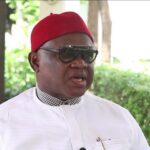
A former General Officer Commanding, 1 Mechanised Division of the Nigerian Army, Kaduna, and former commandant of the Nigerian Defence Academy, Oyebade, has defended President Bola Tinubu’s economic reforms, particularly fuel subsidy removal and foreign exchange reforms, describing them as necessary measures to avert economic collapse.
Oyebade acknowledged the hardship caused by the policies but argued that they were needed to address years of economic distortions, alleged mismanagement of public resources and the failure of successive administrations to implement development plans.
Speaking in an interview, he said the reforms were intended to redirect public resources towards infrastructure and development, laying the foundation for long-term economic stability.
“These reforms are absolutely necessary in order to dismantle the decades of economic distortion, mis-management of our commonwealth and failure to adhere to national development plans that successive administrations had but fell short in implementing across all tiers of government,” he said.
He argued that Nigeria had spent substantial resources defending the naira and subsidising petroleum products, while irregularities in the subsidy and foreign exchange regimes created opportunities for profiteering.
According to him, the dollar, which exchanged for about N200 to N250 in 2015–2016, had risen to approximately N700–N800 before Tinubu assumed office in 2023.
He also claimed that Nigeria had been borrowing about $1.5 billion monthly to defend the naira, describing the arrangement as unsustainable.
“We knew how difficult it was to source for foreign exchange from the banks, which wasn’t so many years gone by. Subsidy was the biggest money heist in Nigeria,” he said.
Oyebade alleged that subsidised petroleum products were smuggled into neighbouring countries, where they could fetch higher prices, depriving Nigeria of revenue.
“The same people that are bringing the fuel to Nigeria are the same people, majorly, who also facilitated the smuggling of it abroad,” he alleged.
He maintained that the reforms, though painful, were necessary to address the country’s fiscal problems.
“We are now borrowing for infrastructure, for development, things that in the course of time will impact the populace. Progressive change may be slow, but it is sure.
“There are difficulties, no doubt, but we are in the right direction. Our country was on the verge of collapsing. Subsidy removal is one of Tinubu’s boldest decisions,” he said.
Other News
The retired general also identified crude oil theft and illegal mining as major threats to government revenue and national security. He said oil theft and pipeline vandalism had affected production, while illegal refineries and unauthorised vessels allegedly facilitated the diversion of crude oil.
He claimed that crude oil theft had declined substantially over the preceding three years and production had improved, describing the development as a gain for the country.
“Is that not a plus to the Nigerian people? This success is not about Mr President. It’s our commonwealth,” he said.
Oyebade linked insecurity in some communities to illegal mining, alleging that criminal groups armed local militia to protect access to mineral deposits and sustain illegal operations.
He said Nigeria was losing substantial revenue from minerals such as gold and lithium and welcomed efforts to strengthen regulation and attract legitimate mining investments.
“Do you think they will give up without a fight? They are not interested in the welfare of Nigerians. They just want money to continue committing their atrocities,” he said.
On insecurity, Oyebade said Nigeria’s challenges predated the Tinubu administration, citing Boko Haram’s emergence in 2009, the activities of the Islamic State West Africa Province and the spread of armed groups across the Sahel.
Drawing on his experience as a military commander, he recalled attacks on the United Nations office in Abuja and in Nyanya as reminders of the country’s longstanding security difficulties.
He acknowledged continuing threats but urged Nigerians to appreciate the sacrifices of military personnel and other security agencies.
“Sometimes, I feel that a large majority of our population do not deeply appreciate the huge sacrifices the military and security agencies make. It’s not just a job to serve. It is the readiness to sacrifice our lives for country. What’s greater than that?” he asked.
He cited the expansion of the Nigerian Army from eight to 12 divisions, increased recruitment, acquisition of equipment and intelligence reforms as measures intended to strengthen national security.
Oyebade also supported state police, arguing that security threats often emerge at the local level.
“The establishment of state police is a deep necessity because every security challenge is first and foremost local,” he said.
He added that the proliferation of weapons following conflicts in Libya and other parts of North Africa had complicated security operations in Nigeria and neighbouring countries.