Follow Us on Google
From Okwe Obi, Abuja
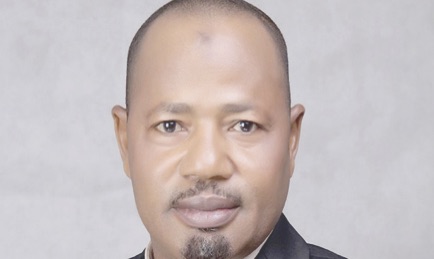
The immediate past President of the Real Estate Developers Association of Nigeria (REDAN), Aliyu Wamakko, has raised critical concerns about the flagrant misuse of the real estate sector as a channel for money laundering, particularly by politicians.
Speaking candidly in a recent interview, Wamakko highlighted the urgent need for transparency and regulatory oversight to address the alarming trend, which he says terribly undermines the credibility and growth potential of the sector.
Wamakko also weighed in on the contentious issue of housing provision for civil servants, asserting that it is not the government’s primary responsibility to directly construct homes for its workforce. According to him, the intricate process of building should be entrusted to private developers who possess the technical expertise and industry knowledge to deliver sustainable and efficient housing solutions.
He further argued that the government’s role should be more facilitative than hands-on. By providing essential resources such as land, financing, and an enabling environment, the government can empower private developers to lead the charge in addressing Nigeria’s housing deficit. The collaborative approach, he believes, will ensure quality construction, foster efficiency, and ultimately contribute to the overall development of the nation’s real estate sector.
Wamakko, who doubles as the the Chairman and Chief Executive Officer of Jedo Investment Limited, said with the REDAN Bill, which was passed by the 9th Assembly and is before President Bola Tinubu for assent would clean up the augean stable and regulate the activities of private developers.
He speaks more about the sector.
Paradox of abandoned buildings and growing homelessness in Nigeria
Fixed Version
One thing we did was to work with the DSS to identify those people that own property, which led us to development control that gave the approval for the buildings. Sometimes, you will be surprised to find out that there is no file for the building in the development control. We believe that if an approval is given to you to build a certain structure, there should be a time limit for such an approval. If you exceed the time limit, there would be charges for that. But that is not done. The ones that are there, if someone cannot complete a building, the government should take over it, complete it, and put it into economic use. I believe that will address the problem of abandoned buildings. Most times, you will find out that the governors and local government chairmen want to start new projects instead of completing old projects that were started by their predecessors. They will say it is no longer tenable. But the thing is that anything that is being made for the people should be completed for the people because you are working for the people, who elected you. So, the people own those properties and not you as an individual. I think there should be strong legislation in terms of abandoned property in Nigeria. I worked with DSS, development control, and we organized a lot of symposiums and seminars during my time to let people know the problems associated with abandoned property.
Affordable Housing for Nigerians: Any Hope?
We are facing a situation where security is porous. We have banditry in the North, insurgency in the Northeast, and kidnappers in the Southeast, South-South, and Southwest. All this insecurity is associated with job scarcity. The youths do not have jobs. It is very difficult for an engaged mind to think of evil. An idle mind is thinking of evil. The reality of the situation is that insurgency, banditry, and kidnapping can be curtailed if the government makes housing a priority.
We welcome the development going on under the new minister. He is doing pretty well in the area of housing provision. We believe that if he maintains the tempo, it will reduce youth excesses in the aspect of security. Any house you are going to build will create at least 25 direct employments. So, if you are building 1,000 houses, times 25, you can calculate how many people would be employed—even if it is 100 houses. Apart from the indirect employment opportunities for those who sell groundnuts, rice, and beans, it will create a lot of jobs and keep people’s minds busy. The only way out is for the government to prioritize building houses to address the menace created by insurgents and bandits. Bandits will go to a place and burn it down, which leads to urban and rural migration. IDP camps are now in cities most of the time. Most of the people who migrated from villages due to insurgents come to the cities.
This issue now breeds another problem because most of those affected are widows and children, who are sent to the streets to beg. Before you know it, some of them are recruited by bandits, disturbing society. If the government can balance this equation by prioritizing housing projects and pumping money into the sector, it will reduce the problem and rejuvenate the economy, especially at the grassroots level. The microeconomic factor is at the grassroots. When we rejuvenate the sector, I am sure the sky will be the limit, and it will douse the tension of many societal problems in the country. Housing is key in providing livelihood for Nigerians.
Collaboration Between NHF and REDAN to Address Housing Deficit
REDAN was created in 2002. It became a matter of policy for the Federal Government in 2012 to create affordable housing for Nigerians. The Federal Mortgage Bank created the National Housing Fund to contribute to addressing the housing deficit. The aforementioned was done to ameliorate the problem of housing and provide shelter for civil servants.
Other News
As I speak, we have more than four to five million people contributing to the National Housing Fund. But unfortunately, up till now, not up to 5% of these people have been able to get houses through the scheme. So, it is a mind-boggling issue.
When we came in, we made sure that all parties kept to their agreements and estate development terms were followed.
In a normal situation, you cannot say all eggs are good. There are some bad eggs, and these come from political loans they were given. Political loans are given to senators or House of Representatives members to construct houses under the EDL of the Federal Mortgage Bank. That is why there are a lot of defaulters on that side. When I came in as REDAN president, I met with the Federal Mortgage Bank and told the leadership that there were some political loans given, while genuine developers, our members, did not get the loans. I told them that if they wanted to give loans, they should adopt the Estate Development Loan Arrangement, and the seekers of the loan must be members of REDAN. That is one of the criteria. When they gave this money to some people who claimed to be our members, we were not informed. If we were informed, we would have followed up because these funds were given in tranches. Most of the people who benefitted in the first tranche ran away with it, and that is a political loan. As per developers, at least you meet something at the site, and that is how it is supposed to be. We arranged with them and put up a committee to work out that effect. The committee is still existing. I handed over our programmes to the new leadership. There is a need for the government to address this issue. Let that EDL work, even though the Federal Mortgage Bank has rolled out many windows, like cooperative windows and rent-on programmes. It does not have the capacity or capability to address the housing challenges of civil servants. There is a need for the Federal Mortgage Bank to be recapitalized to the maximum so that they can provide mortgages to the teeming population of Nigerians contributing to the National Housing Fund. If that is not done, it means the funds contributed are wasted because, sometimes, you find a worker, ask if he is a contributor, and he says yes, but he does not have the account number or know how much he is contributing. Even though they tried to digitize it, you can see it but cannot withdraw. Not all contributors have that card. So many people do not know how much they have paid and what they are supposed to get. The law says when you tender your resignation or retire, you are expected to collect your money within 14 days. If you apply for the money you have been contributing to the National Housing Fund, you will get it. The Federal Mortgage Bank has been making some refunds to these individual contributors when they resign, but not up to the level we are expecting. We feel the government should intervene. Presently, the primary mortgage institutions are even more capitalized in terms of capital than the Federal Mortgage Bank. The FMB capital is about N2.5 billion, while most of the primary mortgage institutions have about N8 billion to N10 billion. So, the Federal Mortgage Bank needs to be recapitalized.
Challenges
We have said this time and again: the government has no business building houses for the public. It is the duty of private developers to build houses. The houses we build, we maintain. The government builds houses and abandons them. The government gives contracts and forgets about them.
We told them, instead of giving contracts, make a budgetary allocation for housing creation and give it to us at a single-digit interest rate so that we can build these houses, pay our taxes, pay the interest, and repay the loans given to us. But if you go around the country, all the houses built by Fashola have been abandoned. Nobody is taking care of them. Some of them are unroofed, and nobody is willing to buy them because, first of all, the cost is exorbitant. We have been in the business for years; we know what it takes to do the business, we know our target audience, and we know what they need. The government does not know that. All it knows is to issue contracts based on the concrete mix per square metre and how much it costs according to the ministry’s budget.
But we don’t operate that way. For example, I can build a two-bedroom flat within a given time frame. Instead of building a semi-detached two-bedroom house for ₦24 million, we could build four. Fashola built these twin houses for ₦24 million, and there is no infrastructure like lighting, drainage, roads, or water. After finishing, he set the cost of a two-bedroom house at ₦14.5 million in my village in Sokoto, where those houses were built. In fact, nobody will go to those places because the land there is unstable. If you build anything there, it will crash within a short period.
You can get a three-bedroom house for ₦7 million to ₦8 million. So why would anyone buy a two-bedroom house for ₦14.5 million? There is a need for the government to understand that it has no role in the provision of houses. This should be the responsibility of the private sector. Even globally, governments rely on the private sector. Housing provision is not something the government should handle. We are not a socialist republic. In fact, a socialist republic would build and give houses out for free. The constitution does not state that the government should build houses and give them out for free. The government is meant to provide subsidies for people to access housing, maybe through mortgages or other means, and that is what we have been campaigning for.
The government does not even have off-takers. Now, we have moved past the practice of just building and waiting for a buyer. In the private sector, we don’t operate like that. We ensure we have a targeted customer before we start building. That is how we work.
We have to give credit to the present minister because he is part of us. He is doing a lot in the area of housing development. When it comes to building houses, the biggest challenges are land and finance. He was able to secure the land. It is now up to the government to provide the funds to ensure these houses are erected.
In the next budget, we hope this administration will allocate substantial funds to address the housing needs of Nigerians. With over 28 million housing deficits, we need at least one to two million houses annually to close the gap. The government should make a significant budgetary allocation and provide it to private developers at a single-digit interest rate.
REDAN Bill
The REDAN Bill is a comprehensive document that aims to sanitize the housing sector and ensure accountability at all levels of housing development. By institutionalizing a strict adherence to the national building code, the Bill will serve as a safeguard against the proliferation of substandard housing and building collapse incidents. It has been carefully developed with inputs from diverse stakeholders, including 36 state commissioners for land, regulatory agencies like ICPC, EFCC, DSS, and NFIU, as well as professional bodies like architects, structural engineers, and builders.
The Bill also targets individuals and entities engaged in illicit activities like money laundering through property acquisition. These unscrupulous practices have long hindered the growth of the housing sector. However, the combined effort of stakeholders and REDAN’s relentless advocacy have ensured the Bill reached its current stage. It is now awaiting the President’s assent. If signed into law, the Bill will be a game-changer for Nigeria’s housing industry, ensuring transparency, accountability, and sustainable development.
The journey has not been without challenges, but we remain optimistic. This is a legacy project, one designed not just for the present but for future generations. It reflects a collective resolve to fix the inefficiencies and irregularities that have plagued the sector for decades.