Follow Us on Google
Driving Nigeria cleaner, cheaper with electric vehicles: Journey so far
By Moses Akaigwe
Even without the Electric Vehicle Transition and Green Mobility Bill, 2025 being passed into law and assented to yet, its second reading in the Senate was seen as a kind of watershed in Nigeria’s efforts to provide a comprehensive legal framework and incentives for local vehicle production.
Besides being applauded in the auto industry, the bill, sponsored by the senator representing Abia North, Dr. Orji Uzor Kalu, has thrown up a couple of issues which have been engaging stakeholders in the industry.
But, first of all, for the benefit of those who haven’t had the privilege of an insight, the proposed legislation seeks to establish a national framework for the transition to electric vehicles, encourage local manufacturing, and strengthen Nigeria’s commitment to environmental sustainability.
Senator Kalu had informed the senate that his vision in drafting the bill was to transform Nigeria’s automotive and energy sectors, foster innovation, and create jobs throughout the manufacturing value chain.
Other highpoints include: To incentivise investors in electric vehicles with tax holidays, import duty waivers, toll exemptions, and subsidies; as well as make it mandatory for all fuel stations to install charging points.
When it becomes law, the bill would require foreign automakers seeking to sell electric vehicles in Nigeria to partner with licensed local assemblers and establish domestic assembly plants within three years.
It also aims to compel companies to source at least 30 percent of their components locally by 2030, while violations could attract fines of up to 250 million naira per breach, even as unlicensed importers could risk penalties of 500 million naira and confiscation of their goods.
The legislation, which is expected to position Nigeria as a potential hub for electric vehicles production in Africa, would further encourage investors who establish charging infrastructure by availing them with government grants and tax credits.
Underscoring the huge advantages adopting EVs bring, the senators were generally optimistic that the initiative would be the vehicle to drive Nigeria’s green mobility initiative to success, foster innovation, and boost employment throughout the manufacturing value chain.
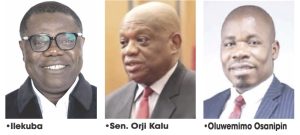
These targets were acknowledged by the Director General of the National Automotive Design and Development Council (NADDC), Otunba Oluwemimo Joseph Osanipin and other industry chieftains, as capable of lifting the domestic auto industry, if the bill becomes an act and assiduously implemented.
It is an optimistic view shared by Innoson Vehicle Manufacturing Company Ltd (IVM) Chairman, Dr. Innocent Chukwuma, CON; the Managing Director of Dana Motors, Mr. Jacky Hathiramani; and the Chairman of Cedric Masters Group, Chief Anselm Ilekuba, in their reactions.
Equally upbeat is the Managing Director of Jet Motor Company, Engr. Derek Ewelukwa, who in addition to lauding the initiative, noted that it would encourage domestic production of electric vehicles, as well as speed up the uptake of such vehicles by private citizens, companies, and public institutions.
The stakeholders observed that the objectives of the bill dovetail fittingly into most of the aims of the Auto Policy (Nigerian Automotive Industry Development Programme, NAIDP), which is currently being fine-tuned preparatory to presentation to the federal lawmakers.
They also noted that Senator Kalu’s initiative is timely, because it has come when the global industry is steadily de-emphasizing automobiles that are powered by internal combustion engines (ICE) and embracing electric vehicles that enhance reduction in carbon emissions.
Commenting on the second reading on Wednesday, November 5, 2025, and the bill’s content, the NADDC Director General commended the upper chamber for recognising the reality that the future of mobility lies in the electric vehicle technology.
He stated: “We at the NADDC have said it time and time again, that the future of mobility is in electric vehicles, and it is commendable when your legislators see it the way it is. “
Interestingly, the introduction of the bill has provided food for thought which any careful observer cannot fail to take note of: One is that it is very likely to be an act by 2026, if realistic projections are anything to go by, including concurrence by the House of Representatives, and the President assenting to it, before the end of next year.
If this happens, it means that the EV subsector would have achieved a legal framework well ahead of the NAIDP, and only about three years after President Bola Tinubu’s presidential initiative on green mobility launched in 2023.
Naturally, an EV law is supposed to be sired by the older and bigger NAIDP, but the senators, in their wisdom, must have considered the former (EV bill) a matter of urgent national interest.
Moreover, it is common knowledge that, as a policy, the NAIDP has been struggling to make headway, in terms of having a legal backbone, 12 years after it was introduced by the Goodluck Jonathan administration in 2013 (though it took effect from 2014).
Also noteworthy about the Electric Vehicle Transition and Green Mobility Bill, 2025 is that when it becomes an act, it would earn Nigeria a place in the league of countries that are earnestly embracing EV technology – driven by strong government incentives, a push for robust charging infrastructure, and increasing environmental awareness.
And, thirdly, it has also thrown up the imperativeness of a very strict forward-looking measure that would ensure Nigeria does not become a dumping ground for ICE vehicles that would be in disuse when many developed countries hit their target years for full adoption of green mobility.
To Chief Ilekuba, who doubles as the National Coordinator, Automotive Local Content Manufacturers Association of Nigeria (ALCMAN), the fastracked legislative attention EV is receiving even as the NAIDP remains on the slow lane, is not surprising.
“This is a clear difference between a single-channeled legislative effort against a cumbersome government agency approach of the past that stalled the NAIDP against the EV bill of Senator Orjir Kalu,” the ALCMAN National Coordinator stated.
He, however, noted that the NAIDP is beginning to gain traction because of the diligence of the current NADDC DG. He remarked, “The DG’s stakeholders mobilisation, especially the last engagement with the senators gives a lot of hope that the NAIDP bill (being passed and signed into) will soon be a reality.”
And, like Cedric Masters Chairman, the NADDC Director General is confident that a legal framework for the entire auto industry would be a reality in the foreseeable future with electric vehicles well accommodated.
Otunba Osanipin disclosed that a lot of efforts are being made, including an amendment to the existing NAIDP, to ensure a more comprehensive version to be known as the Nigerian Automotive Policy Act when the legislative process is completed.
This, he stated, is being handled as a team work that involves vehicle manufacturers and local content producers, as well as the senators.
What this means is that when eventually the Nigerian Automotive Policy Act comes into existence, Nigeria will have two Acts for the auto industry: While one would be taking care of electric vehicle production and importation as a sub-set, the other would be regulating the automotive industry as a whole.
However, both Otunba Osanipin and Dr. Chukwuma underscored the need for the EV bill to have in place a provision that would prevent the dumping of ICE vehicles that can no longer be used in developed economies that have set targets for full adoption of electric vehicles.
They drew attention to the fact that many countries have set desdlines to end the production and sale of new petrol and diesel cars as part of their efforts to fully embrace electric vehicles and reduce carbon emissions. Nigeria, they argued, should keep this in view
Worried that not to do this would in future jeopardise efforts to ensure widespread adoption of electric vehicles in Nigeria, the Director General, said, “We also have to develop and prepare, because If we are not looking at taking action today, those vehicles they can no longer register in China and other countries, what do you think will happen to them? Your guess is as good as mine.”
EV Adoption Gains Momentum, But…
Though the official Federal Government programme on green mobility (which incorporates electric vehicles) was introduced in 2023 by President Bola Tinubu, following the removal of oil subsidy, the pioneering initiatives were by the private sector.
The credit for the very first made-in-Nigeria electric vehicle belongs to Hyundai Motors Nigeria (a part of Stallion Motors) which in 2019 unveiled the Hyundai Kona EV assembled at its VON Nigeria plant in Ojo, Lagos. This was later followed by Jet Motor Company with a bus and van assembly plant in Lekki, also in Lagos.
But, it wasn’t until the launch of the post subsidy-removal flagship Presidential Initiative on CNG (Pi-CNG) could the electric vehicle train be said to have started gathering momentum.
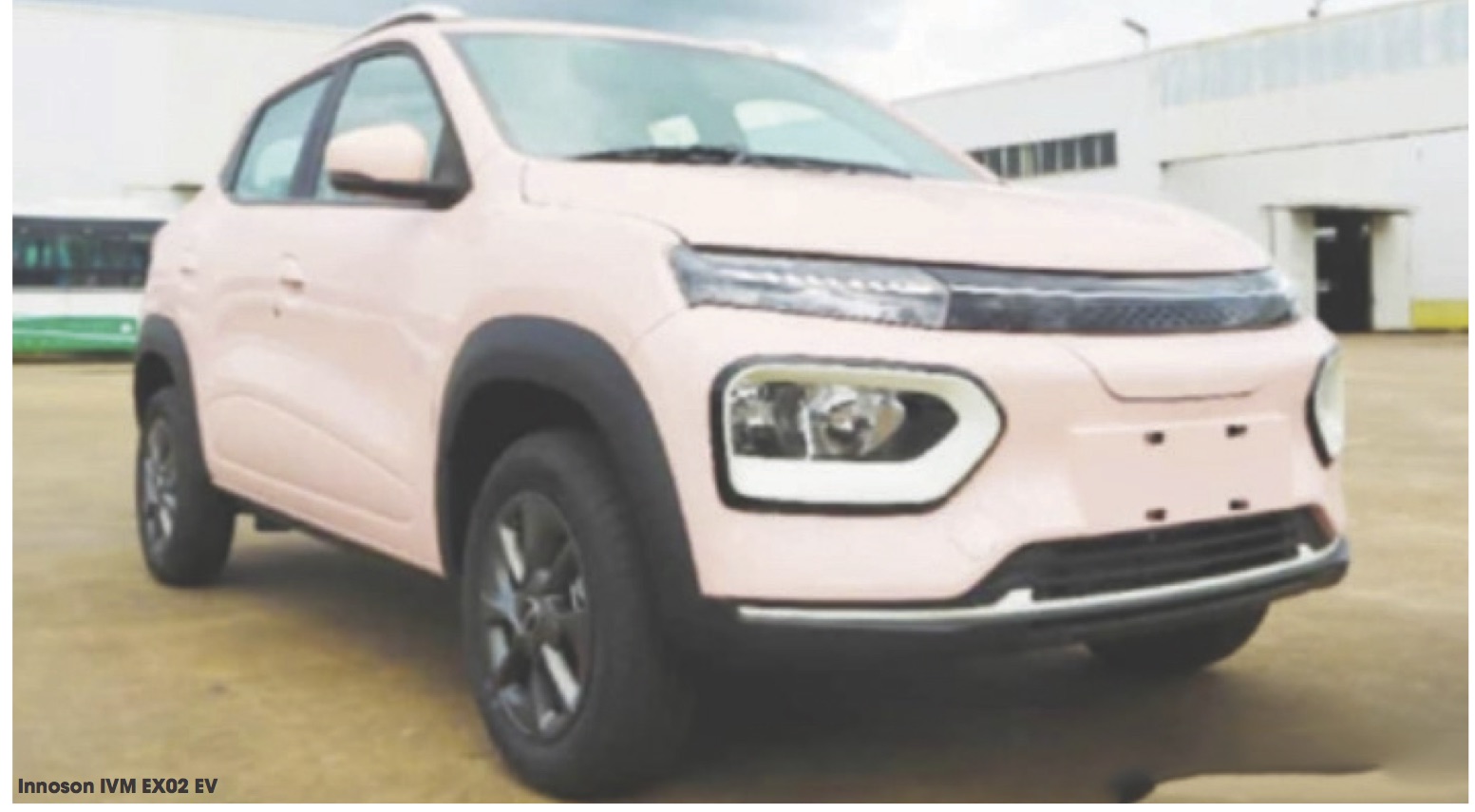
Nigeria’s first indigenous automaker and pioneer CNG vehicles manufacturer, Innoson Vehicle Manufacturing Company Ltd (IVM), Nnewi, Anambra State, was among those inspired by the Presidential Initiative to roll out its IVM-badged EV mini car models at the plant. But, the latest development is that the company is now getting set to commission a new multibillion naira plant that will be dedicated exclusively to the production of CNG and electric vehicles.
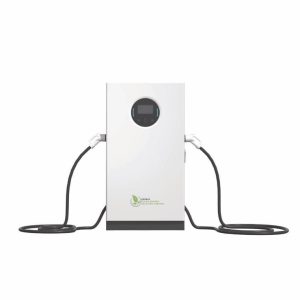
A comparatively new, but big name, Cedric Masters Group, which owns the assembly plant of Jim-Isuzu brand of vehicles, is doing more than assembling electric vehicles at its base in the Lekki area of Lagos. This is because its subsidiary, Cedric Clean Energy Solution, has built an electric vehicle charge station assembly plant in the same location – a future-focused investment the EV industry in Nigeria will find very useful. According to Ilekuba, the first batch of EV charge stations that rolled out of the facility are already in use at different locations.
Kia Motors Nigeria with an assembly plant in Isolo, Lagos, has expanded its product portfolio with the addition of CNG and electric vehicles, while the closely related FAW Nigeria has also followed the trend with an exciting line-up featuring eco-friendly compact city cars and executive models purpose-built for Nigeria’s terrain.
Obviously one of the latest entrants into the EV space in Nigeria,Cawin Mobility Limited, located in Ikeja GRA Lagos, is already winning hearts with a unique throw-in for customers, including a home EV charger, for every vehicle purchased.
SAGLEV Electromobility in Imota area of Ikorodu, Lagos; NEV Electric in Abuja; JeGO in Lekki, Lagos; CIG Motors, in Ogba, Lagos; Kogi-based Electric Motor Vehicle Company (EMVC), and some others, also assemble electric vehicles in Nigeria.
Spiro Nigeria provides a range of electric bikes in the Nigerian market while Siltech World is known for its three-wheelers.
The response of these and other local assemblers and importers of various brands to the Presidential Initiative has increased the rate of EV adoption by mainly corporate organisations and to an extent, individuals, in Nigeria
However, considering that statistics show that the population of electric vehicles on the road in Nigeria is less than 30,000, the adoption rate is still nascent. This is still too low for a country with a population of between 11 and 14 million registered vehicles.
Commentators on the issue agree that Nigerians are well aware of the enormous advantages of using electric and CNG vehicles (over those that run on petrol or diesel), including cleaner operation, considerably reduced running and maintenance costs, as well as environment-friendliness. But, their adoption is constrained by challenges.
According to the Managers at FAW Nigeria and Cawin Mobility, the savings from fuel costs and other operational expenses, including maintenance, are as high as 70 percent.
Many players in the EV space, including Engr. Ewelukwa of Jet Motor, have identified some of the challenges as limited charging infrastructure, and poor electricity supply, while others fault what they describe as policy emphasis which seems to tilt towards CNG.
The high cost of the the EVs – and those assembled locally are not an exception – is also a factor, owing to challenges bothering on forex for the importation of components, and sundry port charges
The Jet Motor Managing Director spoke further: “The only immediate drawback I see is that its success hinges on stable electricity supply and affordability of EVs. Without robust financing options, adoption may remain low.
“This is where the Feds (Federal Government and its agencies) will have to come in and spur up the space by injecting substantial cash into charging infrastructure development as well as tax holidays, subsidies, and waivers for EV businesses. These savings will in turn be passed on to potential EV owners,” Ewelukwa stated.
Until there is an improvement in power supply and charging infrastructure, the Group General Manager, Cawin Mobility, Mr. Marc Shao, disclosed recently that the company has improvised an answer, because every customer who buys its vehicle has a charging unit installed in their home or wherever it is needed. This is in addition to a mobile charger that can be used anywhere.
According to Shao, this is an innovative solution that has helped Cawin’s customers defy the challenges.