Follow Us on Google
By Grace Egbunuekhe
There are few environmental relationships more consequential in Lagos than the one between a household and its waste collector. When that relationship works, it is barely noticed.
A truck arrives. Bins are emptied. Waste disappears. Life continues. When it breaks down, however, the result appears almost immediately on the street. Overfilled bins become heaps. Heaps become informal dumpsites.
Informal dumpsites attract additional dumping. Rainfall carries loose waste into drainage channels. Before long, what began as a collection failure becomes a sanitation, flooding and public-health problem.
This explains why any serious discussion of Lagos’s environmental legacy must confront the Private Sector Participation system, not merely celebrate it.
Private-sector involvement in Lagos waste collection dates back decades. The Lagos Waste Management Authority (LAWMA) records that the initial pilot began in Kosofe and Bariga in 1997 before being expanded and subsequently restructured.
Today, PSP operators remain central to domestic and commercial waste collection across Lagos.
The LAWMA says a five-year franchise arrangement involved 437 PSP operators, reflecting the scale of the network responsible for moving refuse from communities into the formal waste-management system. That is significant institutional infrastructure.
But quantity does not automatically equal quality. The weakness of the PSP system has long been familiar to residents. Some operators have inadequate trucks. Collection schedules can be irregular. Equipment breaks down. Traffic affects turnaround times. Some customers dispute bills. And some households simply refuse to pay.
Government itself acknowledged in October 2025 that a number of PSP operators were struggling to meet obligations, while some residents deliberately avoided formal operators and resorted to indiscriminate disposal.
That two-sided failure is important. It is easy for a PSP operator to blame residents. It is equally easy for residents to blame LAWMA. Government can blame illegal cart pushers. But refuse does not disappear while everybody assigns responsibility.
The system must work as one chain. Government has attempted various interventions.
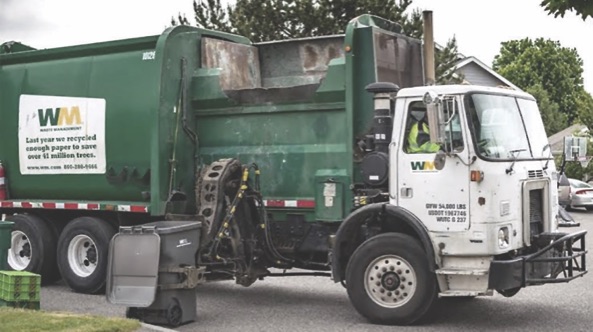
The LAWMA reports that 102 waste-collection trucks and 100 double-dino bins had been commissioned as part of strengthening operational capacity.
In 2025, the government said additional intervention trucks were being deployed where PSP operators had difficulties, while environmental-health officers were to be attached to operators to strengthen monitoring.
But the future of the PSP programme needs to go beyond periodically rescuing weak operators. Performance must become measurable.
Residents should know how often their waste is expected to be collected. Operators consistently failing service standards should face consequences. Complaint channels must lead to resolution. Billing should be transparent.
Other News
And technology should increasingly allow government to know whether trucks are actually serving the routes for which customers are being charged.
The LAWMA already operates digital platforms relating to waste collection, environmental monitoring, PSP services and recycling. The opportunity now is to integrate technology more deeply into performance management.
There is also a structural reality. Not every part of Lagos is equally accessible to large compactors. Some communities have narrow streets. Some informal settlements were never designed for heavy trucks.
Some densely populated areas require smaller collection vehicles feeding into transfer systems rather than waiting for conventional trucks that cannot easily navigate them.
The LAWMA has referenced the deployment of tricycle compactors as part of efforts to improve collection in difficult-to-reach locations. That kind of adaptation is important.
A megacity needs several waste-collection models operating within one regulated system.
But residents must also meet their side of the bargain.
A functioning service cannot survive indefinitely if substantial numbers of waste generators refuse to pay but still expect somebody to remove what they produce.
Government has repeatedly complained about “free riders” who evade PSP payments and dispose of refuse illegally.
That behaviour pushes the cost onto everybody else. The solution, however, cannot be enforcement alone. Reliable service creates willingness to pay.
Transparent billing builds trust. Prompt response to complaints strengthens cooperation. Residents are more likely to respect a system they believe respects them.
The next stage of the Lagos waste legacy should therefore be to transform the PSP programme from simply a roster of private collectors into a performance-driven public service.
The objective is very simple. A resident should not need to know who regulates whom. He should not need to understand the institutional relationship between LAWMA, the ministry and his PSP operator.
He should simply know that on the agreed day, the truck will come.
That is how citizens ultimately judge environmental governance.
Not by organisational charts. Not by communiqués. But by whether the waste outside their gate disappears when it is supposed to.