Follow Us on Google
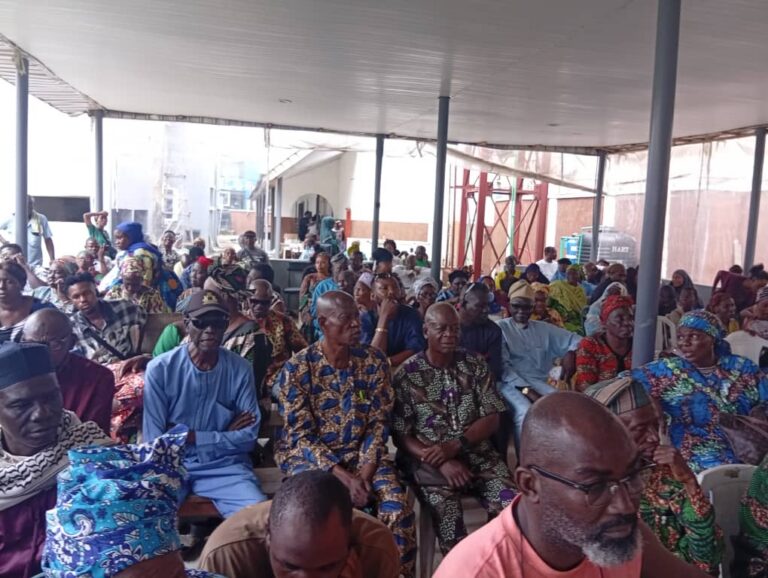
Experts have disclosed that the report of a recent research survey has revealed that Nigeria’s protein deficiency situation is approaching alarming proportions. The report, “Nigerian Protein Deficiency Report 2020,” was unveiled at a Protein Deficiency Webinar Series 8, held recently with the theme: “The Nigerian Protein Deficiency Awareness Report 2020: Unpacking the Numbers, Exploring the Issues.”
The Service Line Lead (West Africa), IPSOS Channel Performance, Mr. Obaro Agalabri, stated that 45 per cent of respondents did not consume protein daily and this was more prevalent in the North East and among the lower socioeconomic class: “The survey was conducted by IPSOS, a leading market research company that carries out in-depth analyses of various issues, such as health statistics, population demographics and other related fields.”
“Nigerians are consuming a minimal amount of protein daily due to the poverty level in the country. The recent report by the National Bureau of Statistics (NBS) indicates that less than half of the working population is unemployed, a situation that no doubt reduces the purchasing power of households and general food purchases.”
Quoting the NBS report, Agalabri explained that about 40 per cent of Nigerians live below the poverty line, implying that more than 82 million Nigerians live on less than $1 a day. He noted that the average cost of protein per meal is N80, and the majority of Nigerians would have to use more than 68 per cent of their income in purchasing protein foods to get enough.
“The Nigerian Protein Deficiency Report 2020 revealed that there is a gap in protein consumption across Nigeria with cost and household income levels as the main hindrance to adequate intake of protein in the country.”
On his part, chief lecturer, Department of Home Economics, Adeniran Ogunsanya College of Education, Dr. Beatrice Oganah-Ikujenyo, said the cost of food was a problem that made people underfeed. She noted that the average Nigerian ate food just to get satisfied without taking into consideration the nutritional content, making food consumption patterns to lean towards carbohydrates in Nigeria. With this, protein deficiency is still prevalent in the country: “The way to curb this is by consuming protein-rich foods like soya beans, eggs, beans, groundnuts and so on.”
She strongly advised that children should be prioritized in protein consumption in every home.
Also, provost, College of Agriculture, Osun State University, Oshogbo, Prof. Adetunji Kehinde, said that the agricultural sector has the potential to alleviate protein deficiency in the country. He argued that farmers should be supported with appropriate incentives to motivate them to produce more protein-rich food. “There should be policy evaluation and intervention to curb the nutrition deficit in Nigeria.”
National co-chair, Women in Global Health Nigeria, Dr. Adepeju Adeniran, added that soyabean is a good source of protein. She lamented that the Nigerian Protein Deficiency Report 2020 showed that a large number of Nigerian infants and young children are malnourished. To curb this, she called on Nigerians from all walks of life to use healthy food plate in meal planning.