Follow Us on Google

This editorial examines President Bola Tinubu’s apology to Plateau people and the moral burden of political promises. A name can carry a future. A promise can hold a lifetime of expectations. Sometimes, a name becomes an unbearable metaphor.
His name was Promise. Promise Gideon Ayuba. He was among those killed in the March 29, 2026, gun attack on Angwan Rukuba, Jos North, Plateau State. His mother, Mrs Favour Ayuba, was seen in a haunting video, clutching the lifeless body of her son. Her grief needed no interpreter. Her arms told the story. Her tears supplied the punctuation.
She had carried Promise in her womb. She had nurtured him at her breast. She had invested in his tomorrow. Then violence arrived. It took the boy and emptied the future his name seemed to announce.
The tragedy is personal. Its implications are national. Certainly, ‘Promise’ is not only a proper noun. It is also a common noun. It speaks to expectation, assurance and the obligation to deliver. It takes us from the life of one young Nigerian to the promises made by those entrusted with the lives of millions. One Promise was lost. Many promises remain.
The Mother, the Son and the Airport
On March 29, gunmen attacked Angwan Rukuba. The violence left families bereaved, residents injured and communities traumatised. The death toll later rose to 33, according to a representative of the Plateau State Government. The numbers are grave. But numbers alone cannot convey the full human cost.
There was Promise. There was his mother.
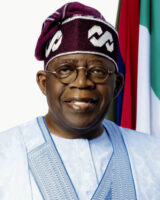
On April 2, President Bola Tinubu visited Jos to commiserate with the people of Plateau State. But he did not proceed to Angwan Rukuba or the affected communities. He met community representatives and victims’ families at a hall adjoining Yakubu Gowon Airport.
The encounter produced an image that travelled far beyond the airport.
A bereaved mother.
A dead son.
A President offering condolences.
A nation watching.
The Presidency subsequently explained the airport arrangement. Presidential spokesman Bayo Onanuga cited the delayed schedule following a meeting with Chad’s President, Mahamat Idriss Déby Itno. He also referred to the absence of navigational aids for night operations at the Jos airport and the approximately 40-minute road journey between the airport and the township. According to the explanation, these constraints made it impracticable for the President to travel into town and return before dusk. Officials therefore arranged for community representatives to meet him at the airport. The explanation deserves to be heard. Presidential movements involve security, timing and logistical considerations. Yet, logistics cannot exhaust the ethical question. A bereaved community may reasonably expect more than a meeting arranged around an airport timetable. It may expect its national leader to stand on the ground where lives were lost. To encounter the wounded landscape. To see, hear and feel the human consequences of insecurity.
The airport became the meeting point. But it also became a metaphor for distance.
The Politics of Explanation
The Presidency’s response to public criticism raises a question about political communication. What happens when an administration explains an action but fails to engage fully with the public feeling behind the criticism?
The issue was not simply whether the President had met victims. He had. Nor was it whether officials had visited the affected area. The Presidency said senior security officials had done so. The deeper question concerned presidential presence: why did the nation’s chief executive not visit the community itself?
The response shifted attention towards scheduling, runway limitations and travel time. These were administrative explanations. The criticism, however, was also moral and symbolic. This is a form of discursive displacement. An ethical question is redirected into an administrative one. The explanation may be factually accurate and still leave the original concern unanswered. Presidential communication teams must do more than defend the principal. They must also convey uncomfortable public feedback. An echo chamber is dangerous because it filters out the very signals leadership needs to hear. Advisers may report that an engagement achieved its objectives. Official statements may insist that the visit was strategic. But the image of a mother holding her dead son cannot be edited out of the public memory.
Explanation is not absolution. Neither is criticism proof of bad faith. The task of leadership is to listen beyond the defence of its own decisions.
The Return of Promise
On November 14, Tinubu returned to Jos. This time, he spoke directly about the airport visit. At the APC North-Central presidential campaign rally, he acknowledged that his previous visit had been limited to the airport.
“When I last visited the other time, I was limited to the airport. Forgive me if you didn’t see me in the hinterland,” he said. He added that he had seen the devastation and received reports from the governor. He also spoke of the horror reflected in the faces of affected residents.
He promised to rebuild affected communities and facilitate the return of displaced people to their homes. The apology deserves to be considered on its own terms. It acknowledges an omission. It recognises that the earlier visit did not reach the hinterland. It asks for forgiveness. But context matters. The words were spoken at a party campaign rally. The President was not merely addressing a community in mourning. He was also addressing a political audience in the run-up to the 2027 elections. He sought support for his party and his re-election bid.
This setting does not automatically make the apology insincere. Human contrition and political calculation can occupy the same public moment. An apology may be sincere and politically useful at once. The challenge is to examine what was said, what was acknowledged and what follows.
The Grammar of Forgiveness
J. L. Austin’s Speech Act Theory offers a useful lens. Words do not merely describe the world. They can perform actions.
President Tinubu’s statement has a locutionary dimension: “Forgive me if you didn’t see me in the hinterland.” These are the words uttered. Its illocutionary force is an act of acknowledgement and an appeal for reconciliation. The President recognises that his earlier visit did not extend to the affected communities. He asks those aggrieved to forgive him. Its perlocutionary dimension concerns the effects the utterance may produce. It may soften resentment. It may restore goodwill. It may persuade some listeners that the President has heard their complaint. In a campaign setting, it may also generate political sympathy. But perlocution is not guaranteed. A speaker may request forgiveness; the listener retains the freedom to withhold it. Who, then, has the authority to forgive?
A governor may welcome the apology. Traditional rulers may accept it. Community leaders may express appreciation. But no public official can automatically forgive on behalf of every bereaved mother, every injured survivor or every displaced family. Forgiveness is not a transferable political asset.
Nor does forgiveness amount to electoral endorsement. A citizen may accept an apology and still demand accountability. A family may forgive an omission and still insist on justice for a murdered relative. A community may welcome presidential attention and still judge the government by the security it provides. To err is human. To forgive is divine. But to make amends is the responsibility of leadership.
*The Promises That Must Be Kept*
The April visit produced more than condolences. Tinubu promised an AI-enabled network of more than 5,000 surveillance cameras. He directed security chiefs to pursue those responsible for the killings. Government also announced measures to support affected families. The recruitment of 1,000 forest guards was among the security initiatives associated with the Plateau response. At the November rally, the President said the cameras had arrived in Nigeria and would soon be installed. He also said the 1,000 forest guards were undergoing training and would begin work after completing it. These are important commitments. But a promise announced is not a promise fulfilled. Cameras procured are not necessarily cameras installed. Cameras installed are not necessarily cameras operational. Forest guards in training are not yet guards deployed to protect vulnerable communities.
Each stage requires evidence. Each commitment requires a timeline. Each intervention requires measurable outcomes.
How many cameras have been installed? Where are they located? Are they connected to an effective monitoring and response system? When will the forest guards complete training? Where will they be deployed? What arrangements will ensure that affected residents can return home safely? Have perpetrators been identified, prosecuted and brought to justice? These are not hostile questions. They are the ordinary questions of citizenship.
Reconstruction must mean more than rebuilding houses. A rebuilt home without security is a waiting room for another displacement. The return of internally displaced persons must be safe, voluntary and sustainable. Justice must reach beyond expressions of outrage. Security must be experienced in villages, streets, farms and homes.
The measure of a promise is not the applause that greets its announcement. It is the difference it makes in people’s lives.
*Promise and the Moral Burden of Leadership*
There is a painful irony in this story. A young man named Promise lost his future to violence. His mother lost the son whose name carried her hopes. The President now speaks of promises: security, reconstruction and the return of displaced people.
The two meanings of Promise meet here.
The proper noun reminds us of the human being behind the statistics. The common noun reminds us of the obligations that remain. One is a life that cannot be restored. The other is a responsibility that cannot be abandoned. No apology can bring Promise Ayuba back. No compensation can fully repair his mother’s loss. No presidential visit can reverse the violence. But leadership can determine whether the tragedy becomes another entry in an endless catalogue of national grief or a turning point in the pursuit of security and justice.
The President’s request for forgiveness should therefore not close the conversation. It should open a more demanding one. What has changed since April? What protection now exists for vulnerable communities? What progress has been made in identifying and prosecuting those responsible? What guarantees can displaced families trust? These questions should not be heard as rejection of reconciliation. They are its necessary companions. Forgiveness without responsibility risks becoming a convenient political exit. Reconciliation without justice risks becoming a ceremony of forgetting.
And there is another uncomfortable truth. The dead cannot vote in 2027. Promise Ayuba is gone and cannot assess the next campaign manifesto. His mother and the living citizens of Plateau can. They can listen to the promises. They can ask for evidence. They can judge the distance between announcement and achievement. The burden is on government to make that judgement possible through transparent action.
*Let the Promises Live*
A President may travel to a community and ask its people to forgive him. That is a human appeal. But a President also occupies an office with constitutional responsibilities. The office demands more than empathy. It demands protection, justice and the conditions under which citizens can live without fear.
The mother who carried Promise in her womb should not have to carry the burden of unanswered questions alone. The families who lost loved ones should not be left with condolences as their only inheritance. The displaced should not have to mistake a campaign assurance for a safe road home. The ultimate apology is not another speech. It is a safer Plateau. It is justice for the victims. It is the return of displaced families to secure homes. It is a future in which mothers do not have to identify their children among the dead.
Promise was a name. Promise became a life. That life was brutally snuffed out. But the political promises made in its shadow remain alive, waiting to be measured against performance.
Promise Ayuba died. In the street parlance, ‘Nigeria happened to him,’ thus, denying him the chances of living out his name. However, it is not over yet if only Mr President would let the political promises live. Therein lies the prospects of Promise Ayuba taking on the wings of fruition and drying up the tears of his dear mother, Favour Ayuba.
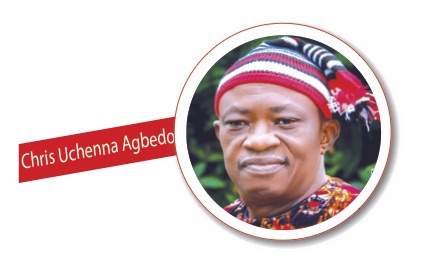
• Prof Agbedo writes from University of Nigeria, Nsukka.