Follow Us on Google

•Reviews policies, courts investors
From Okwe Obi, Abuja
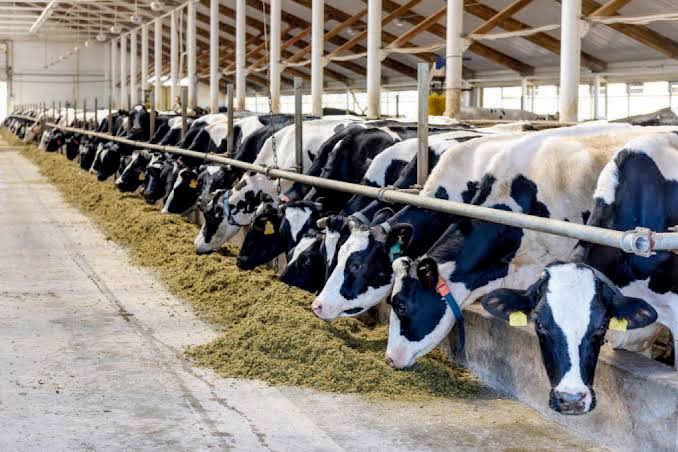
Nigeria’s quest to unlock the enormous economic potential of its livestock industry is taking a new direction, with the Federal Government combining policy reforms, expert consultations and international partnerships to address longstanding challenges in the sector.
From reviewing technical policy proposals to exploring investment opportunities with Tunisia, the government is seeking a more productive, commercially viable and globally competitive livestock industry capable of contributing significantly to food security, employment generation, industrial development and economic growth.
The renewed push comes at a time when Nigeria is looking to diversify its economy, reduce pressure on food prices, strengthen domestic production and create new sources of non-oil revenue.
Although livestock production remains an important part of the country’s agricultural economy, the sector has considerable room for growth, particularly in animal feed production, breeding, veterinary services, meat processing, storage, transportation and access to international markets.
The Federal Government’s latest initiatives suggest a clear recognition that unlocking this potential requires more than policy declarations.
It demands sound technical advice, adequate funding, modern technology, private-sector investment and cooperation with countries that have developed expertise in different aspects of livestock production.
One of the immediate steps is the review of technical memoranda and the development of actionable recommendations in partnership with livestock experts, veterinary professionals, researchers, regulators and other industry stakeholders.
The exercise is intended to strengthen technical inputs into deliberations at the National Council and ensure that proposed policies and interventions are supported by evidence, financially realistic and capable of implementation.
The Chief Veterinary Officer of Nigeria and Chairman of the National Livestock Development Committee, Dr. Samuel Anzaku, believes that the quality of recommendations submitted to the Council will largely determine the effectiveness of decisions taken to reposition the sector. He stressed that technical proposals must be subjected to rigorous scrutiny, particularly regarding their evidence base, feasibility, preventive impact and financing requirements.
For him, the committee’s responsibility goes beyond receiving memoranda and endorsing proposals. Members must interrogate ideas, identify weaknesses and ensure that only recommendations capable of producing meaningful results are presented for consideration.
“Our value to the Council lies in the quality of judgment, not the speed of our work. A committee that convenes and approves everything placed before it has added nothing to the process. Let us be constructive. Disagreement is very useful, especially if it is objectively done,” he stated.
Anzaku’s position reflects an important challenge in Nigeria’s policy environment, where ambitious programmes sometimes struggle because of inadequate planning, weak funding arrangements and implementation gaps. For the livestock industry, these shortcomings could undermine efforts to improve animal breeds, expand feed production, strengthen disease control and develop modern processing facilities.
The government is therefore seeking to ensure that its interventions are properly assessed before implementation, with particular attention to their likely economic and technical benefits. The Country Representative and Team Lead of Propcom+, Dr. Adiya Ode, also expressed support for the initiative, reaffirming her organisation’s commitment to improving livestock productivity through interventions capable of driving growth across the value chain.
She said her assessment of the memoranda showed that several proposals could have far-reaching effects on the industry if approved and implemented.
However, Ode warned that the government and its partners must recognise the limitations of available resources and avoid pursuing too many interventions without the capacity to complete them.
“We see this effort as a new initiative, and we’re interested in supporting anyone who is working on improving livestock productivity. I have looked through the memos being presented, and I see that many of them will have a far-reaching impact on the livestock sector if they are passed and if they are implemented.
“But I would also like us to be conscious of the fact that resources are not endless. So, we can aspire to do everything and not do anything, or we can aspire to do the few things that our resources will take us through,” she cautioned.
Her intervention brings into focus the funding question that has confronted several government development programmes. While the livestock sector has numerous areas requiring attention, the ability to identify priorities and channel resources into interventions with measurable outcomes will be critical.
Beyond the review of policies and technical recommendations, the Federal Government is also seeking international partnerships to attract capital, improve production methods and introduce technologies that could help modernise the industry.
This is where Tunisia has emerged as a potential strategic partner.
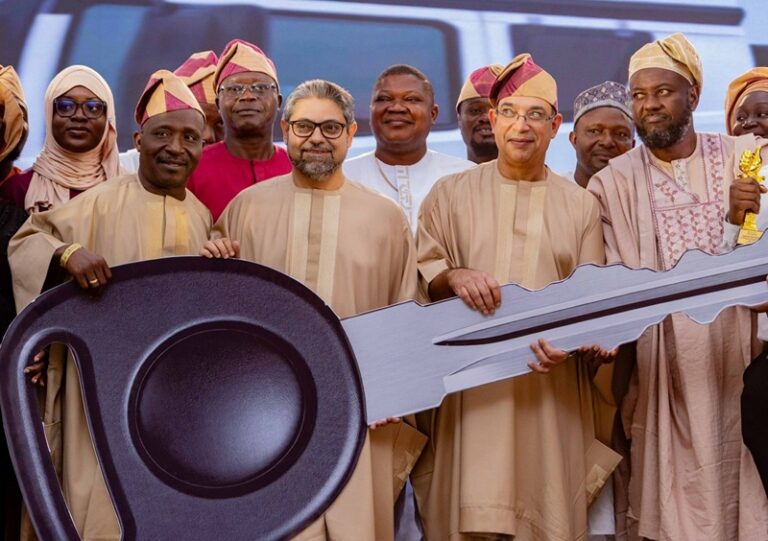
During a meeting in Abuja with the Tunisian Ambassador to Nigeria, Mohsen Antit, and his delegation, the Permanent Secretary, Ministry of Livestock Development, Chinyere Akujobi, reaffirmed Nigeria’s commitment to strengthening bilateral cooperation in livestock development.
The proposed partnership covers animal feed production, meat processing, technology transfer and investment across different segments of the livestock value chain.
Akujobi described the visit as an important opportunity to translate the longstanding diplomatic relationship between Nigeria and Tunisia into practical economic and technical partnerships capable of driving sustainable growth in Nigeria’s livestock industry.
The choice of these areas of cooperation is significant because livestock development is not limited to raising animals. It involves an interconnected chain of activities, from the production of feed and breeding of healthy animals to veterinary care, slaughtering, processing, packaging, transportation and marketing.
Weaknesses in any of these areas can increase production costs, reduce output, undermine quality and limit the ability of local businesses to compete in international markets.
For instance, inadequate access to quality animal feed can increase the cost of raising livestock and poultry, while poor processing and storage facilities can result in losses and prevent producers from supplying markets consistently.
Partnerships that address these gaps could therefore improve productivity and create opportunities for businesses operating at different levels of the industry.
Akujobi explained that the proposed areas of collaboration were consistent with the Ministry’s National Livestock Growth Acceleration Strategy (NL-GAS), which provides a framework built around 10 strategic pillars.
The strategy covers breed improvement, feed and fodder production, animal health, infrastructure development, peacebuilding and other critical areas considered necessary for the transformation of the industry.
Akujobi welcomed the Tunisian delegation’s interest in working with Nigerian stakeholders, particularly in animal feed production, meat processing, technology transfer and investment.
To move discussions beyond expressions of interest, she proposed the establishment of a joint technical working group comprising representatives of both countries.
The group, she said, would identify priority areas of cooperation and develop a framework for a Memorandum of Understanding (MoU).
Such an arrangement could provide a structured platform for identifying investment opportunities, matching Nigerian businesses with Tunisian companies and developing specific projects for implementation.
The Permanent Secretary also highlighted Nigeria’s interest in expanding its participation in international livestock markets through trade in feed and fodder, red meat and other livestock products.
However, she emphasised the need to take into account the international sanitary and quality standards required to compete effectively in those markets.
This is particularly important because access to international markets depends not only on production volumes but also on the ability to meet standards relating to animal health, food safety, processing, packaging and traceability.
Earlier, Antit described the meeting as a significant starting point towards establishing a stronger partnership between Nigeria and Tunisia, particularly in agriculture and livestock development.
He proposed a bilateral cooperation agreement between Tunisia’s Ministry of Agriculture and Nigeria’s Federal Ministry of Livestock Development ahead of the Nigeria-Tunisia Joint Commission scheduled for early 2027.
The proposed agreement is expected to provide a formal framework for cooperation and facilitate engagements between government institutions, investors, technical experts and businesses in both countries.
Antit also disclosed that discussions were ongoing towards improving connectivity between Nigeria and Tunisia through the possible introduction of a direct flight between Tunis and Abuja by 2027.
He said improved air connectivity would further facilitate trade, investment, business relations and people-to-people exchanges.
Although aviation connectivity may appear separate from livestock development, it could help strengthen commercial relationships by making business engagements, technical exchanges and investment discussions easier between both countries.
The Tunisian delegation also brought a private-sector perspective to the discussions, with a representative of Rose Blanche Group outlining the company’s experience in agriculture, animal feed production and integrated livestock operations.
The group operates across several segments of the agricultural and livestock value chains, including cereal collection, wheat processing, animal feed production, poultry breeding, hatcheries, livestock farms, slaughterhouses and meat processing.
Its operations offer a practical illustration of how different components of the livestock industry can be linked to create an integrated business model.
Rather than concentrating on only one aspect of production, such an arrangement connects the supply of agricultural raw materials to feed manufacturing, animal production and the processing of meat for the market.
For Nigeria, where many livestock businesses operate with gaps between production, processing and distribution, the experience could offer opportunities for knowledge-sharing, investment and the development of more efficient production systems.
The Rose Blanche representative also identified Nova Nutrition, a subsidiary of the group, as a specialised company involved in producing premixes and concentrates for animal feed.
These products are important in livestock production because properly formulated feed helps provide animals with the nutrients required for healthy growth and improved productivity.
Highlighting the group’s experience in poultry production, the representative cited its reported success in achieving “Zero” coccidiosis on poultry farms in Tunisia.
Coccidiosis is a parasitic disease that affects poultry, particularly chickens, and can cause poor growth, reduced productivity and mortality, resulting in financial losses for farmers.
The representative expressed the company’s readiness to share technical expertise, understand the challenges confronting Nigeria’s livestock industry and explore mutually beneficial investment opportunities with Nigerian businesses.
The interest of Rose Blanche Group could open discussions around technical partnerships, local production, processing infrastructure and improved poultry management practices.
It also offers an opportunity for Nigerian businesses to learn from an established agricultural and livestock operator with experience across several stages of the value chain.
Another important contribution came from Tunisian veterinary consultant, Amal Essaied, who has worked in Nigeria for about one and a half years.
Essaied amplified the country’s enormous livestock potential, drawing on her 33 years of international experience in the industry.
She expressed interest in working with the Ministry to support ongoing efforts to transform the sector into a vibrant, sustainable and globally competitive industry.
Her experience could be valuable in areas such as animal health management, veterinary practices and the development of systems that improve livestock productivity and reduce losses.
Indeed, animal health remains central to the success of any livestock development programme. Healthy animals are essential for increasing production, protecting farmers’ investments and ensuring that meat and other animal products meet safety requirements.
The presence of veterinary professionals in the proposed cooperation also reinforces the need to combine investment with technical expertise and improved disease prevention systems.
The wider economic opportunities in the livestock industry are substantial. Beyond the direct production of meat, milk, eggs and other animal products, the sector supports businesses involved in feed milling, veterinary medicine, equipment supply, transportation, cold storage, packaging and retail distribution.
A stronger domestic livestock industry could therefore stimulate activities across agriculture, manufacturing, logistics and trade.
It could also create employment for young people, particularly in animal production, processing, veterinary services, feed manufacturing and other supporting businesses.
However, achieving these outcomes will require sustained investment and a clear implementation framework.
The Federal Government’s policy review must produce recommendations that address actual production constraints, while the proposed Nigerian-Tunisian partnership must move from diplomatic discussions to identifiable projects with clear responsibilities, timelines and investment commitments.
The establishment of the joint technical working group is therefore an important next step. Its ability to identify practical areas of cooperation and develop a workable MoU could determine how quickly the discussions translate into tangible benefits.
Equally, the government must ensure that local farmers, processors, investors and other industry operators are actively involved in the process so that the proposed interventions respond to the realities of the Nigerian market.
The meeting was attended by the Tunisian Ambassador and members of his delegation, representatives of Tunisia’s trade promotion authorities, business representatives and officials of the Federal Ministry of Livestock Development.
Ultimately, Nigeria’s livestock transformation drive will be measured not by the number of policies reviewed or partnerships announced, but by improvements in animal productivity, lower production costs, stronger processing capacity, increased investment and access to wider markets.