Follow Us on Google
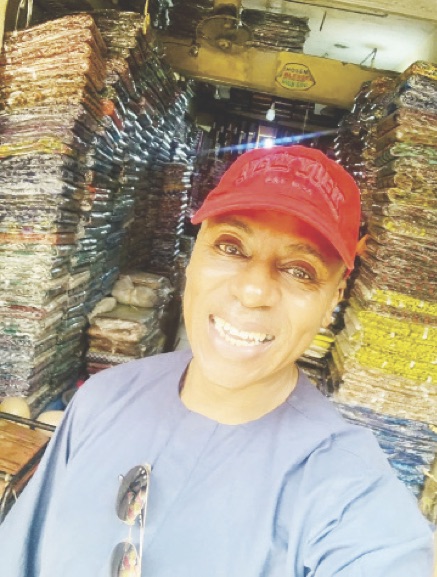
By Ade Bakare
There has been a huge increase in the amount of fake indigenous fabrics that are available in Nigerian markets and sometimes it is hard to differentiate from the original.
Perhaps it will be best to shed more light on this epidemic from our own experiences to make it more understandable.
I started using indigenous fabrics such as Adire, Akwete, and Aso Oke when I opened Atelier in Lagos, which we still maintain and work from in Victoria Island, Lagos. We opened the Atelier/shop in 2006.
Initially, the Atelier was used as a depot to store clothes we made in the UK and shipped to the Lagos shop. I came across Adire when a friend visited the shop and mentioned that his mother supplied Adire. I quickly declined, rejecting the cotton samples he showed me due to their lack of luxurious feel and look suitable for couture. He asked if I had samples of the fabrics I preferred using, and we happened to have some silk samples, specifically silk organzas, in the Atelier.
He took the silk samples away and returned some months later, showing me Adire incorporated into the silk organzas. I was surprised, and this introduction led me to start using Adire, especially in silk designs.
Over the years, we quietly created beautiful designs using these fabrics, and our clients enthusiastically purchased them. On one occasion, I questioned the huge interest in these fabrics, and a client aptly responded, “This is us.”
We never looked back, and it has now become part of our signature designs in the collections we produce annually.
Now, fast-forwarding to the present, there has been a significant increase in the use of these indigenous fabrics by Nigerian designers. Aso Oke is in high demand, and weavers are constantly struggling to meet deadlines.
Other News
Adire and Akwete are used in a wide range of designs, from jackets to dresses, trousers, and skirts, in various styles, colours, and patterns. However, demand far exceeds supply, creating a void in the market that foreign dealers are quickly filling with cheap imports.
The capital that the country should be enjoying is being lost to imports, and this is worrisome. Indigenous fabrics are akin to the country they are produced in and represent a national heritage and treasure.
We cannot allow fake imports to flood the markets. Although the fakes may be cheaper and sometimes elaborate in design, they are still not ours. As such, the government should impose high tariffs on them to discourage imports, as this will eventually ruin jobs for weavers and dealers in Nigeria.
I was interviewed by a UK TV station, ITV’s Ronke Phillips, and they produced a documentary on this issue. I mentioned that while the average working-class person might prioritize affordability over heritage, the cheap imports offer poor quality.
However, a lot is at stake – a gradual erosion of what makes us unique and a loss of cultural identity.
The way forward would be to gradually industrialise our textile sector. While weavers must continue to be protected, perhaps it’s time for modernity. An alternative could be manufacturing fabrics in factories in Nigeria. Foreign textile mills should be encouraged to set up in Nigeria, just like Aswani Mills and Shokas Lace Mills did in the 1970s. This would enable local manufacturing using local labour.
As Nigerians, we are known for our sense of style, and our sartorial elegance has led to an increase in fashion designers in the country, creating many employment opportunities. We should reap the rewards of producing fabrics in Nigeria, as it is our heritage. As the lady in our Atelier so aptly put it when admiring the silk Adire styles, “This is us.”
•Ade Bakare is a Nigerian-British couture designer.