Follow Us on Google
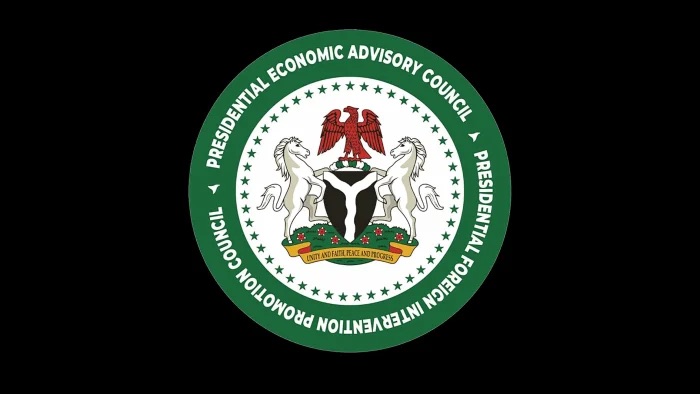
It is sad that a fake Presidential Foreign Intervention Promotion Council (PFIPC) was recently discovered in Nigeria. The agency had reportedly also secured office space in Abuja’s Federal Secretariat, opened bank accounts and had N1.3 billion allocation in the 2026 Appropriation Act. This is shameful and has exposed deep institutional vulnerabilities in the country.
Worse still, the Independent Corrupt Practices and Other Related Offences Commission (ICPC) uncovered another fake agency called the National Brands Development and Made-in-Nigeria Special Project Office recently. This fake agency reportedly operated from within the Office of the Secretary to the Government of the Federation (OSGF) without presidential authorisation and even allegedly reached out to many state governors for funding.
Incidentally, the House of Representatives Ad-Hoc Committee investigating the scams uncovered 12 additional fake agencies, 58 suspicious bank accounts linked to the ex-Director General of PFIPC, Prince Adeniyi Adeyemi. There is also an alleged N400 million transaction which may have involved fraudulent representations. A company claimed Adeyemi induced it to make the payments in four installments after allegedly saying he could secure for it a contract for the renovation, furnishing or improvement of a purported official residence allocated to him as the DG of the PFIPC.
The Chairman of the House Committee, Yusuf Gagdi, said 30 of the identified accounts appeared to have been operated in the names of about nine agencies and related entities allegedly connected to Adeyemi. The entities include the Confederation of United Nations Youths, FCT Investment Promotion Agency and Public-Private Partnership, and Foreign Investment Promotion Agency.
Interestingly, the committee exonerated the Chief of Staff to the President, Femi Gbajabiamila, from allegations of authorising, approving, establishing or participating in the activities of the fake agency as alleged by Adeyemi. It said that the evidence obtained from the State House established that the purported appointment letter was neither issued nor signed by Gbajabiamila. Also, it discovered that the alleged official documents, including a purported presidential appointment letter for Adeyemi, a purported Executive Order and a document presented as an Act of the National Assembly establishing the organisation were fabricated. It also exonerated the National Assembly committees responsible for budget scrutiny from blame.
It is surprising that this agency was accommodated within the Federal Secretariat Complex and even operated a website that portrayed it as a federal institution without any institution or senior government official detecting the fraud. It is a serious indictment on Nigerian government institutions and principal officers of the government who are supposed to have questioned or raised a red flag on the existence or activities of these fake agencies.
This shows nothing but failure of government and lack of due process in most activities of government. It shows that all is not well with the administration of ministries, departments and agencies (MDAs) of government.
Other News
As the Committee for the Defence of Human Rights (CDHR) rightly demanded, the discovery of these fake agencies must not be the end of the matter. It demanded clear explanations from the Secretary to the Government of the Federation, the Head of the Civil Service of the Federation, the Accountant-General of the Federation, and the Auditor-General of the Federation within the limits of their respective mandates.
We agree with the House committee that there should be an establishment of a secure, centralised digital verification platform which can enable an independent authentication of the lawful existence, establishing instrument and status of every federal institution.
While we decry the proliferation of fake agencies in Nigeria, we call for a comprehensive probe by an independent panel. The panel must expose those behind them. Those indicted must be diligently prosecuted and punished.
Gladly, President Bola Tinubu has ordered an investigation into the PFIPC, the suspension of three permanent secretaries, and the arrest of the promoter of the second fake agency. He has gone further to order the forensic audit of the architecture of government.
The President should go beyond his call for forensic audit. He should prune the over-bloated agencies for cost effectiveness and easier monitoring. The best way to do this is to revisit the Stephen Oronsaye Report which was submitted since 2012. The report recommended that some agencies of government whose functions overlap with some other government institutions should be merged, abolished or returned to ministries.
Essentially, the Report recommended reducing 263 statutory agencies to 161, merging 52, abolishing 38, and reverting 14 to ministerial departments. The Tinubu administration approved implementation of the report in February 2024. But so far, it is not too certain why it has not been fully implemented.
The existence of fake agencies is troubling and must be eliminated. It testifies how the fight against corruption is poorly handled in Nigeria. Government should entrench transparency in governance and plug the loopholes that pave way for the establishment of such fake agencies.