Follow Us on Google
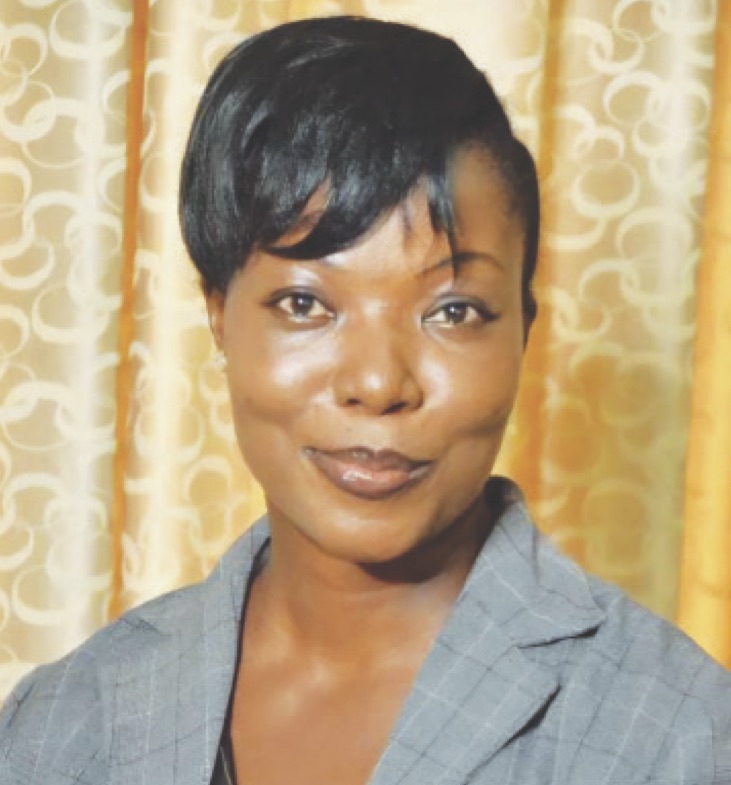
By Damiete Braide
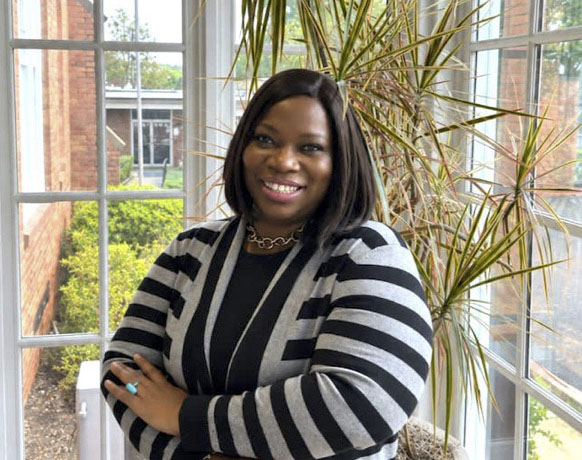
For Deborah Oluwabunmi Omoaregba, literature is more than words on a page; it is a tool for education, advocacy and social transformation. An educationist, author, poet, playwright, counsellor and motivational speaker, Omoaregba has devoted her creative journey to confronting societal silence, nurturing young talents and creating platforms for emerging writers. Now, as Vice Chairman of the Association of Nigerian Authors, Lagos Chapter, she speaks on literature, children, technology, advocacy and the legacy she hopes to build.
You wear many hats: educationist, author, poet, playwright, counsellor and motivational speaker. How did your journey into literature and the creative arts begin?
My journey into literature began from my deep love for words, children and the desire to communicate ideas that can transform lives. As an educationist, I discovered very early that stories, poetry and creative expression could reach children in ways that conventional teaching sometimes could not.
Writing, therefore, became more than a creative outlet for me; it became a tool for education, advocacy, and social change. I began writing for children, poetry and plays, and gradually found myself using literature to address issues around education, humanity, silence, development and the society we live in. Over time, these interests evolved into authorship, poetry, playwriting, counselling, motivational speaking and literary mentorship.
Your book Where Silence Speaks addresses the culture of silence. What inspired the book, and what specific silences were you determined to confront?
Where Silence Speaks was born from my observation that there are many things society knows but chooses not to talk about. Sometimes silence is imposed by fear; sometimes by culture, shame, power, inequality or the belief that speaking up will change nothing.
I wanted to confront those silences around injustice, abuse, marginalisation, the suppression of voices, the struggles of women and children, and the many societal issues that people endure quietly. The book is my way of saying that silence should not become a permanent home for truth. Sometimes, somebody must speak so that healing, accountability and change can begin.
As an advocate who uses poetry to give voice to issues often left unspoken, what do you believe poetry can achieve that conventional advocacy sometimes cannot?
Poetry reaches the heart before it reaches the argument. Conventional advocacy may present facts, statistics and demands, but poetry has the capacity to make people feel an issue.
A poem can take an abstract social problem and give it a human face. It can make someone pause, reflect and perhaps see an issue from another person’s perspective. That emotional connection can become the beginning of empathy and, ultimately, action. For me, poetry is not merely about beautiful words. It is a vehicle for consciousness, advocacy and transformation.
You proposed the 2024 Cross Country Celebration of Poetry theme, “A Nation on the Wings of Poetry.” What informed the theme, and what does it say about the role of poetry in nation-building?
The theme came from my conviction that poetry is not detached from nation-building. A nation is built not only with infrastructure and policies but also with ideas, values, imagination, identity and a shared sense of humanity.
“A Nation on the Wings of Poetry” recognises poetry as a vehicle through which we can interrogate our realities, celebrate our diversity, preserve our history and imagine the Nigeria we desire.
Poetry gives us the freedom to question the present while imagining a better future. In that sense, it can contribute significantly to building a more conscious, empathetic and responsible nation.
You have been recognised for your literary contributions and were longlisted for the 2025 Awele Prize for Literature. How have these recognitions influenced your writing and commitment to literature?
Recognition is encouraging, but for me, it is also a responsibility. Every honour reminds me that the work matters and that there is a greater responsibility to keep contributing meaningfully. Being longlisted for the Awele Prize and receiving other recognitions have strengthened my confidence as a writer, but they have not changed the reason I write. I write because I believe literature can educate, preserve memory, challenge injustice, inspire children and contribute to societal development. The greatest recognition, ultimately, is knowing that something I have written has touched a life or opened a mind.
As a former Treasurer of the Association of Nigerian Authors (ANA), Lagos Chapter, what are some of the major challenges facing writers and literary practitioners in Lagos and Nigeria today?
There are several challenges: limited financial support for writers and literary projects, inadequate structures for sustaining literary careers, poor know-how on access to publishing and distribution opportunities, declining reading culture, and the difficulty many writers face in monetising their intellectual and creative work.
There is also the need for stronger literary infrastructure, more opportunities for emerging writers, better visibility for Nigerian literature and greater collaboration between literary organisations, educational institutions, government and the private sector. I believe writers should not only be encouraged to write; we must also create ecosystems that enable writing, publishing, reading, performance and literary enterprise to thrive.
You have contributed to and pioneered literary anthologies. What motivates you to create platforms that allow other writers, particularly young ones, to have their voices heard?
I believe that literature should not be a room where only a few people are allowed to speak. I have always believed in creating space for others, particularly young and emerging writers. When I pioneered and contributed to literary anthologies, the motivation was to create visibility and give writers an opportunity to see their names, ideas and voices in print. Sometimes, what a young writer needs is not someone to tell them they cannot write, but someone to say, “Your voice matters. Keep writing.” I consider literary mentorship and platform-building part of my own contribution to the growth of literature.
You have mentored children who went on to become published writers. What have you discovered about children’s creativity that many adults tend to overlook?
Children possess an extraordinary imagination. They are not always limited by the boundaries that adults impose on ideas. What adults sometimes overlook is that children have stories to tell, perspectives to share and questions that can challenge our assumptions. Given the right environment, encouragement and guidance, a child can move from simply enjoying a story to becoming its creator. That is why I take children’s literature and literary mentorship very seriously. We should not merely create literature for children; we should also create opportunities for children to become creators of literature.
How important is early exposure to poetry, storytelling and creative writing in developing confident and imaginative children?
It is extremely important. Early exposure helps children develop language, imagination, confidence, empathy, communication skills and critical thinking. When a child is encouraged to tell stories, write poems or perform, the child is learning more than literature. The child is learning to express thoughts, understand other perspectives and develop confidence in their own voice. This is one of the reasons I have consistently integrated literature, performance and creative expression into my work with children.
Rainbow House is another important part of your creative journey. What inspired its establishment, and what gap are you trying to fill through the initiative?
Rainbow House was inspired by my desire to discover, nurture and develop talents. I believe every child has a gift, but talent without nurturing can remain hidden. Through Rainbow House, I wanted to create an environment where children can explore drama, dance, music, art, public speaking, sports and other creative abilities while receiving guidance and mentorship. The broader vision is to bridge the gap between discovering talent and giving that talent the structure, discipline and platform required to flourish.
As an educationist and child counsellor, how do your professional experiences influence the themes and characters you explore in your literary works?
My professional experiences expose me to real people, real emotions and real challenges. Working with children, families and educators has taught me to look beyond behaviour and ask what may be happening underneath it. That naturally influences my writing. My characters often emerge from observations about society, childhood, family, education, human relationships and the struggles people experience. My background in education and counselling also makes me particularly interested in stories that do not merely entertain but leave readers with something to think about.
With the rise of social media, artificial intelligence and other digital platforms, do you see technology as a threat to literature or as an opportunity to take Nigerian writing to a wider audience?
I see technology primarily as an opportunity, provided we use it responsibly. Social media has made it possible for a Nigerian writer to reach readers far beyond geographical boundaries. Digital publishing, virtual literary events, audiobooks and other platforms have also created new possibilities for writers. AI presents both opportunities and questions around originality, authorship, ethics and intellectual property. Writers, therefore, need to understand the technology without surrendering their creative identity to it. Technology should be our tool, not the replacement for the human imagination that gives literature its soul.
Looking ahead, what is the next chapter for Deborah Oluwabunmi Omoaregba, and what legacy would you like to leave in Nigerian literature?
My next chapter is the one I have just stepped into as Vice Chairman of the Association of Nigerian Authors (ANA), Lagos Chapter. I see this not simply as a position, but as a platform for service, collaboration and greater literary impact.
ANA Lagos is a vibrant body of intellectual authors, of a great standing with the Chairman, Dr. Taofeek Olatunbosun. Together, with other Excos, we will build a greater ANA Lagos from this SURE FOUNDATION.
With the team,I want to use the platform to reach as many people and sectors as possible and contribute to taking literature to the peak of excellence—by strengthening literary development, supporting writers, encouraging reading, creating opportunities for young voices and building bridges between literature, education, culture and other spheres of society.
One of my aspirations is also to see the emergence of a new generation of writers from childhood. I envision the establishment of the Association of Nigerian Children Authors, subject, of course, to the endorsement and approval of the national body of ANA. I see it as a literary birth that will nurture young authors and create a generation prepared to continue the work where we stop.
Ultimately, I want to leave behind a legacy of literary dignity that impacts all spheres of influence—a legacy in which literature is not merely read, but respected, lived, used to educate, to advocate, to preserve our identity, to raise leaders and to transform society. I want the writers coming behind us to inherit not just books, but a stronger literary ecosystem, greater possibilities and the confidence to know that their voices matter. If my generation can open doors, the next generation should walk through them and open even wider doors for those coming after them.