Follow Us on Google
-
From Ebeano and “Enugu is working” to “safe hands”, a convoy of editors journeys through cattle country, classrooms, hospitals, highways, security installations, tourism sites and a new city taking shape
By Beifoh Osewele
Enugu has never been short of slogans, those short, catchy expressions with which governments try to compress an entire philosophy of administration into a few memorable words.
There was Ebeano, the political identity that became synonymous with the Chimaroke Nnamani years, along with the refrain, “Enugu is working.” Years later, the administration of Ifeanyi Ugwuanyi repeatedly described the state as being “in the safe hands of God.”
Each slogan belonged to its time and sought to tell a larger story about government and the state. But slogans are easier to construct than cities, roads, schools and hospitals, and so, as several busloads of editors rolled through Enugu State during the 2026 All Nigeria Editors Conference, the old catchphrases provided an irresistible backdrop against which to examine what was now happening on the ground.
Governor Peter Mbah had virtually invited that scrutiny when, welcoming the editors, he challenged government and the media to meet at what he called the “point of truth”, insisting that journalists should go beyond political narratives and establish facts through evidence, investigation and context.
So off we went to look.
By the end of that long journey, another phrase had begun to form in my mind: Building another Enugu.
It was not written on any billboard we passed and nobody handed it to us in a government press release. It emerged gradually from what we encountered: an entirely new city being carved out of virgin territory, a livestock development centre stretching across thousands of hectares, schools built around a different teaching philosophy, a specialist hospital, new road corridors, a technology-driven security system and an attempt to turn natural attractions into a tourism economy.
Through much of that journey, one man supplied the running commentary.
Secretary to the State Government, Prof Chidiebere Onyia, became our tour guide, project explainer and mobile question-and-answer desk, addressing the editors collectively whenever the convoy stopped and then climbing into one bus or another to continue the commentary as we moved. At the next project, he would be out again, surrounded by editors firing questions from different directions, and when the journey resumed, his voice would somehow be coming through the microphone in another bus.
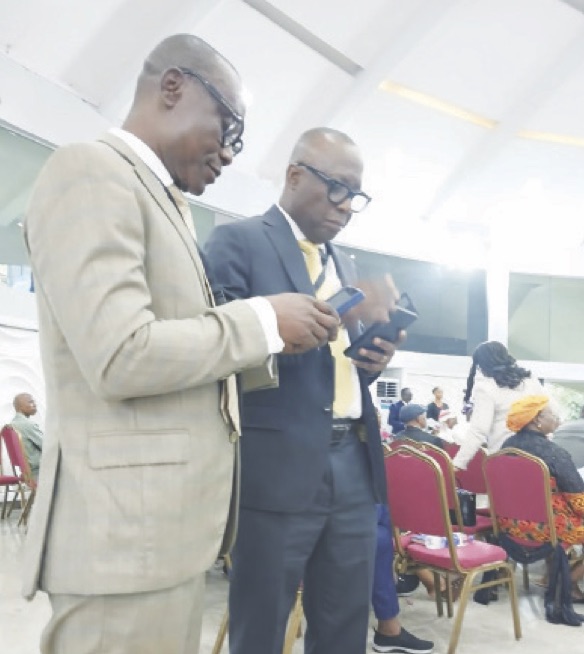
If Onyia had a twin, nobody introduced him.
Our convoy, several busloads of journalists moving across the state, was long enough to attract attention. Fortunately, traffic was unusually light because of the council election and movement restrictions; otherwise, shepherding us through normal Enugu traffic might itself have become another infrastructure test.
At every stop, phones and cameras came out, with flashing, clicking and posing everywhere one turned. For a few hours, editors became paparazzi and the real paparazzi might have been jealous.
Onyia, meanwhile, kept talking.
At Owo in Nkanu East Local Government Area, where the Enugu State Integrated Livestock Development Centre is being developed, he gathered the travelling press corps for another briefing and explained that the project covered more than 12,000 hectares, about 60 per cent of which had been earmarked for livestock production. More than $18 million is involved, he said, while the first phase is targeted to become substantially ready and operational by the fourth quarter of 2027.
“This is a massive project, so it will come in phases,” Onyia told us, explaining that what confronted us represented only the beginning and that other components would follow as the model developed.
Looking across the vast expanse, he added: “Our first model of what a ranch can look like in the South-East is what you are seeing here. This is huge. Sixty per cent of it will be for livestock. It is over 12,000 hectares. What you are seeing here is only a part of it.”
For once, the adjective needed little embellishment.
Onyia explained that the state would provide about a third of the financing, with the balance coming through a sovereign-backed arrangement, while government would also provide critical infrastructure and some of the seed investment before private operators come in.
His argument was that the ranch should not be regarded merely as a place to put cattle but as a structured commercial ecosystem combining livestock, dairy production, feed cultivation, supporting services, security, jobs and revenue under an organised system.
Before all the questions could be exhausted, however, the convoy was moving again and Onyia’s commentary went with us.
At the Smart Green Schools and emerging secondary-school academies, cattle gave way seamlessly to children as the subject of his mobile lecture changed from agriculture to human capital.
“We can’t prepare children for the future with a 20th-century teaching model,” he said, before expanding on the administration’s argument that schools must prepare pupils for the world they are going to inherit rather than the one their parents grew up in.
The emphasis, he told us, was on experiential learning rather than simply memorising enough notes to reproduce in an examination. “It is an experiential learning model,” Onyia explained. “It is not just memorising stuff.”
Mbah later reinforced the point during his interaction with the editors, stressing that the huge investment in education should not be viewed simply in terms of buildings. “It is not about structures alone,” the governor said, explaining that the objective was to expose children to 21st-century skills and practical learning.
The ultimate examination of the schools, however, will not be the photographs visitors take but what happens to the children who pass through them. Teachers must master the technology, equipment must remain functional and learning outcomes must justify the investment.
Security had also been built into the school design, with technology, fibre connectivity and surveillance forming part of the architecture. “We will not accept anybody walking away with our students,” Onyia said.
The same thought about outcomes followed us into healthcare.
At the Enugu International Hospital, medical officials led the editors through outpatient areas, laboratories, emergency facilities, wards and radiology sections equipped with advanced diagnostic machines, including a 128-slice CT scanner, 1.5 Tesla MRI, ultrasound, mammography and X-ray systems.
Some hospitals manage to look sick even before one meets the first patient. This one looked hale and healthy.
But hospitals are ultimately tested not by shiny floors or sophisticated machines but by what happens when patients arrive: specialists must be available, equipment must work and treatment must be accessible.
That was increasingly the theme of the journey: roads must lead somewhere useful, schools must teach, hospitals must heal, security systems must protect, tourism facilities must attract visitors and spending, while businesses and jobs must eventually follow the infrastructure.
By the time Mbah sat down with the editors, many of the projects Onyia had spent hours explaining from bus to bus had acquired a larger frame.
The governor said the security, transport, investments and tourism developments we had seen were not isolated undertakings but “interconnected” and “mutually reinforcing”, designed to achieve the administration’s broader economic objectives.
There lay the governor’s larger proposition and the thread Onyia had been trying to demonstrate throughout the day: security, education, healthcare, roads, agriculture, tourism and urban development were not supposed to be read as separate chapters.
The aspiration, as Mbah put it in our interaction, was to create the sort of Enugu that would give its young people reasons to remain and those outside reasons to return for something more than funerals and weddings.
If Mbah supplied the destination, Onyia spent the better part of the day explaining the road towards it.
That connection was particularly evident in security, where technology at the Command and Control Centre is designed to connect with the Distress Response Squad on the streets. Cameras and communications technology may detect trouble, but somebody still has to arrive where the trouble is. Mbah has summed up that logic simply: “Matters of security are measured in minutes.”
The roads performed much the same connective function throughout our trip. One opened access to an agricultural area, another linked communities, while yet another formed part of the network around the emerging New Enugu City.
Governments understandably count kilometres, but the enduring value of a road is what those kilometres eventually do. A road should move farm produce, shorten journeys, open communities, attract businesses, unlock land or create some other measurable economic or social benefit. Otherwise, it is merely asphalt.
That principle became particularly relevant as the buses entered New Enugu City, where Building Another Enugu stopped being merely a metaphor.
Here, another urban centre is literally being cut out of the earth.
As we travelled through the developing roads, Onyia again became the voice of the journey, explaining what was planned around us and how residential, commercial and other districts were expected to grow around the infrastructure.
The scale was unmistakable, but roads running across virgin territory do not by themselves make a city. Houses must become homes, businesses must open, utilities must work, jobs must appear and people must decide that this is somewhere they want to live.
It was impossible, nonetheless, to drive through the emerging city without returning to that old Enugu expression.
Ebeano — here we are.
Only that the question now seemed to be: where exactly is “here” heading?
At Ngwo Pine Forest, the tour changed character again as concrete, hospital equipment and cattle country gave way to towering pines, a steep descent of more than 200 feet and hundreds of steps through an environment that seemed determined to remind us that tourism does not always come with air-conditioning.
By then, we had been on the road for hours, having left Owo around 1pm and reached Ngwo at about 4p.m., but our indefatigable tour guide was still going, explaining the tourism plan as we moved through the site.
Then came the zipline.
A young man demonstrated it, gliding across while phones went up and cameras clicked. The editors watched attentively, but nobody seemed particularly eager to follow.
Here were men and women who had confronted military regimes, angry politicians, hostile newsmakers and impossible deadlines, yet a wire suspended over a dramatic drop suddenly introduced a new editorial principle: being a senior in journalism is one thing; being a senior in adventure, is another. “Dem no be mate.” The laughter came easily, but the tourism proposition was serious. Mbah later expanded on plans for cable-car infrastructure and other attractions intended to transform the state’s natural endowments into a functioning tourism economy.
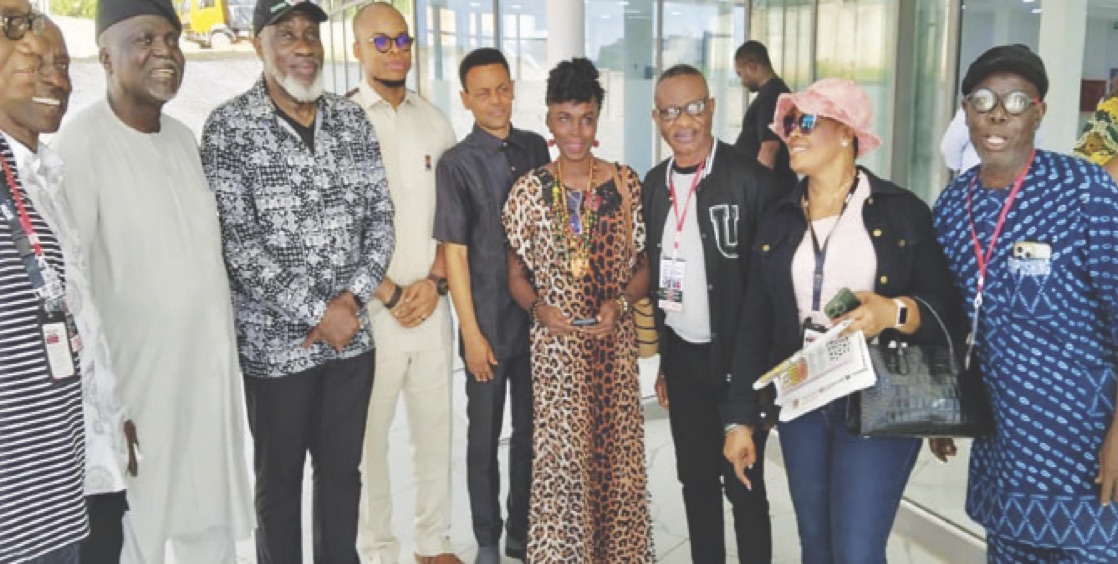
Tourism, however, brought us straight back to roads. A beautiful destination behind a bad access road remains largely a beautiful secret, which was why the quality of the approach to Ngwo naturally became part of our conversation as we travelled.
Looking back, it is difficult to separate the tour from Onyia’s voice. He moved with the convoy, switching between collective briefings and bus commentaries, supplying figures, explaining the philosophy behind projects and submitting himself repeatedly to questions from a professional tribe trained to ask one more question just when everybody else thinks the matter is settled. His commentary also gave the sprawling itinerary continuity, repeatedly linking cattle, classrooms, roads, hospitals, cameras, pine trees and a new city to the administration’s wider argument.
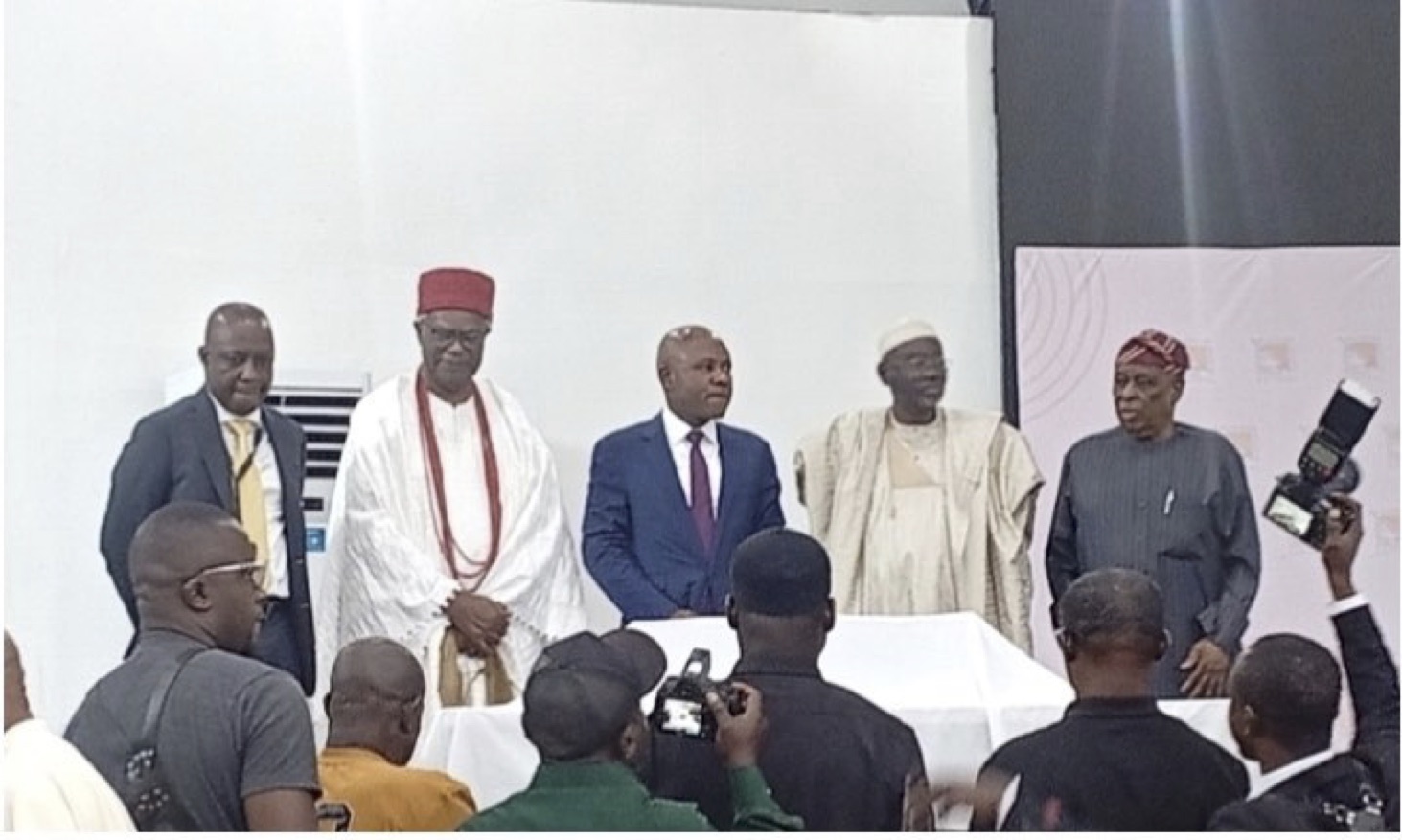
Mbah made essentially the same case when we eventually met him, although there was an interesting contrast in style between the two men. Onyia had spent the day on the road with us, animatedly defending the logic of the programme and, figuratively, thumping his chest that the projects would work. Mbah, simply dressed that evening in a grey kaftan rather than the sartorial blue suits in which he is often seen, was less demonstrative but appeared no less cocksure about the direction in which his administration was travelling.
That still left the obvious question.
The evidence we saw certainly showed substantial work under way, but the more enduring issue is what happens when the construction crews leave: whether the schools will produce better learning, the hospitals will heal, the roads will generate economic value, businesses and jobs will follow, the ranch will produce, tourism will bring visitors and spending, and security investments will translate into safer everyday lives.
Onyia had no doubts. Through the day, his confidence was unmistakable as he insisted that the interventions had been carefully thought through, deliberately connected and designed to endure beyond the government that conceived them. Mbah’s confidence was quieter, but the message was essentially the same.
Both argued that what was being built was not meant to be a collection of monuments tied to one governor, but infrastructure and institutions that would become so useful and so deeply embedded in the economic and social life of Enugu that neglecting or abandoning them after a change of administration would become difficult to contemplate.
In their telling, a successor would not merely be walking away from Mbah’s projects; he would be walking away from schools filled with children, hospitals treating patients, roads serving communities, businesses relying on infrastructure and livelihoods that had come to depend on them. Abandonment under those circumstances, they suggested, would become politically difficult and economically self-defeating.
For Mbah, that appeared to be an important part of the sustainability equation: think the projects through, build them well, make them work and make their benefits sufficiently obvious that continuity ceases to be a favour to a predecessor and becomes an obligation to the people.
That conviction will, of course, be tested by time. It also brings us back to Enugu’s old slogans. “Enugu is working” is no longer answered merely by counting construction sites. The more durable answer will come when the schools have taught generations of children, when the hospital has treated patients, when the roads have carried commerce, when the ranch is producing, when tourists are coming and spending, when businesses have opened and when residents can say from everyday experience that the security architecture is working.
Likewise, whether Enugu is truly “in safe hands” is ultimately a question residents will answer from their everyday experience rather than something a visiting convoy of editors can settle after one project tour.
But Ebeano remains an intriguing question.
Here we are, certainly.
For one long day, we saw an administration building simultaneously across several sectors, while Onyia moved from bus to bus explaining the pieces and Mbah later supplied the larger argument intended to bind them together.
The lasting story will be whether all those pieces deliver the outcomes promised and survive the administration that conceived them.
For now, however, one part of the metaphor is impossible to miss. Beside the Enugu everyone already knows, roads, bridges and infrastructure are being laid for an entirely new urban centre.
Whatever slogan comes next, that part at least is literal.
They are building another Enugu.