Follow Us on Google
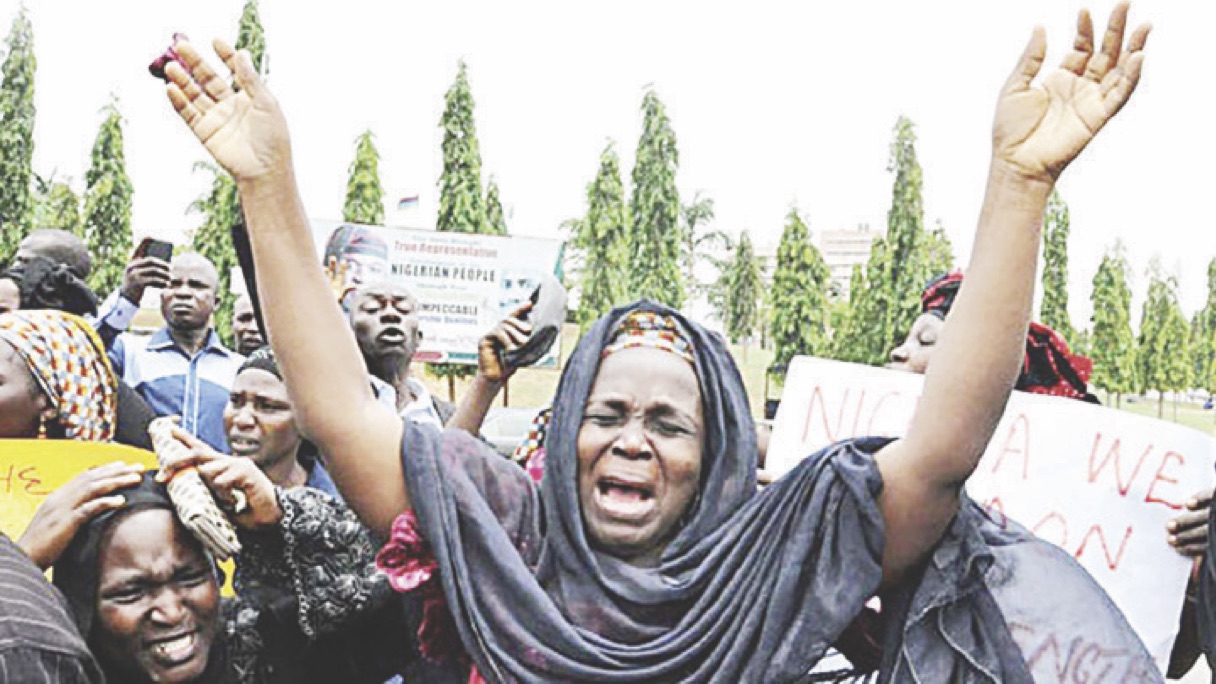
ν Ethnic nationalities, other stakeholders lament leadership failures, insecurity, economic hardship
ν State Police, regional autonomy, implementation of 2014 confab report top demands
By Oluseye Ojo (Ibadan), Fred Ezeh (Abuja), Ola Muhammad (Birnin Kebbi), Noah Ebije (Kaduna), Aniekan Aniekan (Calabar), Emmanuel Adeyemi (Lokoja), Stanley Uzoaru (Owerri), and Scholastica Hir (Makurdi)
Prominent socio-cultural organisations, religious leaders, regional champions, traditional rulers and elder statesmen across the six geopolitical zones of the federation have expressed deep frustration over the perilous state of the nation.
The key stakeholders, who reflected on Nigeria’s turbulent journey since gaining sovereignty from British colonial rule on October 1, 1960, argued that the country’s persistent failure to attain its full developmental potential is rooted in a toxic combination of elite consensus deficit, acute leadership failure, weak synergy between citizens and government, hyper-centralisation of power in Abuja, and deep-seated ethnic and religious sentiments that have continued to corrode national institutions.
Leaders across political, ethnic and socio-cultural divides declared that the current federal structure, which they described as an unnatural hybrid inherited from military command systems, has failed to guarantee security, foster economic prosperity or build genuine national cohesion.
They warned that unless urgent structural steps are taken to comprehensively restructure the country, decentralise policing capabilities, enthrone equity and justice, and dismantle entrenched corruption, the nation will continue to drift dangerously.
During separate encounters with our reporters, they offered historical assessments, structural diagnoses and policy recommendations on how to rescue Nigeria from its current trajectory.
South-East seeks equitable, competitive, restructured Nigeria, say IHIF, ex-Aka Ikenga president
The Igbo Heroes and Icons Foundation (IHIF), under the leadership of Chief Chinedu Nsofor, alongside former President of Aka Ikenga, Chief Goddy Uwazuruike, provided an assessment of Nigeria’s post-independence trajectory from the perspective of the South-East.
IHIF traced developmental stagnation to the destruction of the 1954 Federal Constitution, which established a decentralised federal system comprising semi-autonomous regions.
Chief Nsofor recalled that under the First Republic, the Eastern, Western and Northern regions exercised substantial control over local economies, education, public health, agriculture and internal security, while the Federal Government managed defence, external affairs and monetary policy.
He said the competitive model produced notable achievements across the regions.
Nsofor said “In the West, Chief Obafemi Awolowo launched free primary education in 1955. In the North, Sir Ahmadu Bello’s government promoted industrialization, including Kaduna Textiles Limited which began production in 1957. In the East, Dr. Nnamdi Azikiwe was associated with the establishment of the University of Nigeria, Nsukka and the Nigeria Cement Company (Nigercem) in Nkalagu.”
IHIF argued that the military coups of 1966 and the subsequent Civil War destroyed the productive federal framework. According to the group, the military replaced regional autonomy with a centralised system, reduced states’ fiscal powers and made subnational governments dependent on federal allocations.
The South-East leaders presented structural demands aimed at resolving what they described as the national question and restoring confidence in the Nigerian project.
IHIF called for a constitutional shift towards greater fiscal and operational autonomy for geopolitical zones. States and regions, it said, should be empowered to explore and commercialise local deposits of crude oil, natural gas, coal, lithium, limestone and agricultural products without excessive federal bottlenecks.
The South-East leaders noted that since the beginning of the Fourth Republic in 1999, the presidency has rotated among different geopolitical zones, while the South-East has not produced a president under the current democratic dispensation.
IHIF argued that a constitutionally recognised framework for rotational presidency among the six geopolitical zones would address perceptions of political exclusion and build national trust.
The group demanded that states be granted greater powers to build regional rail networks, manage local waterways, generate and distribute electricity, and establish regional security networks capable of protecting lives, investments and commercial centres.
Chief Uwazuruike stressed that constitutional restructuring must be accompanied by what he called human restructuring.
He argued that the political class suffers from a poverty of leadership and a ‘grab, snatch and run’ mentality towards public office.
Until political actors internalise moral accountability, respect the rule of law and view public service as a trust rather than an avenue for personal enrichment, he said, structural reforms would remain vulnerable to subversion.
The Igbo leaders said the South-East seeks an equitable, competitive and restructured Nigeria where entrepreneurship, private investment and regional development can flourish without artificial central barriers.
Colonial imbalance, faulty political structure hindering Nigeria’s development — YCE
The Yoruba Council of Elders (YCE) identified the imbalance created during the colonial era and the faulty political structure inherited and entrenched at independence as major obstacles to Nigeria’s development.
The elders said the country had continued to grapple with structural problems that had hindered the self-actualisation and development of its various peoples since independence.
Secretary-General of YCE, Chief Oladipo Oyewole, who made the position known to Saturday Sun, called for urgent political restructuring or regionalisation, saying Nigeria needs an arrangement that will give every citizen a sense of belonging and create a level playing field for social and economic development.
The elders said the imbalance established by the colonial authorities had remained “the bane of our progress as a nation”, arguing that the problems created before independence had continued to affect the country’s development.
It also faulted the political arrangement established around the transition to self-government, referring to what it described as a warped arrangement following the first election that ushered Nigeria into self-rule.
According to the council, historical evidence, including alleged admissions by colonial officials, had raised questions about the credibility of that process and its consequences for the country’s subsequent political development.
The YCE said the inherited system had become a clog in the wheel of self-actualisation and development among Nigeria’s constituent peoples.
It stressed that correcting the situation should be pursued in the interest of all Nigerians and for the long-term stability and progress of the country.
On what leaders should do to accelerate social and economic development, the elders urged them to establish a level playing field in all areas of national life.
The council said every Nigerian should have the opportunity to develop his or her potential, irrespective of region or gender, and be empowered to make meaningful contributions to national development.
“The immediate corrections envisaged is for Nigerian leaders to give everyone a sense of belonging to accelerate social and economic developments in the country with establishment of a level playing ground in all areas of national concern,” it said.
The YCE maintained that genuine independence should go beyond the attainment of political sovereignty to ensuring that citizens have the freedom and opportunities to develop themselves and live with dignity.
On the present political arrangement, the elders said the situation in the country showed that Nigerians were not comfortable with the status quo.
“Taking a cue from all happenings around us today, it is obvious that Nigerians are not and cannot be comfortable with the arrangement of the country as it is today,” the council stated.
It called for a deliberate and inclusive process of rearranging the country’s political structure, urging Nigerians to support measures that would create a better future for generations yet unborn.
The YCE said restructuring or regionalisation should be pursued as part of the process of addressing the country’s structural challenges.
“In view of all observations made for growth and stability, there is an urgent need to pursue and process rearrangements that will come to us via restructuring or regionalisation,” the council said.
The elders said the objective should be to create a Nigeria in which people from the North, East, West and South could develop their individual and collective potential and contribute effectively to national development.
“Real Independence must be vigorously pursued for every Nigerian (North, East, West or South, men and women) to develop potentially and individually to live well in accordance with the will of the Creator. With that ability, every citizen will contribute to national development,” the council said.
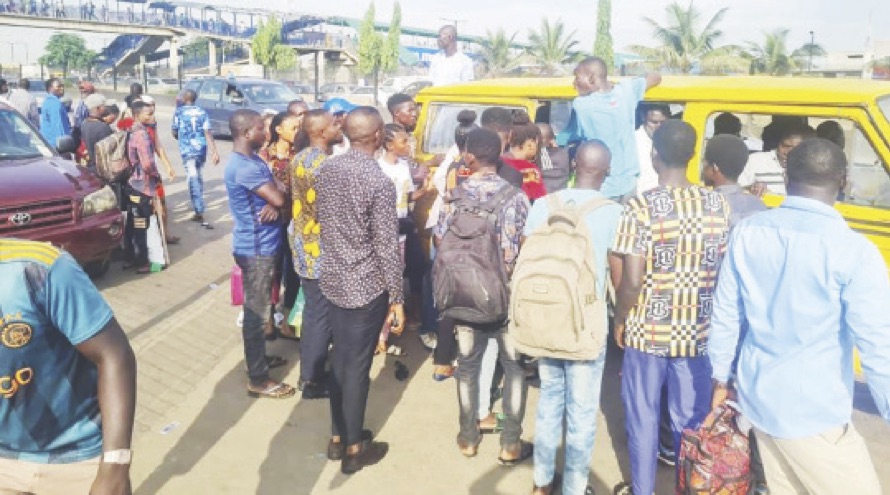
The YCE also felicitated present and past Nigerian leaders, the leadership of the National Assembly and state Houses of Assembly, as well as Nigerians at home and abroad on the 66th Independence anniversary.
The elders congratulated President Bola Tinubu, saying they were pleased to witness what they described as his dynamic, progressive leadership.
The council said its vision was of a Nigeria where every citizen could develop his or her potential, enjoy a genuine sense of belonging and contribute meaningfully to the growth and stability of the nation.
Corruption, weak institutions undermining nation’s progress-MBF
The Middle Belt Forum (MBF), the umbrella socio-cultural organisation representing the multi-ethnic nationalities of Nigeria’s central region, spanning Plateau, Benue, Nasarawa, Taraba, Niger, Kwara, Kogi, Southern Kaduna and the Federal Capital Territory, issued a declaration on the state of the federation through its National Spokesperson, Luka Binniyat.
The MBF asserted that 66 years of independence have produced widespread disappointment because the Nigerian state has been undermined by systemic corruption and institutional decay.
The twin problems, according to the MBF, have starved the country of developmental capital, crippled public infrastructure, fuelled poverty and allowed non-state armed actors to challenge the territorial sovereignty of the nation.
Binniyat explained that corruption in Nigeria is not merely an isolated moral failure but an institutionalised system that enriches a section of the political elite at the expense of the majority.
Public funds intended for regional security, medical facilities, public education and agricultural development are, according to the MBF, routinely diverted without adequate consequences because enforcement agencies, judicial mechanisms and oversight bodies remain weak and politically dependent.
The Middle Belt Forum focused on the breakdown of the social contract and electoral system, outlining interventions it considers necessary to restore public confidence.
The MBF said democracy is weakened when citizens lose confidence in the electoral umpire. Binniyat argued that when politicians believe elections can be determined by judicial technicalities, financial inducements or administrative manipulation rather than the ballot box, they govern with little regard for the welfare and security of citizens.
The body demanded greater electoral transparency, electronic transmission of results and operational independence for the Independent National Electoral Commission (INEC).
The MBF rejected the current political and constitutional framework, declaring it inadequate to address the country’s diversity and developmental needs.
The forum demanded implementation of recommendations contained in the 2014 National Conference Report, including the creation of new states to address perceived marginalisation, devolution of key responsibilities from the centre to subnational units and establishment of a multi-tier policing system.
“The present political and constitutional arrangement has not addressed Nigeria’s longstanding problems of injustice, insecurity, fiscal federalism, poor governance and unequal development,” he said.
“We believe the Constitution should be amended to restructure the country along with the broad recommendations of the 2014 National Conference,” Binniyat said.
Relying on Sections 14(2)(b) and 16(2)(d) of the 1999 Constitution, the MBF demanded that access to basic food, clean drinking water, adequate shelter, healthcare and security be transformed into justiciable constitutional rights.
The MBF said the Middle Belt, endowed with solid minerals, arable agricultural land and water resources, continues to suffer environmental degradation and federal neglect.
It insisted that federating units should exercise greater control over solid minerals and natural resources within their territories while paying agreed taxes or royalties to the central treasury.
The MBF warned that no nation can achieve lasting stability while treating minority nationalities as second-class citizens or exposing agrarian communities to violence without adequate state protection. It maintained that restructuring along the lines of true federalism remains essential to addressing national instability.
Misgovernance, corruption demand structural rejigging – Afenifere
The pan-Yoruba socio-political organisation, Afenifere, adduced corruption and bad leadership to be the major challenges that the country is facing according to
In response to Saturday Sun’s inquiry, the National Publicity Secretary of the body, Mr. Jare Ajayi, went down memory lane by recalling that the reasons given by those who executed the first military coup in Nigeria in January, 1996 are still there today, 60 years after.
According to him, Major Chukwuma Nzeogwu, the spokesman of the military junta that displaced the politicians ruling the country then, specifically mentioned corruption and misgovernance as the main reasons for their action. He added that the third point made was the breakdown of democratic governance as a result of what happened in the Western Region then.
“It would be recalled that the coup plotters described the ruling political class as ‘political profiteers, swindlers’ who were demanding ‘10 per cent’ as bribes on government contracts. They went further to accuse politicians of institutionalising nepotism, graft and the misuse of public funds at the expense of national development.
“Sixty years after, the situation has not changed, especially in the areas of corruption and misuse of public funds.”
Regarding what Nigerian leaders can do for everyone to have a sense of belonging, Afenifere is of the view that politicians and other public office holders should display greater sense of equity, justice and fairness in the discharge of their responsibilities.
“They should also be more prudent. A stop needs to be put to the lip-service that is characterising the federal character and other policies meant to foster a sense of unity currently.
“Given what has been happening in this respect over the years however, it is certain that the existing structure may not allow this to happen. This is why we in Afenifere have been agitating for the restructuring of the country, such that there would be more devolution of power to the constituent entities. If the constituent entities are in a position to control their affairs as obtained before independence and in the early years of independence, the situation would be different.
“It is gratifying that President Ahmed Bola Tinubu, in his 2026 Independence Day broadcast, recognised the challenges facing the country. He assured us that the country of his administration’s focus is a Nigeria of abundance and opportunity, a nation where prosperity is broadly shared, where every child can dream beyond the circumstance of his birth. He enjoined everyone of us to focus on this with faith in ourselves, faith in our country, and faith that the sacrifices we have made will yield their reward.”
Ajayi who expressed the hope that the government at every level in the country will work on ‘reducing the cost of living’ as promised by Mr. President by, among others “cutting the cost of producing and transporting goods and services.”
Afenifere spokesman lauded President Tinubu for the efforts his administration has been making in unbundling the items on the Exclusive Legislative List.
He added, however, that the superstructure on which the reforms rest needs to be rejigged for an enduring and greater impact to be felt, “hence the need to restructure as we have been canvassing.’
MACBAN identifies two trends damaging Northern Nigeria
Alhaji Muhammad Dan-Ali, Zonal Chairman of the Miyetti Allah Cattle Breeders Association of Nigeria (MACBAN) for the North-West zone, delivered a grassroots assessment of the socio-economic and security challenges affecting rural communities across Kebbi, Sokoto, Zamfara, Niger and Kaduna states.
Speaking in Birnin Kebbi, he noted two trends he said were damaging Northern Nigeria. According to him, they are escalating rural violence and the widening gap between the political elite and impoverished citizens.
He recalled that during his youth, children of traditional rulers, governors, commissioners and wealthy merchants attended the same public schools, used the same hospitals and lived in the same neighbourhoods as children of peasant farmers and pastoralists.
Today, he said, political elites have increasingly isolated themselves, sending their children to elite private schools or universities abroad, using foreign hospitals and living in fortified urban enclaves, detached from the decline of public infrastructure and security in rural areas.
Providing an account of rural security failures, Dan-Ali alleged that unmonitored vigilante groups and informal security actors, including the Yan Sakai, have aggravated inter-ethnic violence.
He cited incidents in Borgu and Agwara local government areas of Niger and Kebbi states, where he alleged that vigilantes attacked pastoralist communities, confiscated livestock, destroyed homes and expelled residents.
He said when displaced communities lose confidence in formal security and justice systems, they may retaliate, creating a cycle of violence across parts of the North-West and Middle Belt.
Dan-Ali identified the consequences as including disruption of rural education and food production, saying insecurity has forced farmers and pastoralists from their lands and contributed to food shortages and rising prices.
He called for government-backed inter-ethnic reconciliation and urged governors and public officials to remain on the ground during crises and mediate disputes between farming and pastoral communities.
MACBAN also called for greater judicial, electoral and constitutional independence, including operational and financial independence for judges and INEC.
Dan-Ali urged voters to reject money politics and hold public officials accountable for the protection of lives and management of public resources.
Decentralised security, fiscal autonomy, constitutional reform for minority protection – SOKAPU
The Southern Kaduna Peoples United Association (SOKAPU), representing ethnic national minorities across Southern Kaduna and the wider Middle Belt, released a comprehensive Independence Day document authored by its National President, Tabara Samuel Kato.
The body offered a structural analysis of the historical, security, economic and institutional failures that have characterised Nigeria’s post-independence history.
Kato noted that from the 1914 amalgamation of the Northern and Southern Protectorates by Lord Lugard to independence in 1960, Nigeria was assembled without a genuine national consensus among its diverse ethnic nationalities. Consequently, successive military and civilian administrations have struggled with leadership deficits, corruption, economic mismanagement, weak national cohesion and infrastructural decay.
SOKAPU criticised Nigeria’s continued reliance on a mono-product economy centred on crude oil exports. It said the structural economic weakness has left the national budget exposed to global oil-market volatility, contributing to currency devaluation, high inflation, rising living costs, soaring food prices and youth unemployment.
“We have principally been running on a mono-economy; Nigeria relies heavily on crude oil exports for government revenue and foreign exchange, making the economy vulnerable to global price shocks,” he said.
On security, SOKAPU assessed the human toll of violence across the Middle Belt and Northern regions.
The association noted that insurgency in the North-East, banditry in the North-West and attacks on farming communities in the Middle Belt have displaced populations, destroyed agricultural ecosystems and deepened inter-ethnic and inter-religious mistrust.
To address the threats, SOKAPU presented a five-point reform blueprint.
It demanded the constitutional creation of state police and community-based law-enforcement frameworks.
Kato stressed that local police officers drawn from indigenous communities, who understand local terrain, languages and cultural dynamics, are essential to combating rural banditry, terrorism and land disputes.
The association called for a reduction of federal power, advocating that Nigeria’s six geopolitical zones operate as competitive economic blocs. SOKAPU argued that regional competition would encourage subnational leaders to innovate, exploit local agricultural and mineral resources and build autonomous industrial bases rather than rely on monthly federal allocations.
To combat corruption and public fund leakages, SOKAPU advocated full digitisation of federal, state and local government procurement processes.
Kato argued that mandatory e-governance platforms would track public expenditure, expose ghost workers, curb inflated contract bidding and ensure that appropriated capital funds are used for roads, schools and hospitals.
SOKAPU also called for constitutional amendments targeting Chapter II of the 1999 Constitution, particularly provisions it said make government obligations regarding healthcare, free education, clean environment, housing and employment non-justiciable.
The association insisted that citizens should have legal avenues to challenge government failure to provide basic socio-economic rights.
The group warned against policies that could alter the demographic or land rights of indigenous minority populations under the guise of security or agricultural development. It called for legal frameworks to protect ancestral lands, resettle internally displaced persons in their home communities and provide restorative justice for victims.
SOKAPU further stated that while top-down fiscal reforms such as fuel subsidy removal and foreign-exchange liberalisation have inflicted immediate hardship on millions of families, their long-term validity should be judged by whether they lead to security, economic stability and restoration of dignity for all federating nationalities.
Nigeria failed to forge consensus on core developmental priorities at independence – Ochetoha k’Idoma
Professor Yakubu Ochefu, President of Ochetoha k’Idoma, the central socio-cultural organisation representing the Idoma ethnic nationality of Benue State, offered a critique of Nigeria’s historical trajectory, focusing on the breakdown of elite consensus and escalating insecurity affecting minority populations.
He explained that from independence in 1960, Nigeria’s political elite failed to forge a unified national vision or reach consensus on core developmental priorities.
Comparing contemporary challenges with those of the early independence era, he noted that while highway robbery and communal friction existed in the 1960s, today’s security crisis is unprecedented in scale and complexity.
He said well-armed criminal syndicates, non-state militias and terrorist groups now operate across rural territories, dispossessing farmers of ancestral lands and terrorising communities through mass kidnappings for ransom.
Ochefu criticised the Federal Government’s reliance on centralised military approaches, arguing that top-down operations often fail to address social justice, local intelligence and community participation.
Ochetoha k’Idoma called for the constitutionalisation of the principles of the 1958 Henry Willink Commission, established to examine the fears of minority groups regarding domination by larger ethnic blocs.
Ochefu said the commission’s recommendations on minority representation, targeted infrastructure and protection against cultural domination should be reflected in a new constitutional framework.
The Idoma leader also advocated a multi-tier policing architecture comprising Federal Police for inter-state crimes, border security and counter-terrorism; State Police for state-wide law enforcement; and Local or Municipal Police for rural communities and farmlands.
Ochefu further called for equity and social justice, including employment opportunities for unemployed youths, protection of farmers and equal access to public institutions.
Ochetoha k’Idoma voiced support for comprehensive restructuring, advocating strong federating units capable of developing their natural, mineral and agricultural resources while contributing fairly to national institutions.
NSCIA pinpoints major factor slowing Nigeria’s progress since 1960.
The Nigerian Supreme Council for Islamic Affairs (NSCIA), representing Islamic leadership across Nigeria, delivered its 66th Independence assessment through its Public Affairs Officer, Abbas Jimoh.
The NSCIA identified the persistent lack of synergy between political leadership and citizens in prioritising national development above personal, sectarian and narrow interests as a major factor slowing Nigeria’s progress since 1960.
The apex Islamic council stressed that sustainable nation-building requires just, responsible and accountable leadership.
The NSCIA reminded public office holders that leadership is a sacred trust, or Amanah, for which they will account not only to the electorate but ultimately to Almighty Allah.
The council urged leaders to fulfil campaign promises, act fairly towards citizens regardless of creed or region and implement policies that directly alleviate economic hardship.
While emphasising justice, equity, moral rearmament and economic relief, the NSCIA maintained a neutral position on specific political models or constitutional structures.
It affirmed that decisions on the political arrangement or constitutional framework best suited to Nigeria’s future should rest collectively with Nigerians through peaceful and inclusive national dialogue.
Failure of leaders, citizens to embrace Nigeria as shared responsibility, bane of development – Rev Hayab
Reverend John Joseph Hayab, former Chairman of the Christian Association of Nigeria (CAN) in the 19 Northern States and Abuja, provided a moral, social and political diagnosis of Nigeria’s post-independence challenges, focusing on national patriotism and identity politics.
He asserted that Nigeria’s primary obstacle to development over the past 66 years has been the failure of leaders and citizens to embrace the nation as a shared responsibility.
He observed that whenever national issues arise, Nigerians often retreat into tribal, religious, regional and personal enclaves, defending narrow interests at the expense of the national good.
“I wasn’t there when our founding fathers agreed to start what we celebrate today as Nigeria, but it seems this genuine patriotism that is supposed to build a nation has never really existed,” Hayab stated.
The cleric criticised elected lawmakers and public officials who view their positions through narrow constituency or religious lenses. He stressed that although representatives are elected from specific constituencies, their constitutional responsibility is to serve the entire Federal Republic of Nigeria.
Hayab said political leaders sometimes resort to ethnic and religious identity politics when they fail to deliver infrastructure, secure lives, create jobs or manage the economy, thereby diverting public attention from accountability.
He also criticised what he described as the government’s failure to confront emerging criminal groups decisively, insisting that crime should be treated as crime regardless of the ethnicity or religion of perpetrators.
Hayab decried the practice whereby qualified graduates allegedly require political sponsorship or payment to influential politicians to gain public-sector employment or security-force recruitment.
He called for transparent, merit-based recruitment through open screening and competitive testing.
On electoral choices, Hayab used an airline analogy, saying passengers care about a pilot’s expertise and ability to fly them safely rather than the pilot’s tribe, state of origin or religion.
He urged Nigerians to apply the same principle to political leadership by assessing candidates based on competence, track record, character and capacity to deliver good governance.
Hayab called on President Bola Tinubu, state governors and lawmakers to use their authority to improve public healthcare, revitalise education, secure rural communities and build a country of which Nigerians at home and abroad can be proud.
Cross River traditional rulers lament capital flight, poor rural governance, economic distress
Paramount Ruler of Ikom Local Government Area in Cross River State, Ambassador Takon Atangba Nkpa, also spoke on the 66th independence anniversary .
He mentioned capital flight, poor rural governance and severe economic distress among working-class families as part of the challenges confronting the country.
He, lamented that despite Nigeria’s human, agricultural, maritime and mineral wealth, the country continues to underperform because of what he described as a lack of patriotism among political and business elites.
The monarch singled out domestic capital flight, noting that wealthy Nigerians routinely invest money earned domestically in real estate, businesses and banks abroad rather than establishing industries in their communities to employ local youths.
He argued that if a significant proportion of such investments had been directed into agro-processing, manufacturing and infrastructure within Nigeria, the domestic economy would be more resilient.
Clan Head of Kasuk Qua Clan II in Calabar Municipality, Ntoe (Dr.) Ededem Okon Ayito III, said at 66, Nigeria is displaying signs of advanced age without corresponding economic stability, infrastructure and social development.
The monarch decried the hardship facing ordinary citizens and civil servants.
Ntoe Ayito III questioned how a civil servant earning N70,000 monthly could survive amid rising fuel prices, rent, transportation costs and food prices while paying school fees for several children.
He warned that economic hardship is forcing poor families to rely heavily on cheap carbohydrates, potentially worsening malnutrition and other health problems.
He appealed to President Tinubu and state governors to take measures to ease public suffering. If fuel and food prices cannot be reduced immediately, he called for wage adjustments, subsidised public transportation and targeted agricultural support to help reduce food prices.
Kogi stakeholders decry minority marginalisation, demand internal restructuring, power rotation
In Kogi State, community leaders, public analysts and ethnic representatives used Nigeria’s 66th Independence anniversary to articulate grievances over political marginalisation, power rotation and restructuring.
Central to the submissions was the position of the Okun-Yoruba ethnic group, which described itself as the third-largest ethnic nationality in Kogi State and complained of decades of exclusion from the state’s governorship.
Speaking for the Okun nation, community leader and public analyst, Chief Musa Bakare, said since the creation of Kogi State, the Okun-Yoruba population had not produced a governor.
He contrasted this with the Igala ethnic group, which held the governorship for more than 18 consecutive years, and the Ebira ethnic group, which he said is completing a 12-year tenure.
Christian leaders in the state also noted that no Christian has been elected governor of Kogi State during any civilian dispensation since its creation.
Bakare argued that administrative boundaries created by military decrees should not be treated as permanent definitions of human identity or political destiny.
He emphasised the Okun people’s Yoruba cultural, linguistic and historical affinities and argued that where boundaries create political marginalisation and restrict economic opportunities, there should be room for democratic discussions on boundary adjustment or state creation.
Through their umbrella body, the Okun-Yoruba reiterated two options, which are formal national restructuring that would realign Okun communities in Kogi with their kith and kin in the South-West, or creation of a new ‘Kabba State’that will comprise contiguous Okun communities across Kogi, Kwara, Ondo and Ekiti states.
Kogi stakeholders also advocated constitutional amendments that would establish a single non-renewable five-year tenure for state governors and the President, alongside mandatory power rotation among the three senatorial districts of each state.
Bakare stated that political maps and state boundaries can only succeed when institutions operating within them deliver justice, inclusion, dignity and economic prosperity for citizens.