Follow Us on Google
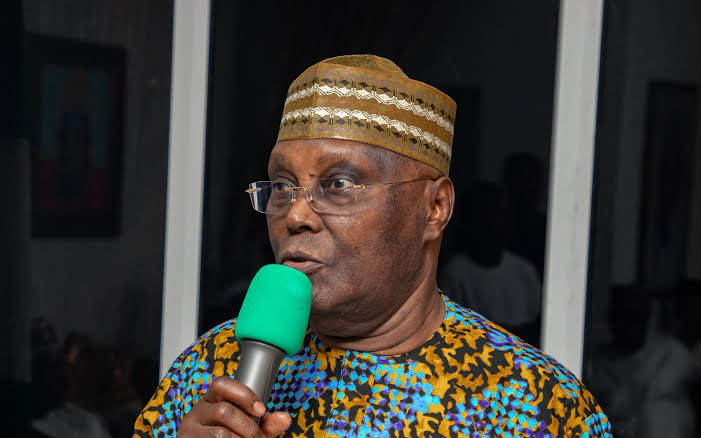
From Juliana Taiwo-Obalonye, Abuja
The Presidency has warned that former Vice-President Atiku Abubakar’s proposed production subsidy on petroleum products would drain public revenue and reverse the gains of the removal of fuel subsidy.
Special Adviser to President Bola Tinubu on Media and Public Communications, Sunday Dare, said Nigeria did not have enough unencumbered crude oil to sustain the proposal without undermining government revenue and existing contractual obligations.
Dare, in a statement on Sunday, said that although Nigeria currently produced about 1.8 million barrels of crude oil daily, fewer than 700,000 barrels were available to the government after meeting contractual and statutory obligations.
He was reacting to Atiku’s criticism of the Federal Government’s 30-day petrol discount and proposed price-modulation framework, which the former vice-president described as a temporary measure incapable of providing lasting relief to Nigerians.
Atiku, presidential candidate of the African Democratic Congress (ADC), has proposed what he calls a capped production subsidy for petroleum products refined locally, arguing that it would support domestic refining and bring down pump prices.
But Dare dismissed the proposal as financially unsustainable, saying it failed to take into account how much crude the Federal Government could actually deploy after production costs, royalties, joint venture agreements, production-sharing contracts and other obligations had been settled.
Citing figures attributed to the Coordinating Minister of the Economy and Minister of Finance, Taiwo Oyedele, Dare said Nigeria’s entire crude production could not simply be diverted to local refiners.
“After accounting for these statutory and contractual obligations, Nigeria has fewer than 700,000 barrels per day of unencumbered ‘free crude’ to give away.”
According to him, large domestic refiners would consequently continue to require crude purchases from other sources because the government could not allocate all Nigeria’s production to them without jeopardising revenue and international supply commitments.
“Mega-refineries like the Dangote Petroleum Refinery require immense daily feedstock that far exceeds what the state can freely provide without breaching existing international supply contracts or bankrupting national revenues,” Dare said.
He added: “To propose a blanket ‘targeted production subsidy’ on crude without the physical, unencumbered volume to back it up is pure economic illiteracy. It invites the very opacity, fraudulent round-tripping and fiscal haemorrhage that crippled Nigeria for decades under the old subsidy regime.”
The presidential aide also faulted comparisons between crude oil and locally produced agricultural commodities, insisting that crude production and supply were governed by complex contractual obligations and international market conditions.
He maintained that being an oil-producing country did not mean the government could supply crude cheaply to refiners without accounting for production costs, contractual commitments and foregone public revenue.
Dare also defended NNPC Retail’s 30-day petrol discount, rejecting Atiku’s suggestion that the intervention amounted to a return to subsidy.
According to him, the discount was initially introduced to mark Nigeria’s 66th Independence anniversary and subsequently extended for another 30 days to cushion the impact of rising international crude prices.
“Atiku’s attempt to frame NNPC Retail’s decision to forgo its profit margin as a ‘return to the fuel subsidy’ is a deliberate mischaracterisation,” he said.
Other News
“When NNPC Retail agrees to sell fuel at landing cost for 30 days during an unprecedented global crude price spike, it is not writing checks to opaque import cartels. It is leveraging its corporate balance sheet to absorb short-term global volatility.”
Dare said the arrangement was fundamentally different from the previous subsidy regime because the intervention was being undertaken through NNPC Retail’s commercial balance sheet rather than through open-ended payments from the Federation Account.
He also defended the proposed interim ceiling of ₦1,350 per litre on ex-gantry costs, describing it as a price-smoothing mechanism designed to prevent sudden fluctuations in fuel prices from immediately translating into permanent increases in transport fares and other costs.
Under the proposed framework, he said refiners and importers would temporarily absorb costs above the ceiling and recover the difference when international crude prices declined or the exchange rate became more favourable.
“The ceiling protects commuters from permanent hikes in transport prices,” Dare said, adding that the framework would be reviewed monthly on the basis of published cost audits to prevent the accumulation of undisclosed liabilities.
He listed the expansion of compressed natural gas infrastructure, the naira-for-crude arrangement for domestic refiners and the proposed strategic energy reserve among measures being pursued by the Tinubu administration to reduce Nigeria’s vulnerability to international oil-market shocks.
The presidential aide also defended the removal of petrol subsidy in 2023 and the unification of the foreign exchange market, arguing that both reforms were necessary to address long-standing distortions in the economy.
According to him, the old subsidy system placed enormous pressure on government finances while encouraging smuggling, arbitrage and opaque payments.
He said savings and additional revenues arising from the reforms had helped to increase allocations to states and local governments through the Federation Account Allocation Committee and provided resources for social intervention programmes.
Dare said the administration preferred targeted measures, including cash transfers, support for small businesses and alternative-energy programmes, to restoring a broad subsidy system.
Atiku had, however, argued that his proposal differed from the abolished petrol subsidy because it would be capped, budgeted and restricted to verified petroleum products refined in Nigeria.
He has also criticised the 30-day NNPC intervention as a temporary palliative, asking what would happen to consumers after the discount expired.
But Dare accused the former vice-president of reducing a complex energy and fiscal question to campaign politics.
He maintained that Nigeria required policies that addressed structural weaknesses in the economy rather than measures which, in the Presidency’s view, could reopen the fiscal burden associated with the former subsidy regime.
The exchange comes amid continuing concerns over high petrol prices and their impact on transportation, food prices, businesses and household incomes as the debate over the government’s energy policy increasingly becomes an issue in the 2027 presidential campaign.
I tightened the repetitions around the 1.8 million/700,000-barrel argument and brought the central clash — Atiku’s lasting production subsidy versus the Presidency’s temporary price-smoothing intervention — into sharper focus.