Follow Us on Google
•Say basic services at PHCs becoming unaffordable
From Fred Ezeh, Abuja
Mothers, particularly pregnant and nursing mothers who are major visitors at Primary Health Care (PHC) centres across Nigeria, are grumbling and complaining about the rising cost of basic health care services at PHCs, particularly in the ones in Abuja.

Ideally, services at PHCs ought to be free or at least rendered at a very discounted rate. They are specifically set up to serve people in rural communities, providing them with basic health services and also making referral to secondary and tertiary health facilities, when necessary.
But findings revealed that the PHCs are now lacking in several areas, particularly in quality and affordable services, hence the drop in trust and confidence of the women and children that ought to visit the PHCs as a first point of call for any health care challenge.
Perhaps, the effect of inflation as evident in high cost of living in Nigeria may not be far from the cause of the increasing cost of services at the PHCs, as well as other unforeseen challenges, which might include unmotivated manpower.
Few years ago, former President Muhammadu Buhari, signed the National Health Act, which recommended that one per cent of the funds in the Consolidated Revenue Account should be channeled to Basic Health Care Provision Fund (BHCPF) to majorly support health care services at PHCs across the country.
BHCPF was designed to carter for basic health care services for rural women and men that visit PHCs, giving them the right to enjoy certain kind of services at the PHCs either out rightly free or at very good discounted rate.
BHCPF implementation
Former Minister of Health, Prof. Isaac Adewole, flagged off the implementation of the BHCPF in his home state, Osun, in 2019, and had expected that the project would run its course. But shortly after, his successor, Dr. Osagie Ehanire, halted the programme with a view to reviewing the policy and its operations.
But few years after, little or no improvement has been recorded and the expected impacts not felt by health care seekers who often visit PHCs despite billions of naira spent thus far.
In Abuja, there are quite a number of PHCs located at different communities to provide primary health care attention to mothers and children. But increasingly, the PHC facilities are being overwhelmed due to unexpected upsurge in patronage apparently as a result of increasing population in the FCT.
There are also indications that pregnant women and nursing mothers from neighbouring states, notably, Nasarawa, Kaduna, Kogi, and Niger have found comfort in services being provided by PHCs in FCT, hence the increased patronage from these women.
While services have improved in some PHCs in FCT, otherwise became the case in several other ones, especially the ones located in several communities that receive little or no attention from the FCT Administration.
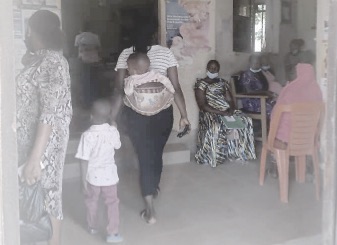
Daily Sun visited some PHCs in some communities in FCT. At different PHCs, patients, mostly mothers, unexpectedly, registered different kinds of complaint about the quality of services being received at the PHCs.
While some mothers confessed to enjoy improved services at the PHCs lately, otherwise experiences were the case of some mothers. They complained about several lapses and shortcomings in the PHC system particularly the cases of increasing drop in quality of services being offered to pregnant mothers.
A pregnant mother, Catherine Agah, told our Correspondent that her recent visit to PHC in Jikwoyi, Abuja, recently, left her with a serious concern. She said that cost services and basic drugs at the PHCs are beginning to be “out of reach” for some people who visit the facility. “Things are increasingly being tough for us. I registered for my antenatal in the PHC and their services have not been impressive at all.
“The PHC is lacking in quality routine drugs for pregnant mothers. All we keep hearing is ‘this or that drug is out of stock’. I don’t know if I visit at wrong time or the case is like that for all pregnant women who visit the PHC, but I have had the experience twice. In place of the routine drugs, which are unavailable, they would give you the ones that would be unaffordable for majority of the mothers. The women would then be left with the only option of grumbling.”
She said she’s aware that government has been “investing” in the basic health care services through local and international interventions but “it seems the investment is not enough to carter for increasing number of women who are reporting to PHC facilities for different kind of primary health care services.
At Kobi PHC, several health care seekers appreciated the approach being used by health care workers to offer services to the people despite several challenges including insufficient manpower in the facility which often force health care seekers to spend long hours before getting the required services, while the workers work extra hours without appreciation.
A pregnant mother identified as Magajiya Zuntu, said she lives within the Kobi community and had patronized the PHC for over 10 years, but confessed that there has been consistent improvement in services over the period.
She said: “This is my third pregnancy and I had all my babies here in this Kobi PHC. Before now, the PHC was in a terrible state. Though not much has changed beginning with the edifice, but there’s little improvement in the services.
“But lately, we have noticed that thing are beginning to change from what we used to know. Could it be because of rising cost of living due to inflation or what? They are beginning to charge us for some kind of services and drugs that were hitherto free. It’s understandable that the economy is not friendly at all but our husbands are not finding it easy. We need serious intervention.
“For instance, there’s no functional scanning machine in this Kobi PHC. The workers are left with the option of directing mothers to a particular scan centre outside the kobi community for scan. I have just been asked visit that place to carry out scan. Such services will cost me huge fortune including transport fare, which is on the rise. We have suggested that a scanning machine be procured and install in the facility to help us but that has not been done and there’s no hope of that being done any time soon.”
Another mother, who identified herself as Jessica Caroline, said she came from Asokoro village to patronize the PHC not minding the distance, stress and financial cost.
She said: “Services here seems to be better than where I came from. Workers here seem to be considerate and have human feelings more than other places I have been. It’s obviously not because they are well paid, but because of the passion and commitment they have for the job.”
She complained about the high cost of drugs that was given to her and other services that was recommended which she must pay to obtain, and appealed to the government to assist the women bring down the cost of services at the PHCs and also procure scanning machine and delivering items for the facility.
Shortage of childbirth equipment
Similarly, one of mothers complained about shortage of childbirth equipment that would make it safer and convenient to have a baby in the PHC. “Many pregnant mothers who are scheduled for delivery here are always afraid and skeptical because of inadequate equipment that would guarantee safe delivery.”
Several other women commended the promptness of the PHC in terms of immunization and other relevant services, and called for urgent renovation of the PHC so it can look neat and habitable for me.
However, there are signs that the rising cost of living in Nigeria as a result of inflation is obviously being felt in the health sector particularly the PHCs centres.
Statutorily, PHCs are the first point of call for health care seekers in Nigeria particularly women and children at the local communities. Services such ante-natal, post-natal, immunization services, are obtained at the PHCs. PHCs are also expected to immediately refer patients secondary health care system for cases they could not handle for adequate attention.
But as time went by, visits to the PHCs began to drop due to poor services, perceived unfriendliness of health workers, insufficient manpower and lost of confidence in the services of the PHCs.
However, efforts are being made by different states to revive and equip existing PHCs and also build new ones that would serve the primary health care needs of people at the local communities.
NPHCDA a critical element
Federal Ministry of Health through the National Primary Health Care Development Agency (NPHCDA) has continually developed policies and programmes to strengthen services at the PHCs.
NPHCDA, at different fora, maintained that it has huge responsibilities to guarantee quality services at thousands of PHCs across the country through periodic manpower training, logistics supports, technical support and other helps they could render to the PHCs.
Immediate-past Executive Director of NPHCDA Dr. Faisal Shuaib, said the Agency’s statutory responsibilities are to provide support to the National Health Policy for the development of PHCs; technical support for planning, management and implementation of PHCs; mobilization of resources, nationally and internationally for the development of PHCs.
He added: “NPHCDA also provide support for the monitoring and evaluation of the National Health Policy, promote health manpower development needed for PHCs through orientation and education, in addition to providing training support to the village health workers.
“NPHCDA is also responsible for promoting health system research by supporting problem-oriented health system research, and also promote technical collaboration by stimulating universities, NGOs and
International Agencies, among several other interventions all geared towards efficient and effective PHC system.”
Director of Research and Statistics at NPHCDA, Dr. Abdullahi Garba Bulama, told Daily Sun, that NPHCDA is a critical element of the Nigeria health care system due to the role it plays in ensuring an improved quality of health care particularly at the community level.
He said: “We set policies in place to ensure that PHC services are responsive to the needs of the people, friendly, accessible, and affordable.
Our target is to have one functional PHC per political ward in Nigeria. These PHCs must have personnel that can cover 24-hour services, with befitting infrastructure. Remember that the states own the PHCs.
“Our main work is more of technical and programme support to the local government towards the implementation and provision of PHC services. People should demand for services and speak up when the services run short of expectations.
“Recently, we recommended a setting up of community health influencers and promoters’ services in all political wards in Nigeria, and 27 states have kicked into the programme. 10 women per political ward in Nigeria is huge number and resources are required to enable them work effectively.
“It is a group of 10 experienced and respected women who are resident in the respective communities that were engaged in every political ward to assist in reaching out to women with advocacy messages and sensitization, and the need to patronize the PHCs.
“Aside that, the health influencers also engage the rural women on health talks like simple hygiene, pregnancy care, child care and several other related issues. For us, they serve as the bridge between the PHCs and the community.”
Meanwhile, the new NPHCDA Executive Director, Dr. Muyi Aina, maintained that the Agency was committed to its responsibility of empowering states and their local governments to achieve and sustain Universal Health Coverage (UHC) and better healthcare outcomes using good governance reform initiatives that lead to institutional development to improve people’s health status and help the government plan the PHC sector.
“We also maintain and strengthen local and international partnerships with institutions in the primary health sector, providers, and other stakeholders to promote the implementation of primary health care services in Nigeria. We have also developed methods of mobilization and coordination of the entire spectrum of stakeholders involved in PHC services,” the official added.