Follow Us on Google
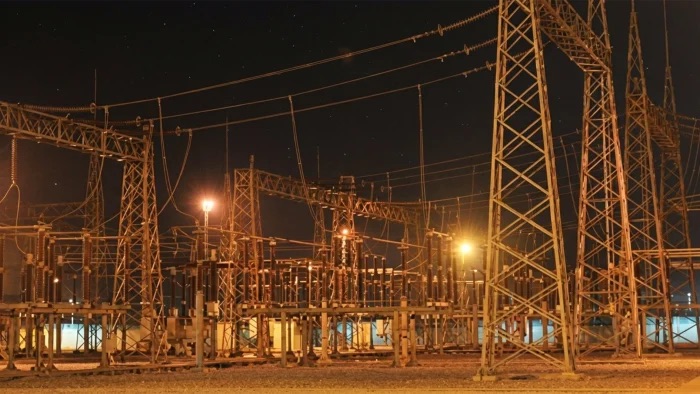
Experts have identified liquidity challenges in the power sector, inadequate infrastructure, weak market incentives and regulatory bottlenecks as the biggest threats preventing Nigeria from realising its ambition of becoming a globally competitive gas economy.
The experts stated this yesterday during a strategic panel session at the 2026 NOG Energy Week titled “Realising Future Gas Economies: Building Secure, Integrated and Globally Competitive Hubs.”
The panellists, drawn from NNPC Limited, NLNG, Falcon Corporation and Levene Energies, argued that while Nigeria possesses one of Africa’s largest gas reserves, translating those resources into sustainable economic value will require coordinated investments across the entire gas value chain.
Focal Person of the NNPC Gas Master Plan Implementation Assurance Team at NNPC Limited, Mr. Ekpei Ukam, said Nigeria’s challenge is no longer the availability of gas resources but the effective implementation of the Gas Master Plan.
According to him, the country already knows where future gas supplies will come from, with the Gas Master Plan identifying gas hubs and supply sources. He said the priority now is synchronising gas production, infrastructure development and market demand to ensure investments remain commercially viable.
“The challenge is not the resource. Nigeria has significant gas resources. What is required is disciplined execution, connecting supply, infrastructure and markets so that the entire value chain develops in a coordinated manner,” he said.
Ukam stressed that pipeline expansion, reliable transportation infrastructure, credible markets and commercially attractive incentives are critical to unlocking investment.
He concluded that Nigeria’s ambition of building secure and globally competitive gas hubs would depend on disciplined implementation rather than new policy pronouncements, adding that collaboration between government, investors and regulators, backed by timely project execution, would determine whether the country succeeds in transforming its abundant gas reserves into long-term economic growth.
Speaking on monetising stranded gas, General Manager, Commercial at NLNG, Timothy Fakrogha, described gas development as one of the most capital-intensive businesses globally, saying Nigeria must move away from isolated gas projects towards integrated gas hub development.
He explained that the Gas Master Plan promotes clustering gas assets around shared processing plants, pipelines and infrastructure to lower development costs and improve project economics. According to him, the proximity of gas fields, existing infrastructure, market access and resource quality should determine how projects are clustered to maximise efficiency.
“It is no longer economical to develop standalone gas projects. Shared infrastructure and integrated gas hubs provide a more efficient pathway for commercialising stranded gas resources,” Fakrogha said.
Addressing concerns over the balance between domestic gas utilisation and exports, he dismissed suggestions that both markets compete against each other. He argued that LNG exports generate the foreign exchange needed to finance domestic infrastructure while also supporting Nigeria’s energy transition.
Other News
Citing NLNG’s domestic LPG programme, he said the company significantly increased supplies into the Nigerian market after deciding in 2021 to domesticate all its liquefied petroleum gas production, with domestic volumes rising substantially by the end of 2025.
He added that upcoming LNG, fertiliser and gas processing projects would further increase gas availability for both export and domestic consumption.
General Manager, Commercial at Falcon Corporation, Mr. Oluremi Rufai, argued that resolving Nigeria’s power sector liquidity crisis is fundamental to expanding domestic gas utilisation.
He noted that although gas demand is growing in the industrial and commercial sectors, the electricity market continues to struggle because generating companies are owed substantial sums, discouraging investment across the value chain.
“The power sector remains the largest potential demand centre for gas, but unless government decisively addresses the sector’s liquidity crisis, domestic gas utilisation will remain constrained,” he said.
Rufai also called for deliberate planning of industrial corridors to reduce the high cost of connecting customers through gas pipelines, warning that fragmented industrial development raises infrastructure costs and limits gas penetration.
On the regulatory front, he urged regulators to simplify licensing procedures, digitise permit approvals, introduce single-window application systems and establish realistic timelines to reduce project delays and financing costs.
Group Managing Director of Levene Energies Limited, Mrs. Nneka Arowolo, said attracting long-term investment into Nigeria’s gas industry would depend largely on regulatory certainty.
According to her, investors require a predictable business environment where rules are clear, transparent and consistently applied. She urged regulators to position themselves as enablers of investment rather than merely compliance agencies, noting that policy certainty remains one of the strongest drivers of capital inflows into the gas sector.
The experts also identified gas aggregation as a critical instrument for expanding Nigeria’s domestic gas market but warned that credit risks, particularly within the electricity value chain, must first be resolved to make aggregation effective.
While acknowledging progress made by the Gas Aggregation Company of Nigeria in matching suppliers with buyers, the panellists argued that unresolved payment defaults in the power sector continue to discourage gas producers from committing additional volumes to the domestic market.
They maintained that government-backed mechanisms to address credit risk would improve investor confidence, stimulate fresh investment and accelerate the growth of Nigeria’s domestic gas market.