Follow Us on Google
By Chinenye Anuforo
Stakeholders in the seafood value chain have raised concerns over poor post-import handling practices in Nigerian markets, warning that the country risks major food safety issues unless retailers and market operators receive urgent training and regulatory guidance.
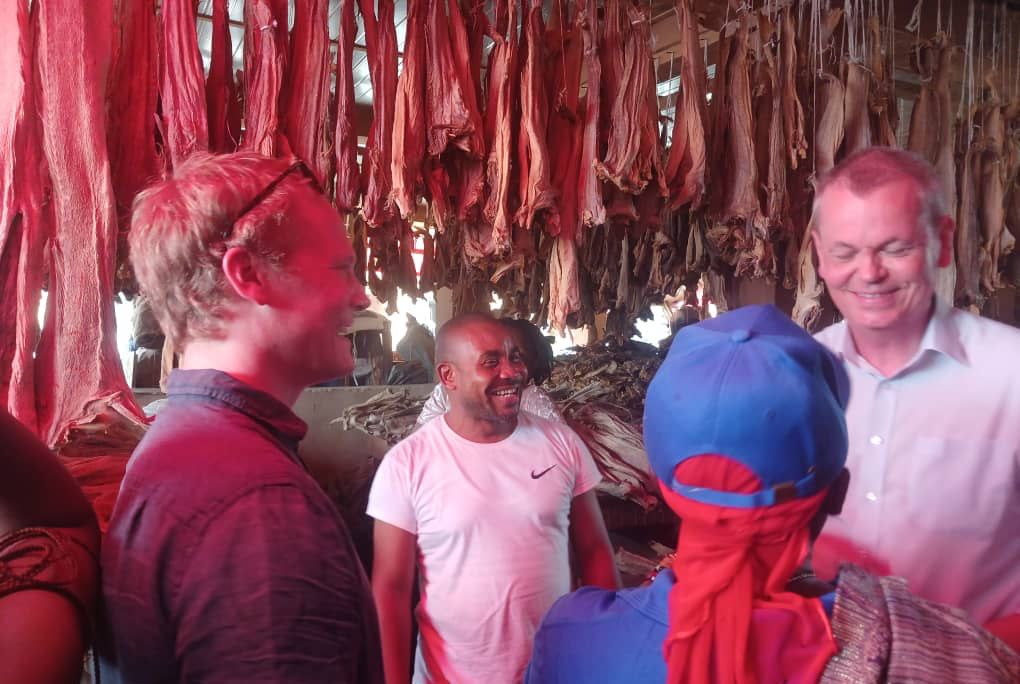
During a recent inspection visit to Lagos’ Whitesand Market, one of the country’s largest seafood hubs, representatives of the Norwegian Seafood Council and SUFI, a Norwegian seafood company, expressed alarm over reports of chemical use and poor storage methods by some local traders seeking to extend the shelf life of imported fish.
The group emphasized that while Norwegian stockfish remains among the purest and safest globally, the real threat often begins after the products enter the local market.
Mr. Truls Hellnæs, Finance Director of SUFI, stressed that Norwegian stockfish is produced under strict natural conditions using only sun, wind, and cold air to dry wild-caught fish with no additives or chemicals involved. He noted that improper local storage, high temperatures, or chemical misuse could compromise product quality.
“Any contamination doesn’t start in Norway; it happens when handling standards are ignored locally,” Hellnæs warned. “Training and enforcement are essential if Nigeria must protect consumers and the credibility of its seafood market.”
Mrs. Abiodun Cheke, Fisheries Consultant to the Norwegian Seafood Council, confirmed that all containers of Norwegian stockfish undergo multiple levels of inspection first by the European Free Trade Association (EFTA) and later by Nigeria’s Federal Department of Fisheries. However, she said these measures lose impact if retailers are not properly trained on post-import storage and preservation.
“After education comes enforcement,” Cheke insisted. “Those who use chemicals must be identified and retrained. The safety of consumers depends on what happens after the product enters Nigerian markets.”
Local traders also voiced frustrations over rising costs, which they say sometimes tempt handlers to cut corners. Mr. Chikodi Onyekwere of Master Fish Enterprises noted that import tariffs and logistics costs have nearly tripled in recent years, driving up prices and slowing sales.
“The government must review import duties. Stockfish is a staple for many Nigerians, not a luxury item,” he said. “If costs remain this high, traders may look for unsafe shortcuts to preserve or resell products faster.”
Stakeholders at the visit urged the National Agency for Food and Drug Administration and Control (NAFDAC) and the Federal Department of Fisheries to strengthen post-import training and monitoring frameworks, warning that neglect could undermine Nigeria’s food safety standards and consumer trust.
The visit was part of a broader initiative by the Norwegian Seafood Council to promote safe food handling, improve trade relations, and support Nigeria’s seafood industry in aligning with global best practices.