Follow Us on Google

Ogbuagu Anikwe interrogates the unfortunate politics of Tunde Bakare, pastor of Nigeria’s Church of Jesus Christ of Latter-Day Saints
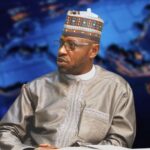
Pastor Tunde Bakare is in the news, and again for the wrong reasons. He declared from the pulpit that, at the point of death, Alhaji Abubakar Tafawa Balewa pronounced a curse on Ndigbo. This strange curse, he says, is what continues to thwart attempts by the Igbo to become President in Nigeria. In other words, the Igbo are good to go but cannot because they are a people under a curse. After injecting this poison into the body politic, Bakare made a hollow show of attempting to remove the alleged curse.
Outraged Nigerians wonder from where he got this story.
My position is that we shouldn’t blame Pastor Bakare for announcing that a First Republic politician cursed the Igbo. Keep in mind that the pastor made this pronouncement from the pulpit, in God’s presence. He obviously meant what he said, based on “facts” at his disposal.
The question, however, is what were those facts?
In January 1966 when the the Prime Minister died, Bakare was a nine-year-old pupil of All Saints Primary School, Kemta, Abeokuta. In other words, he was nowhere near Lagos at the time neither was he in a position to even understand that Nigeria was experiencing political turmoil at that time. Furthermore, there is no public account of this chilling version of events when Balewa came face-to-face with the military adventurers. Finally, an Igbo became head of state after Balewa died. Was there a time frame for the curse to take effect? How come it didn’t stop an Igbo from becoming President?
So, where did Bakare get the information that he regaled and mesmerized his congregation with? How did Pastor Bakare get his new and terrible version of how the Prime Minister met his end?
Facts and assumptions
This question can lead us to certain deductions. We can infer that the pastor merely repeated a secondhand tale. Because he spoke from the pulpit, we can also reasonably assume that he was speaking truthfully about what he was told. We further assume that he heard this version from those with a passionate interest in promoting a Fulani-Igbo political rivalry. Or is this an attempt to add fuel to this rivalry in the context of the current maneuvering for power? Was he cleverly sending a message to the core North to resurrect old wounds and ensure that they turn away from an Igbo presidency? And for whose benefit?
There is something else. The assumptions point to people that the pastor hobnobs with since 2011 when he was made a vice-presidential candidate. They remind us that this is the fourth time we are hearing how terrible the Igbo are during and immediately after an election season. In 2019, we heard it from the same pastor. His poison was repeated and amplified by Chief Doyin Okupe. Thereafter, the megaphone, Femi Fani-Kayode, sang it from the rooftops in an interview that is still available as a public record. Fani-Kayode regaled the public with his knowledge of a deep-seated hatred of the Igbo by a certain northern political figure. Here is why we should worry about the politics of Pastor Tunde Bakare. I took away two pieces of knowledge from my brief sojourn in government at federal and state levels in this republic. One is the limitless capacity of most Nigerian politicians to use falsehoods to advance their personal ambitions or agenda. The other is the ease with which leaders and followers buy dishonest fabrications without interrogation or a simple verification.
Power of suggestion
It is for followers that we should worry about the politics of Bakare. In every culture, the simple human mind acts on suggestions. When repeatedly made, these suggestions harden into stereotypical verities hawked from generation to generation. The stereotypes subsequently influence relationships among individuals and groups.
Here is a recent example taken from what is currently playing out in my home state of Enugu. It has been conclusively proved that, since 1999, political gamesmanship, rather than formal rotation, governed nomination of succeeding Peoples Democratic Party governorship candidates. This notwithstanding, we still see intellectuals and otherwise intelligent people clinging to what their favorite politicos say on the issue of zoning. They stoutly dismiss every suggestion that zoning of political offices was not the norm. It’s the same with the first military attempt to topple a democratically elected government in Nigeria in January 1966. Everyone knows that the coup idea was a patriotic effort by a group of Nigerian military officers, most of who were Igbo. We also read from credible sources that the beneficiary, if it had succeeded, would have been a non-Igbo. Still, intellectuals and otherwise intelligent people continue to cling to and promote the idea that this was an “Igbo coup.”
Pastor Bakare does not realise that it is challenging to preach the gospel in Nigeria, with its deep-seated ethnic and political polarisations. Nigeria is at a crossroads over the question of whether a southeasterner should rule in 2023. Everyone appears to have an opinion on the matter. Politicians like Sen. Bola Ahmed Tinubu and former Vice-President Atiku Abubakar voted on the issue by purchasing presidential nomination forms.
Politics of Pastor Tunde Bakare
As for Pastor Bakare, he appears oblivious of the reality that meddling in partisan politics dents his pastoral credibility. Since 2011, pronouncements that he makes from the pulpit continue to be carefully scrutinized for motive. Same goes for his silences as well. In politically tense times, every pastor walks a tightrope on what to pronounce from the pulpit. Should they go beyond the good news and issues that tug at the heart of morality and justice? Pastors that focus on these twin gospel standards (the Golden Rule) can safely preach on political issues. The Golden Rule summarizes what it means to love God and neighbor. Pastors fail the test when they use their homilies to satisfy personal political agenda, or worse, pander to partisan loyalties.
Longsuffering Nigerians look up to their pastors to make meaning of the divisive rhetoric that define national and local power contests. Desperate politicians cannot show the light because they are more invested in ambitions that are altogether personal and selfish. In their various struggles for power, politicians habitually complicate the crisis of religious and ethnic identities among the people. It therefore becomes a tragedy of gargantuan proportions whenever any pastor mounts the pulpit to also join in exacerbating this identity crisis. I do not blame Man of God, Pastor Tunde Bakare, for his politics from the pulpit. I rather pity and pray for him to repent.