Follow Us on Google

From Adanna Nnamani, Abuja
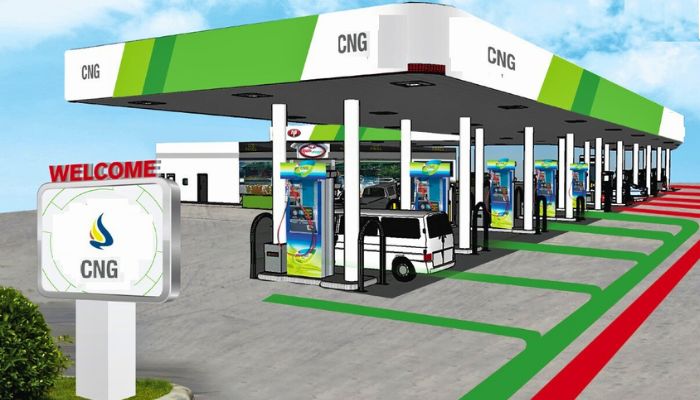
The Federal Government has set a target of establishing 2,500 Compressed Natural Gas (CNG) refuelling stations across the country to accelerate adoption of the alternative fuel and address infrastructure gaps.
The target is part of the government’s broader ambition to expand clean mobility infrastructure, improve access to cheaper transportation fuel and encourage more motorists to convert their vehicles to CNG.
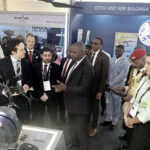
Head, Gas Supply and Integration, Presidential Initiative on CNG and Electric Vehicles (Pi-CNG & EV), Engr. Tare Mayor Bright, disclosed this in a presentation at a town hall meeting in Abuja on Monday.
According to the presentation, the programme is targeting 2,500 refuelling stations across the 36 states and the Federal Capital Territory.
It is also targeting one million cumulative CNG vehicle conversions, 2,000 accredited conversion centres across the states and the FCT, as well as the training of 11,000 technicians.
The presentation showed that Nigeria currently has 113 CNG refuelling stations operated by 24 companies across 24 states and the FCT, with 50 per cent of the facilities concentrated in four cities.
It also identified 127 additional daughter stations in the pipeline, comprising 118 commercial sites and nine campus sites across 31 states and territories. The facilities are planned but yet to be commissioned.
The expansion is expected to improve the availability of CNG, particularly in areas where motorists have limited access to refuelling facilities, while supporting the growing number of converted vehicles.
Speaking at the meeting, Executive Chairman of Pi-CNG & EV, Ismaeel Ahmed, said infrastructure development remained critical to securing public confidence in the transition from petrol to CNG and electric vehicles.
He said Nigerians were not necessarily opposed to adopting alternative energy but wanted assurances that the options would be affordable, accessible and reliable.
Ahmed said the programme, established in 2023 following the removal of petrol subsidy, had recorded progress in expanding conversion centres, refuelling infrastructure and private sector participation.
Other News
He disclosed that private investors had committed about $2.6 billion to the CNG and electric vehicle ecosystem in the last three years.
The chairman, however, acknowledged that existing infrastructure was insufficient, stressing the need to accelerate investments and expand access to underserved parts of the country.
He said the Federal Government was focused on creating an enabling environment for private sector investment rather than directly operating refuelling stations.
Ahmed also said Nigeria had significant natural gas resources that could support the transition, noting that the country had about 250 trillion cubic feet of natural gas reserves.
He said the ultimate objective of the programme was to reduce transportation costs and make alternative energy sources more accessible to Nigerians.
The presentation further identified affordable vehicle conversion, dependable gas supply, reliable infrastructure, fleet-led demand, regulatory compliance and consumer confidence as key drivers of mass adoption.
It stressed the need to align gas supply with the expansion of refuelling facilities to avoid situations where motorists convert their vehicles but struggle to access fuel.
The programme also plans to expand CNG infrastructure through a combination of pipelines, virtual pipelines and partnerships with private operators and state governments.
Ahmed said:”Most times, they simply want to know that the alternative being presented will work, and that it will be available when they need it. A commercial driver who has used petrol all his life will not change simply because somebody says CNG is cheaper. He wants to know where he will refuel, how long conversion will take, how much it will cost, whether the vehicle will be reliable after conversion, whether the savings are real, and whether there will still be a station available for him to go.
“That is where infrastructure becomes critical. It is not enough to speak about reducing commuting costs if passengers are not seeing any difference in the fare on the routes they usually commute to work, to school or to places of worship.
“That is why we need CNG and electric vehicles. We continue to emphasise our three aims: availability, affordability and accessibility. These three things have to move together. We have to transition only when people can find the infrastructure, afford the service and trust the market.
“The real test is whether the benefit gets to the driver, the commuter, the small business owner, the technician and the transport operator whose expenses are affected by the cost of transport. The last mile is where people can judge us, and rightly so.”