Follow Us on Google

From Okwe Obi, Abuja
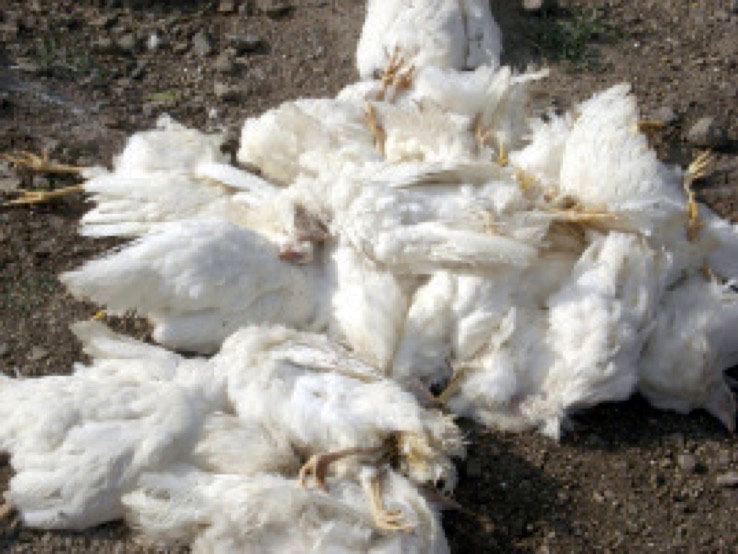
Poultry farmers in Nigeria are counting their losses as bird flu spreads across the livestock sector.
The rampaging disease is threatening farms, destroying birds and raising fears of higher poultry prices.
Beyond the immediate financial damage, the outbreak is putting pressure on farmers already struggling with high feed costs, expensive operations and dwindling profit margins.
With more farms facing the threat of infection, industry players fear that failure to contain the disease could deepen the crisis, disrupt food supply and worsen farmers’ hardship.
For many, Nigeria’s livestock sector is already endangered, owing to the fact most of the birds consumed are imported.
Also, millions of birds and other domestic animals including human beings are affected by the deadly disease because of illiteracy on the part of most farmers and poor sensitisation on the part of relevant authorities.
Already about 15 states and cities are battling to contain the spread. The states are Kano, Kaduna Katsina, Sokoto, Zamfara Plateau, Federal Capital Territory (FCT Abuja), Nasarawa, Niger, Bauchi, Gombe, Lagos, Delta among others.
Many poultry farmers appeared unaware of bird flu and how easily it spreads.
A chicken seller at Kabusa Market, Saidu Mohammed, said he often blamed the weather when his chickens died.
Mohammed said: “I do not know much about the disease. When my chicken dies, I just conclude that it is caused by the weather and I sell it to restaurant owners.”
Amid growing concerns over the spread of the disease, the Federal Government and the Food and Agriculture Organisation (FAO) of the United Nations have joined forces to contain the outbreak.
The government said it was committed to improving the ability of farmers and other players in Nigeria’s livestock industry to detect, prevent, manage and control animal diseases through stronger surveillance and better disease control measures.
The Head of the Department of Animal Health and Reproductive Services and National Programme Coordinator of the Avian Influenza Control Programme at the Federal Ministry of Livestock Development, Dr Mitchell Alao, said the government had carried out a joint field assessment at Wuse Market, Abuja, to identify possible sources and routes of infection.
Alao said the exercise was designed to engage poultry traders and other businesses in the poultry value chain, identify possible ways the disease could spread and understand how the market operates.
He explained that the assessment enabled the team to examine how poultry birds are brought into the market from different parts of the country, particularly the North, North-West and North-East, as well as their transportation and distribution patterns, including movements that take place at night.
The team also examined disease prevention measures, how birds are handled, animal welfare conditions, slaughtering practices and the general cleanliness of the market.
He said: “We have assessed biosecurity measures, how chickens are handled, animal welfare issues, how they are slaughtered, and the general environment. As a One Health team, we have identified some gaps that need to be addressed.”
Alao added that the FAO-developed Avian Influenza Decision Support Tool was used during the training to improve the assessment of disease risks, strengthen surveillance and help authorities make informed decisions on controlling the outbreak.
Also speaking, the FAO Country Team Lead for Livestock in Nigeria, Dr Otto Vianney, said the visit was aimed at gathering vital information on where poultry birds come from, the routes used to transport them, their movement patterns and how long they stay in the market.
He warned that markets receiving birds from areas affected by disease outbreaks could become centres for spreading bird flu to other locations.
He said: “Because if they come from areas where there is a disease, the market itself becomes a hotspot.
“We are in the centre of the country, and Abuja could become a hotspot for transmitting the disease to other destinations. If there is a disease outbreak in Sokoto, in the North-West, Abuja could become a hotspot for the spread of the disease. This is what we are trying to assess.”
Vianney said the FAO, the Ministry of Livestock Development and other relevant stakeholders would support efforts to improve disease prevention measures at the market and stop infections from spreading to poultry farms and nearby communities.
He explained that information gathered during the assessment would be fed into the Avian Influenza Decision Support Tool to improve risk analysis and provide reliable data for government policies and targeted interventions.
“We are going to populate the Decision Support Tool with some of the data we have collected today to help us make better decisions and enable our principals, including the Honourable Minister, to make informed decisions on the control of avian influenza in Nigeria,” he said.
He also restated the FAO’s commitment to supporting Nigeria’s livestock development through technical assistance, training and the introduction of tools that would help strengthen disease prevention and control.
Meanwhile, poultry traders at Wuse Market welcomed the visit, describing it as an important step towards raising awareness and improving disease prevention practices in the poultry business.
Those who interacted with the visiting team included former Secretary of the Chicken Association, Shaibu Saminu, who has spent more than 35 years in the poultry business; Usman Dodo, with 40 years of experience; and Mr Haruna Ado, who has been in the business for 30 years, among other traders.
Saminu said the poultry business at Wuse Market provides livelihoods for more than 200 people and handles over one million live birds. These include broilers, spent layers, local chickens, guinea fowls, pigeons and other poultry species.
The national workshop and training also featured technical sessions where participants received practical lessons on how to use the Avian Influenza Decision Support Tool.
The training covered how to identify disease outbreak locations through geographical mapping, determine the number of people and animals at risk, trace possible routes of infection and assess seasonal changes, water-related conditions and other factors that could influence the spread of the disease.
The initiative highlights the Federal Government’s efforts, in partnership with the FAO and other stakeholders, to improve animal disease monitoring, promote the One Health approach and build a stronger livestock sector through better preparedness, informed decisions and closer cooperation among industry players.