Follow Us on Google
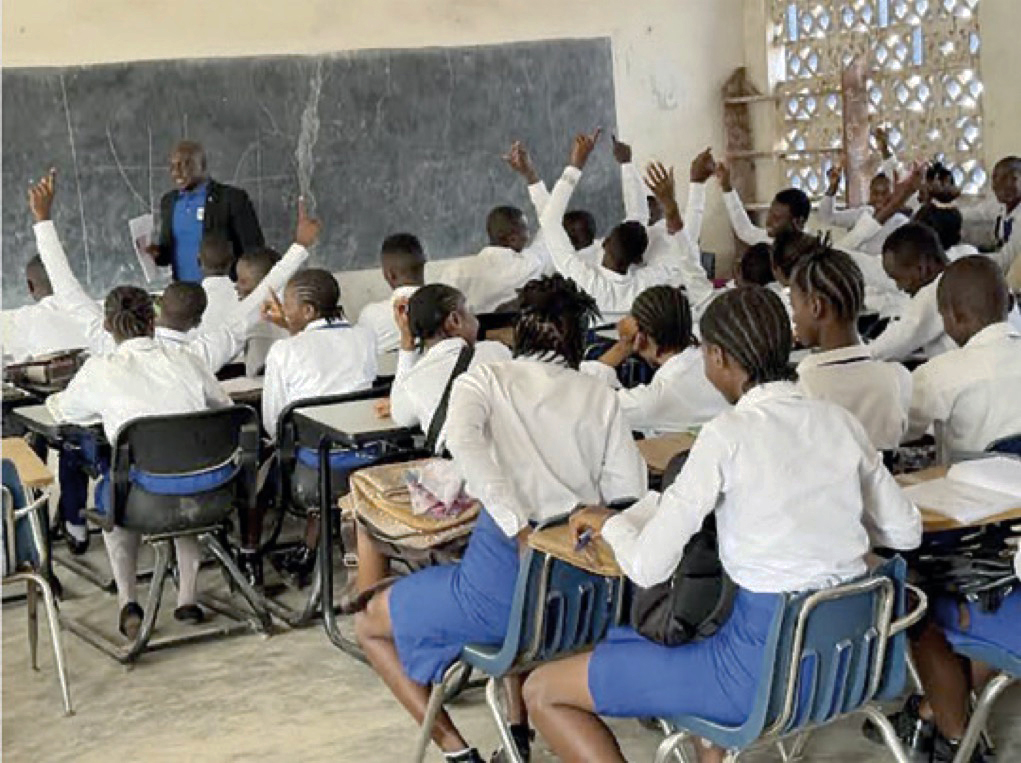
• Govt should focus on giving children internet-era education –Parents
• It’s like repainting faulty house without reinforcing foundation, pillars –Pastor
By By Enyeribe Ejiogu and Ngozi Nwoke (Lagos) and Fred Ezeh (Abuja)
When the Minister of Education, Dr. Tunji Alausa, announced the decision of the Federal Government to merge the separate Junior Secondary School and Senior Secondary School system into one continuous six-years secondary education structure, reactions were quick and sharp.
Alausa noted that the current system being practised across the country has lost its relevance, contributing to the growing number of out-of-school children in the country.
“The transition from JSS3 to SS1 has become a major point at which many students discontinue their education due to admission bottlenecks, placement challenges and additional financial burdens on parents,” the Minister said.
He also made reference to data at the Ministry which indicated that many junior secondary schools in the country are overcrowded while several senior secondary schools remain under-utilised because both operate under separate administrations.
He argued that millions of children who enrol in primary school never complete secondary education, making it imperative to remove barriers that interrupt their academic progression.
He said that integrating junior and senior secondary education into one uninterrupted six-year cycle will improve retention, reduce administrative duplication, maximise existing infrastructure and ensure that more Nigerian children complete secondary education.
Throughout the history of Nigeria, right from the colonial times, secondary school education has regularly undergone transformations in terms of structure, duration and curriculum to align education with national needs and priorities. This saw the country introducing a system focused on vocational education.
A quick, concise timeline of the structural changes includes: Pre-1982 which covers the colonial and early post-Independence era (depending on the region). This was inherited from the British colonial system, whereby students spent six to seven years in primary school, five years in secondary school to write the West African School Certificate (WASC), and an optional two years in Sixth Form (also known as Advanced Level) to write the Higher School Certificate conducted by the West Africa Examinations Council (WAEC) of London GCE Advanced Levels), which enabled that pass to secure direct entry admission in universities before a three-year university degree, while the WASC enabled the candidates write university entrance examinations to gain admission.
In 1982, the Federal Government changed to the 6-3-3-4 System. After the first six years of primary education, the secondary school stage was divided into junior and senior, lasting three years each. The new system was based on the 1977 National Policy on Education but fully implemented in 1982. This shift eliminated the Sixth Form (A-Levels), and split secondary education into Junior Secondary School (JSS 1-3), comprising academic and pre-vocational studies ending with the Junior School Certificate Examination (JSCE), and senior secondary school (SSS 1-3), which features academic, technical or commercial streams ending with the Senior School Certificate Examination (SSCE).
Fourteen years later, in 2006, the Federal Government tweaked the system, rechristening as the 9-3-4 Universal Basic Education (UBE) comprising nine years of basic education (six years primary, three years junior secondary school), three years senior secondary and fours university education (minimum). The government said at the time that it adopted the UBE to “align the education system with the Millennium Development Goals (MDGs) and ensure education for all.”
During the tenure of former President Goodluck Jonathan, when the current Minister of the Federal Capital Territory, Nyesom Wike, was the Minister of State for Education, the Federal Government effected it was described as a refinement of the education system in 2014, under the recommendation of the Nigerian Educational and Development Council (NERDC), which updated the system to formally integrate one year of compulsory Early Childhood Care and Development Education (Pre-Primary) before the 6 years of primary school. The secondary school duration remained split into 3 years of Junior Secondary (part of the 9-year basic cycle) and 3 years of Senior Secondary education.
Despite all these changes in structure, Pastor (Mrs) Gloria Oriaku, General Secretary of Evangel Pentecostal Church (Worldwide), told Sunday Sun the “public schools by and large have not experienced real transformation. The sad thing is that they severely still struggle with glaring inadequacies in terms of equipment, learning infrastructure and other relevant facilities. It’s like repainting a faulty house without reinforcing the foundation and pillars.”
The National Parent Teacher Association of Nigeria (NAPTAN), while reacting to the Education Ministers announcement of the policy change, gave its support to the proposed reform.
Other News
NAPTAN National President, Prof. Boniface Odeh, in a statement described the initiative as a timely intervention capable of addressing one of the major weaknesses in Nigeria’s education system.
He said many students fail to proceed to senior secondary school because of placement challenges, additional costs associated with the transition and limited admission spaces. “Hence, replacing the current structure with a continuous six-year secondary education cycle would remove these barriers and significantly improve student retention,” he said.
A retired Director in the Department of Quality Assurance, Federal Capital Territory (FCT) Education Secretariat, Alhaji Salihu Omehi, described the announcement as a policy proposal that should undergo extensive consultations before implementation.
He said that improving the transition from junior to senior secondary education is desirable, but the real issue is the rising cost of senior secondary education. “The statistics may show that many students who complete Junior Secondary School do not proceed immediately to Senior Secondary School, but we must understand why.
“Parents enjoy relatively affordable education up to JSS3. Once their children move into SS1, the financial burden rises significantly, and many families simply cannot cope. If the government merely merges the two levels without addressing affordability, the financial pressure may only shift to an earlier stage rather than solve the problem,” he said.
Omehi also warned that implementation could become complicated because education is on the concurrent legislative list, allowing states to operate different administrative models.
Similarly, an educationist based in Abuja, Mr. Ifeanyi Eke, also noted that the proposed reform is a step in the right direction. “I am in the system, and can confirm that the transition process is ineffective. I have observed that many junior secondary school students often drop out at the end of the JSS classes because of several factors.
“I am in support of the plan to erase the line between JSS and Senior Secondary Schools. There should be an uninterrupted six-year system that would discourage students from dropping out of school.”
Proprietor, Crescent Hill Academy, Ibadan, Tunde Alabi, who is an education policy analyst said: “Changing from 6-5-4 to 6-3-3-4, and now proposing 6-6-4, feels like we are rearranging structures without fixing the foundation. The real issue is not how many years are in each tier, but whether our personnel are trained and retained for it. Right now, many junior schools have a Principal, plus Vice-Principals for Administration, Academics, Student Affairs, and Special Assignments.
“If you scrap the JSS/SSS divide, what happens to those specialised administrative roles? Will we have redundancy, demotions, or teachers forced into classrooms they are not trained for? In my days, we had fewer titles, but more labs, libraries, and teachers who stayed for 20 years. Today, we need a system that invests in teacher retraining for digital and problem-solving skills, not just a new nomenclature. For the next generation, I want an education system that is stable for at least a decade, with functional ICT labs, project-based learning, and teachers who are paid and equipped to teach critical thinking, not just for exams.”
A retired principal and education consultant in Lagos Mrs. Ijeoma Nwosu flayed the Federal Government, saying: “The constant policy somersault is exhausting for school administrators and demoralizing for staff. When you merge or scrap JSS and SSS, you are also merging career paths. A VP for Student Affairs in a JSS may suddenly have no clear role in a 6-6-4 structure. That creates anxiety, and anxious personnel cannot deliver quality education. Compared to my schooling days in the 1980s, we had less technology but more instructional time and fewer disruptions.
“Now, we change the system every few years and leave schools unprepared. Are our schools equipped for the digital age? Many are not. Most do not have reliable power, internet, or teachers who can teach coding or data literacy. If the government wants to benefit present and future students, scrap the frequent changes. Focus instead on equipping every school with digital tools, retraining all personnel, and making the system competency-based so students can actually solve real problems.”
Mr. Emeka Okoro, who is civil engineer and father of three living Lagos echoed the views of Nwosu. He said: “This back-and-forth is confusing for us as parents. One year it is 6-3-3-4 and the next we hear 6-6-4. My children will enter secondary school soon, and I do not even know what structure they will graduate under. In my time, the system was 6-5-4 and it was predictable.
“We knew what to expect. My concern now is jobs. Are the principals and VPs who managed JSS going to be reassigned or will their experience be wasted? More importantly, are schools teaching our children to think or just to memorize? I want a system where my children can use a computer, do research, and come up with solutions, not one that changes every time whenever there is a new minister. Stability and digital readiness matter more than the number of years.”
Mrs. Nkiru Onyejekwu, caterer and mother of five told Sunday Sun: “As a parent, the policy changes make me anxious about my children’s future. In my schooling days, we had qualified teachers who stayed, and we finished our classes without sudden changes. Now, I hear that VPs for Special Assignments may no longer have roles if JSS is scrapped. That means experienced administrators may leave, and the schools will lose institutional memory.
“For the digital age, most schools do not even have a working computer lab. How can we talk about problem-solving when they have no tools? I would like the government to stop changing the structure and instead fund schools properly. Give them the internet, train the teachers in digital skills, and let the children learn how to apply knowledge to real life. That is what will help this generation and the next.”
Recalling how things were in schooling day, a former banker and father in Lagos, Mr. Samuel Adewale, reminisced: “I went to school in the 6-5-4 era, and it produced engineers, doctors, and teachers who served this country well. Today, we keep changing 6-3-3-4 to 6-6-4 and I ask: what problem are we solving? The bigger issues are poor teacher welfare, overcrowded classrooms, and no technology. If you remove the JSS structure, what becomes of the VPs for Academics and Student Affairs? Will they be absorbed, or will we lose them to frustration?
“In my days, we had discipline, functional labs, and teachers who cared. Now, many schools are not ready for digital education at all. For my grandchildren, I want a system that does not change every election cycle. I want schools with electricity, internet, skilled teachers, and a curriculum that teaches children how to build, fix, and innovate. That is the only way to prepare them for the future.”