Follow Us on Google
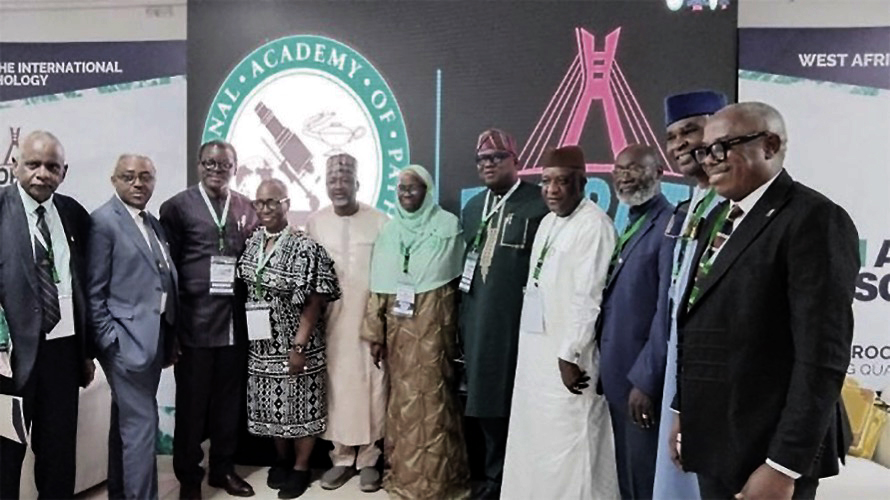
Nigeria’s healthcare system is facing a critical pathology shortage, with fewer than 200 specialists reportedly available to serve more than 200 million Nigerians, experts have warned.
The severe manpower gap, compounded by the migration of trained specialists, poor remuneration, inadequate infrastructure and declining interest among young doctors, is threatening the country’s capacity to accurately diagnose diseases and guide appropriate treatment.
Experts who spoke at the annual conference and general meeting of the West African Division of the International Academy of Pathology (WADIAP) in Lagos warned that without urgent intervention, the shortage could further undermine cancer care and other areas of medicine that depend on timely and accurate diagnosis.
The conference, themed “Future-Proofing Pathology in West Africa: Integrating Quality, Innovation and Regional Synergy,” called for increased investment in specialist training, retention, modern laboratories, artificial intelligence (AI), digital pathology and molecular diagnostics.
President, WADIAP, Prof. Fatimah Abdulkareem, said fewer than 200 pathologists were currently practising in Nigeria, although the actual number could be lower.
Abdulkareem, a consultant histopathologist, Lagos University Teaching Hospital (LUTH), Idi-Araba, said Nigeria had trained hundreds of specialists over the years, but many had migrated while fewer young doctors were choosing pathology.
“The young ones, many of them are not coming,” she said, recalling that only a handful of doctors sometimes showed interest when residency positions were advertised, with some eventually failing to resume.
She noted that the prospect of better opportunities abroad was a major factor discouraging young specialists from remaining in Nigeria.
Professor of Pathology, University of Ghana and immediate past president, WADIAP, Edwin Wiredu, described the situation as unsustainable.
According to him, Nigeria could have roughly one pathologist serving up to one million people, a workload he described as an “impossible task.”
Abdulkareem cited an even more disturbing estimate of about one pathologist to five million people in some settings.
She warned that the shortage could not be quickly reversed because specialist training and the experience required to interpret complex cases take years.
“Training a specialist takes years, while acquiring the experience required to interpret complex cases takes considerably longer,” she said.
Other News
Prof. Francis Faduyile, said the migration of health professionals, popularly known as “Japa,” had become a national challenge.
He attributed the exodus to poor remuneration, economic pressures, insecurity and difficult working conditions, while better salaries and professional opportunities abroad continued to attract Nigerian specialists.
Faduyile stressed that the consequences were particularly serious in pathology because the specialty requires sustained investment in laboratories, equipment, reagents and highly trained personnel.
Professor of Anatomical Pathology, University of Lagos, Adekunbiola Banjo, said the crisis was not only about numbers but also distribution.
She noted that pathologists were concentrated largely in major cities, leaving millions in underserved communities with limited access to specialist diagnostic services.
Chief Consultant Pathologist at LUTH and Chairman of the Local Organising Committee, Dr. Martins Momoh, said digital pathology would allow tissue slides to be scanned and reviewed remotely, enabling specialists in Nigeria to collaborate with experts elsewhere without physically transporting specimens.
He said pathology services must be built around systems capable of adapting to emerging technologies.
Stressing further, Banjo said the pathologist’s role had also become increasingly critical in cancer care, moving beyond simply determining whether a tumour was cancerous.
According to her, pathologists now help identify cancer subtypes, biomarkers and other biological characteristics that enable oncologists to select more appropriate and personalised treatments.
Director-General, National Institute for Cancer Research and Treatment (NICRAT), Prof. Usman Aliyu, described pathologists as the “gateway” to cancer treatment, warning that a wrong diagnosis could result in inappropriate treatment, deterioration and death.
He called for urgent investment in training, retention, remuneration, modern laboratories, quality assurance and digital infrastructure.
The experts also urged stronger cancer screening and early detection, particularly for breast, cervical and colorectal cancers.
They warned that as medicine becomes increasingly dependent on precision diagnosis, Nigeria’s ability to treat patients effectively will remain severely constrained unless the country urgently closes its pathology manpower gap.