Follow Us on Google
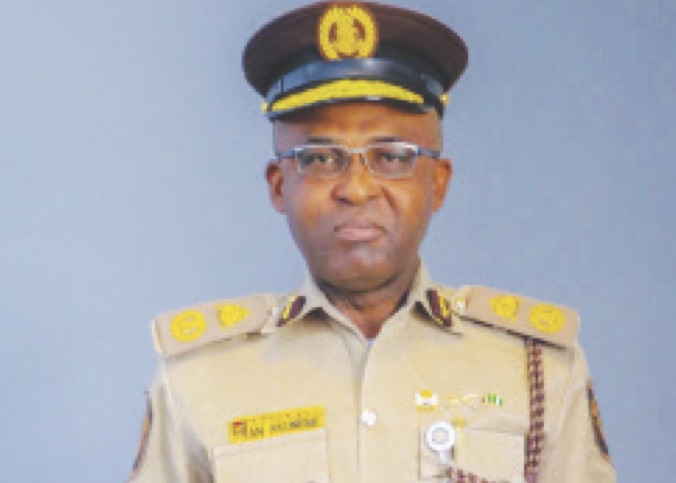

Comptroller of the Nigeria Immigration Service (NIS) in the Federal Capital Territory (NIS), Mr. Anthony Akuneme, has made suggestions on how insecurity in the FCT can be tackled.
In an interview with Saturday Sun, he said that inclusivity is key to tackling the growing insecurity in the federal capital territory, even as he noted that a return to the status quo where paramilitary organisations are included in the expanded security meeting of the FCT administration would be quite beneficial to the country. He spoke with FRED EZEH

The Nigeria Immigration Service seems to be regaining the trust of Nigerians lately. What would you give as the reason?
It’s obviously the inspiration that was brought by the new Comptroller General of the Nigeria Immigration Service (NIS), Kemi Nandap. The new CG has, obviously, added some womanly touch to the leadership style. Most of the things she has done so far are exemplary. She’s practically doing old things in new way. She has promoted transparency and operated an open door policy so far. In addition to that, she has promised to be judicious in handling the affairs of the officers of NIS. She told everybody that the general well-being of officers is at the centre of her plans. These have motivated the officers, thus making them to put in more effort in their respective duties. As Deputy Comptroller General, she was key to the passport reforms being witnessed in NIS which Nigerians, home and abroad, are grateful for. When the Minister of Interior came, he took up the issue of passport and we can see the result.
As a paramilitary agency, what role have you played in tackling the growing insecurity in the FCT?
Well, NIS, as a paramilitary agency, is supposed to be a key part of the security architecture in FCT, but otherwise seems to be the case lately. Prior to this time, we were part of the monthly security meetings of FCTA which holds every last Thursday of the month. It’s always an expanded meeting because all the heads of security agencies in the FCT come together under the leadership of the FCT Minister to discuss issues of security in the FCT. Members of the faith-based organisations and traditional rulers are always part of the meetings. But for some reasons that are unknown to some of us, the FCT Minister, Nyesom Wike, since assumption, has not summoned that expanded security meeting that holds monthly for reasons we don’t know. From all indications, he prefers to use the Police, Army, DSS and NSCDC. I think in the wisdom of the minister, these ones are the most important ones to him, while others, particularly the paramilitary organisations are not relevant to his plans. This is not right at all and should be reversed. I have over 1,500 officers under me who are working across all the six local council areas in FCT. They gather intelligence that could be useful in handling security issues in the FCT.
What have you done about the exclusion?
In addition to making my concerns known at every opportunity, I have written a letter to the minister on behalf of other heads of paramilitary agencies who are also excluded from the security meeting to register our discontent with the decision, but we have yet to receive any acknowledgement or reply from him. We submitted the letter several months ago requesting for audience with the minister, but that has not been done. We need to meet with him so we can let him know our value and the input we can make to the issue of insecurity in FCT.
Could the exclusion be reason for the increasing security threats in the FCT?
You may wish to know that ‘If the owl cries in the night and the child dies in the morning, then you need no one to tell you what could have killed the child.’ There’s need for us to be a part of that meeting. For instance, the FRSC man on the road is the one that you can ask about the cases of one-chance on FCT roads, which has become a big menace to FCT residents. Also, 90 per cent of criminals terrorising FCT are drug addicts and yet the NDLEA boss who knows where to catch them in the FCT is excluded in the war against insecurity. What kind of structure is that? Half of the crime committed in the FCT is done by non-Nigerians who are scattered all over the FCT. It’s only the Immigration officers that have the required training and knowledge to identify and profile them. Our officers across the area councils gather information about movement of non-Nigerians in the FCT, but unfortunately, that is not used effectively by the FCT administration to tackle insecurity because the channel of communication has been closed. So, the action of the minister to exclude some heads of paramilitary agencies from the expanded security meetings in FCTA is counterproductive and should be reversed. Security is about intelligence gathering and it is set up like a chain. The chain should be strong to ensure the desired goal is achieved.
How difficult or otherwise has it been for your officers to identify foreigners that have been unleashing terror on Nigerians?
It’s not a difficult task because we have the requisite training and manpower to identify these people, and we are doing that on daily basis. But with additional support, we would achieve more results and keep Nigerians safe. We have formations across the country. We have Divisional Immigration Officers (DIOs) in all the 774 LGA that monitor every locality. Their duty is to gather relevant information through interactions with community leaders and members. They also interface with heads of foreign communities in a particular location. We have good working relationship with them and it has been yielding the right results. We often carry out enforcements, and each time we identify unregistered immigrants, we ensure they are properly documented.
We are happy with the new Comptroller General because she is committed to achieving great success with the support of our minister, Olubunmi Tunji-Ojo and incidentally, our officers and men are top-notch ready for the great goals we have set out for ourselves. All we need is a little push from the Federal Government in terms of improved budgetary allocation.
You have been in charge of FCT NIS Command for quite some time now. What is the experience so far?
It has been a memorable experience for me. Experience of service to Nigerians. I have tried to redefine leadership as Comptroller of FCT NIS using my unique personality. I have tried to give my team members a sense of belonging and motivation which they confessed they never had over the years that they had served in the command, and that’s because I am committed to career growth and advancement, as well as welfare. No doubt, we are in difficult times now, and anything we can do to put smiles on the faces of people is highly welcome. I have made it a point of duty in the last few weeks to visit all the 15 sections in the FCT Command. The visit has given me the opportunity to freely interact with the officers, receive suggestions and opinions from them on how to move the command forward.
What are the things you discovered during the visitation period?
It was an exposé for me. The visit allowed me the opportunity to have first hand information about the deep workings of the command. It made me to know certain challenges being faced by different sections which would have taken longer time for me to know due to bureaucracy. I had sincere interactions with the officers, and in the cause of doing that, I discovered that some of the officers have different hidden talents and capacity, hence they are wrongly placed. That visitation was also a good opportunity to know my officers well. There are about 1,500 officers in the FCT Command, and I probably meet them during parade that we do once in a month. There’s no way I could have known their faces if not for the visit to their sections. The most interesting part for me is the excitement on the faces of the officers. They couldn’t imagine that I would come down to their level and feel their pulse and share garden eggs, groundnuts and other snacks with them.
What have been the challenges in running NIS FCT?
It’s more of funding challenges that we have, and that has affected our work and output. If we could get additional funding and logistics, we would do better in providing quality services to the people of FCT and Nigerians in general. No state comptroller is excited at what we get monthly to run the command, considering the cost of diesel and other things that would enable us to keep the command running. Let me tell you that what a comptroller gets to run the command in a month is about N100,000. That’s too poor. Where do you start from? Even though we get supplies of essential items from the headquarters, there are some accidental expenditures that can’t wait for bureaucratic response from the headquarters.
Just to deploy and monitor officials to the residences of retired Comptrollers General and Deputy Comptrollers General cost a lot of resources. We need more funding to enable us work well.
That’s my appeal to the government. We need more manpower, improved remuneration, training, welfare, technology, logistics, operational vehicles and other work tools. We can’t keep pretending and yet expect 21st century outcomes