Follow Us on Google
Former Chief of Army Staff Lieutenant General Tukur Yusufu Buratai (retd) has called on African countries to pursue technological sovereignty in defence and security, warning that the continent risks being left behind as artificial intelligence (AI), autonomous systems, and other emerging technologies reshape modern warfare.
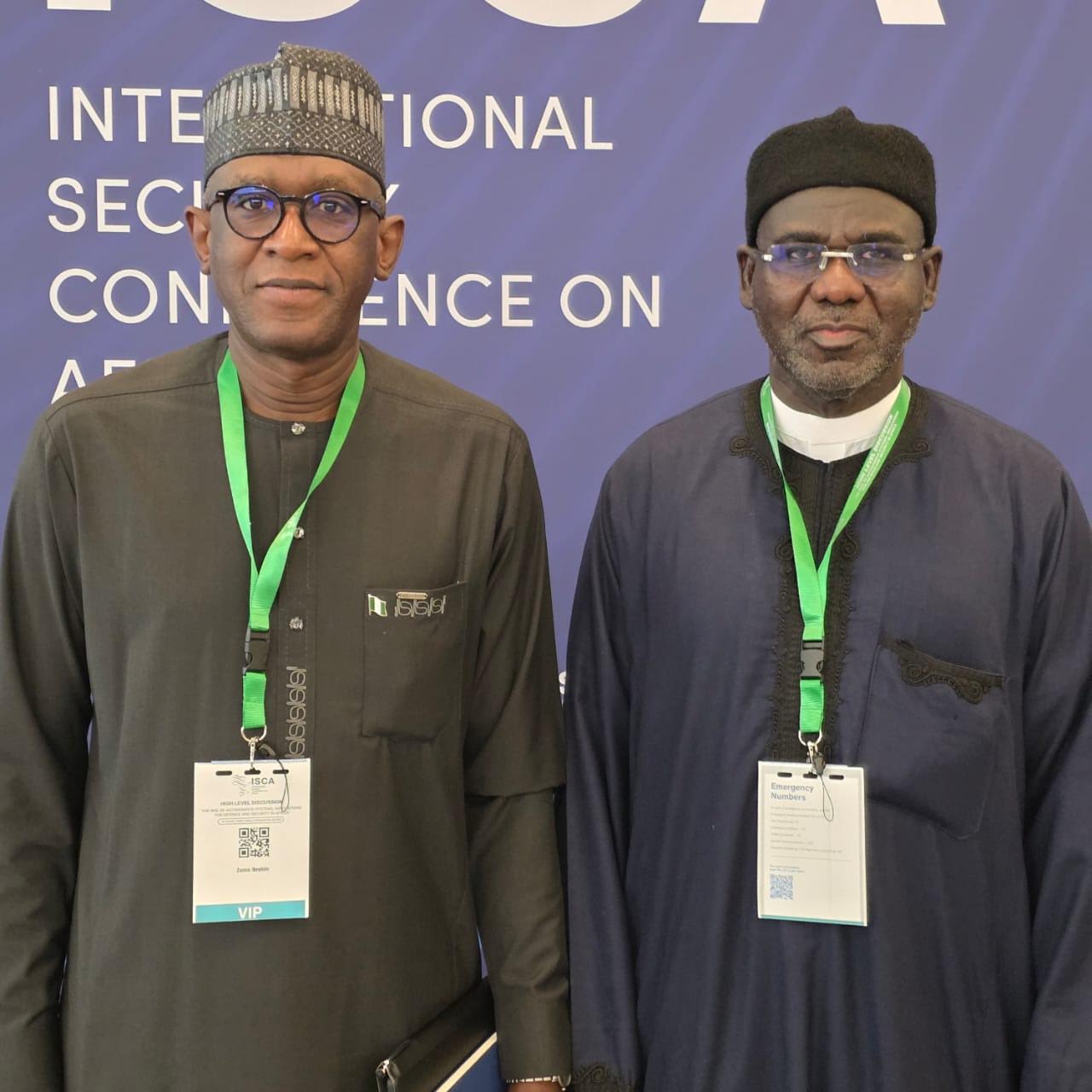
Buratai made the call while speaking at a high-level panel during the International Security Conference on Africa (ISCA) in Kigali, where he challenged African policymakers to move beyond dependence on imported defence technologies and develop indigenous capabilities suited to the continent’s security realities.
Buratai maintained that African countries must begin preparing now for a future in which autonomous systems and artificial intelligence could play an increasingly dominant role on the battlefield.
According to the former Army Chief, Africa must shift from being a passive consumer of military technology to becoming an active developer, adapter, and regulator of emerging defence systems.
“Technologies designed for different operational environments cannot simply be transferred without appropriate adaptation and local expertise,” Buratai said, stressing the importance of building domestic knowledge and technical capacity.
He called for stronger collaboration between governments, defence institutions, universities, and technology companies to create an ecosystem capable of producing home-grown solutions to Africa’s security challenges.
Buratai also drew attention to the growing role of autonomy in military operations, urging African defence establishments to develop a clear understanding of the different levels of autonomy in modern weapons and military systems.
He noted that autonomous technologies can range from remotely controlled platforms to systems capable of making decisions with limited or no direct human intervention.
The increasing sophistication of such systems, he warned, raises critical questions about human control, accountability, and the ethical limits of machine decision-making in matters of life and death.
Other News
The former Army Chief said Africa must therefore ensure that technological advancement in defence is matched by appropriate regulation, professional expertise, and ethical safeguards.
Drawing lessons from the Russia-Ukraine war, Buratai urged African military institutions to reconsider traditional structures and become more agile in responding to rapidly changing methods of warfare.
He called for greater investment in research, technical education, and military innovation, arguing that genuine strategic capacity cannot be achieved through equipment purchases alone.
“True strategic capacity requires human expertise and research ecosystems—not just equipment purchases,” he said.
His message to African policymakers was unequivocal: the continent must anticipate technological changes in warfare rather than wait for them to become unavoidable.
“Africa must be proactive, not reactive,” he said, warning that the continent “cannot afford to wait until autonomous warfare becomes the dominant reality before preparing for it.”
The former Army Chief’s intervention at the Kigali conference highlights the growing debate over Africa’s ability to achieve strategic independence in an era in which technological superiority is becoming increasingly central to national security.
For Buratai, the challenge is not simply to acquire the latest military technology but to develop the people, institutions, research capacity, and regulatory frameworks needed to understand, adapt, and ultimately control the technologies shaping the future of warfare.