Follow Us on Google
ν Poor patients groan in federal facilities as rich ones change to private hospitals
ν NARD reviews position
ν FG threatens them with no-work, no-pay
From Fred Ezeh, Abuja

The last five days, Wednesday to Sunday, were undoubtedly hellish for healthcare-seeking Nigerians, particularly those who patronize public health care facilities for the purpose of getting affordable healthcare services.
This was as a result of the decision of the medical doctors under the umbrella of National Association of Resident Doctors (NARD) to temporarily withdraw their services from the public health facilities nationwide in a peaceful protest. This, undoubtedly, resulted in skeletal services in the public health facilities across the country.

The doctors had embarked on the five-day nationwide warning strike to register their discontentment with the treatment being received from the government and also reawaken their consciousness to their plight as highlighted in their demand list, which, according to them, has been presented to the government at different occasions.
As expected, patients that patronize the public health facilities were at the receiving end. They strongly felt the brief absence of the doctors from the hospitals, as some patients told Sunday Sun that they were taken unawares by the actions of the doctors, while others said they got the hint of the industrial actions and took necessary measures to lessen the effects.
The first and second days of the strike were chaotic at Asokoro District Hospital, Abuja. Many patients were seen confused on what to do to get healthcare services, the privileged ones were quick to switch to private healthcare facilities for medical attention.
A patient at the hospital who pleaded anonymity told Sunday Sun that he got a hint of what was about to happen early in the week when some patients (privileged ones) were being moved out of the hospital to, perhaps, private healthcare facilities for closer attention.
Ukazie Jane, a patient at the Maitama District Hospital, Abuja, said that the doctors miscalculated in their attempt to gain the attention of the government.
She said: “The strike came at the wrong time if you ask me. I can bet you that these striking doctors won’t get the needed attention from the government because the officials are already on ‘departure’ lounge and won’t attend to their needs now.”
She suggested that they shelve the strike and wait for the incoming administration, saying that would be after they might have settled down to work. “This strike should not go beyond this stage,” she suggested.
Another patient who identified herself as Zuwaira said that she had appointment with one of the doctors at the Federal Medical Centre (FMC), Jabi, Abuja, but was later cancelled because of the strike.
She said: “Because my case was not that serious, the doctor asked me to wait till the end of the warning strike. He asked me not to hesitate to call him if the situation changes for bad. So, I returned home as suggested and kept close check on my health situation.”
Dr Chidi Nnabuchi, former head of clinical services, Asokoro General Hospital, Abuja, said that they were observing the situation closely. “We evaluate the situation each day and re-strategize,” he said.
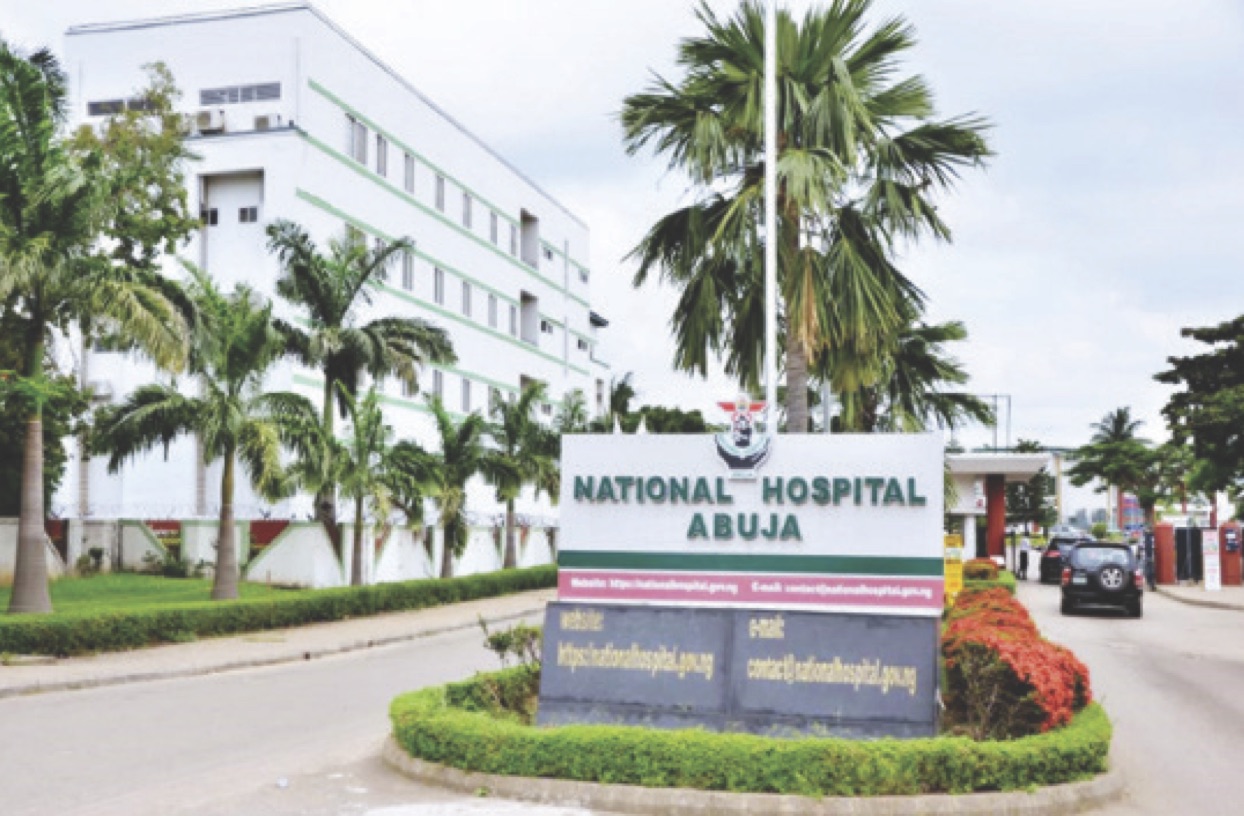
The case was not different at the National Hospital, Abuja. Confusion and frustrations were conspicuously written on the faces of patients who were in the hospital for medical attention, but were disappointed by the strike.
Strike seems to have become a recurring decimal in the healthcare sector, just as it has been in the education sector in the case of the university lecturers under the umbrella of Academic Staff Union of Universities (ASUU) and other university-based labour unions in Nigeria in the past few years.
Over the past years, doctors and other labour unions, notably, ASUU, PENGASSAN, NUPENG, NMA, ASUP, among others, have realized that strike was the only way to urgently get government’s attention, hence they often capitalize on it to get what they wanted, and in most cases, they have succeeded.
Evidently, the demands of these unions are neither new nor fresh items added to the previous demands. It is simply the inability of the government to implement the signed agreements, perhaps months or years after they were signed by both parties that lead to new disagreement.
Expectedly, the decision of the doctors, which was a warning strike that lasted for five days crippled medical services at the various public health facilities across the country, thus exposing patients especially the less privileged to untold hardship.
Being a warning strike that is expected to end today (Sunday), the doctors are expected to go back to work tomorrow morning, while awaiting further directive from NARD leadership who are expected to had interacted with the relevant Federal Government officials on the way forward to avoid extension of the strike.
Sunday Sun gathered that the doctors are insisting on securing a serious commitment from the Federal Government to attend to their needs as quickly as possible so that the situation won’t go beyond what it is at the moment.
On April 29, 2023, the National Executive Council of NARD, at the end of its meeting, in Abeokuta, Ogun State, listed their grievances, which they said are not new to the government and must be attended to, so they could confidently return to work.
At the centre of the demand was CONMESS salary structure. The doctors said that they had reminded the government several times that the CONMESS salary structure which was last reviewed in 2014 was due for review, making reference to the Collective Bargaining Agreement (CBA) on CONMESS which recommended its review after five years.
In addition, the doctors were unhappy that the government has “deliberately” refused to pay 2014, 2015 and 2016, salary arrears of their members, as well as the arrears of the consequential adjustment of minimum wage.
NARD also said that some state governors are yet to implement the appropriate CONMESS structure, domesticate the Medical Residency Training Act (MRTA) nor improve hazard allowance being paid to their colleagues and other health workers while some are being owed backlog of salary arrears.
Amidst the poor salary structure, the doctors complained that they were being overused due to increasing manpower shortage in the health facilities, thus demanding a massive recruitment of health workers to attend to the increasing health needs of the people.
Other areas of concern for the doctors include, poor infrastructure in the hospitals, poor budgetary allocation, suggesting a 15 per cent budgetary allocation to the health sector as contained in the 2001 Abuja Declaration for health care financing in Africa to which Nigeria is a signatory.
The doctors also demanded the immediate withdrawal and jettisoning of what they said was ill-conceived bill by Hon. Ganiyu Johnson on the “enslavement” of young doctors in Nigeria.
NARD President, Dr Innocent Orji, had also informed journalists that his colleague-doctors in Abia State are being owed several months of salary, and nothing was being done about by the state government in spite of several efforts by the leadership of NARD.
He justified the decision of the doctors to down tools, asking Nigerians to hold the government responsible for any further breakdown of the healthcare system.
He said that the government was deliberately causing industrial crisis in the health sector by neglecting the doctors and their consistent demand for improved salary structure and better working conditions.
He said that NARD had issued several ultimatums for the government to act on their demands, but nothing was done in that regard.
“It was rather unfortunate that till the expiration of the recent two-week ultimatum, the government has neither reached out to NARD nor made any significant moves at resolving the issues raised.
“NARD considered that as embarrassing for a nation touted as the ‘giant of Africa’. We frowned at this development and wondered how the government could claim to have the interest of the Nigerian citizens at heart and still neglect such a well-publicized ultimatum.
“Most of the issues raised were contained in previous ultimatums issued to the government last year and still extended to the present time despite the refusal of the government to act on them. We wondered how we got to this point as a nation and hoped this dangerous trend is reversed as quickly as possible,” he said.
Dr Alex Okoh, director of Public Health, Federal Ministry of Health, who spoke on behalf of the Minister of Health, Dr Osagie Ehanire, in Abuja, assured the aggrieved doctors that measures are being taken to resolve the issues, insisting that the withdrawal of services was never the right option.
She told journalists that the Ministry and other relevant stakeholders are working assiduously to ensure that the industrial dispute was resolved, and doctors returned to work.
It was, however, reported within the week that the Minister of Labour and Employment, Dr Chris Ngige, had threatened to implement the “no-work, no-pay” policy on the striking medical doctors if they fail to shelve the strike.
Dr Ngige, reportedly suggested that the doctors use the dialogue option and not disrupt industrial peace and harmony in the hospital system, reminding them of the implications of their actions on healthcare service delivery.