Follow Us on Google
…Says, ‘We’ll rock the boat if pushed to wall’
By Oluseye Ojo
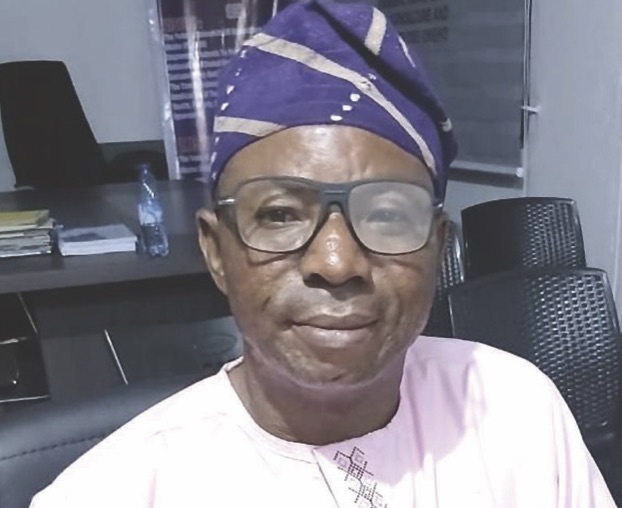
Chairman of the Publicity Committee of the New Nigeria People’s Party (NNPP) in Oyo State, Olufemi Popoola, in this interview, speaks on his role in the 2023 general election, the festering crisis rocking the party in the South, allegations of imposition by national leadership, the controversial ‘prefect’ system, and the implications for the 2027 elections. He also hints at possible decisive actions by aggrieved members.
Excerpts:
What role did you play during the 2023 general elections?
I have been a committed member of the NNPP since 2022. My involvement in the party has not been passive. From the onset, I aligned myself with the vision of building a credible alternative political platform capable of redefining governance in Nigeria. That commitment has driven my participation in mobilisation, strategy discussions, and internal party engagements at various levels.
During the 2023 general elections, I served as a member of the Mobilisation Committee, and our assignment was clear and demanding. We were deployed to areas to galvanise grassroots support for the NNPP and its candidates. We didn’t just go there to make appearances; we worked tirelessly to connect with the people, understand their concerns, and persuade them about the credibility of our party. It was a rigorous exercise that required dedication, coordination, and sacrifice. And I can confidently say we performed very well under the circumstances. However, what is disheartening is that the efforts of committed members like us were not adequately recognised or consolidated upon after the elections. Instead of strengthening the structure we built, certain decisions taken at the national level began to undermine that foundation.
How would you assess the performance of the NNPP in Oyo State during that election?
The performance of the NNPP in Oyo State cannot be assessed in isolation from the challenges we faced internally. We had the capacity to do much better, but certain developments weakened our chances significantly. One of the major issues was the apparent lack of confidence from the national leadership in the local structure. Rather than relying on those of us who had laboured to build the party on the ground, there was a tendency to listen to external influences; people who were not deeply rooted in the political realities of Oyo State. This disconnect created confusion and affected coordination. At a critical moment, when unity and clarity were needed, we found ourselves dealing with conflicting directives and imposed structures. That inevitably affected our overall performance.
You mentioned a lack of trust from the national leadership. Can you elaborate on that?
Yes, that lack of trust is at the heart of the crisis we are experiencing today. It became evident during the election period that the national leadership preferred to rely on individuals they had personal relationships with, rather than the established party structure in Oyo State.
For instance, a campaign coordinator was appointed, someone who had prior political ties with the leadership. Within a short period, that individual abandoned the party. That alone should tell you something about the flawed basis of such appointments. The implication is that those of us who were committed and consistent were sidelined, while those with questionable loyalty were elevated. It sent a very wrong signal to party members and weakened morale across the board.
There are allegations that certain individuals from the North were imposed on the party structure in the South. How true is this?
That is not just an allegation; it is a reality we have experienced firsthand. There is a pattern, where individuals, mostly from Kano State and aligned with a particular political bloc, are appointed to oversee party affairs in southern states, including Oyo State. These individuals act in capacities we have come to describe as ‘prefects’. They come into states like Oyo and begin to dictate who becomes part of the executive and how the party should be run.
Let me be clear, this is not provided for in the party’s constitution. It is an informal arrangement that has created more problems than solutions. It undermines local leadership and disregards the principle that politics is inherently local.
What exactly do these ‘prefects’ do, and how have they affected the party in Oyo State?
Their role, as we have experienced it, is essentially supervisory, but in a manner that is overbearing and undemocratic. They do not just observe; they instruct. They tell us who should occupy key positions within the party. This has led to repeated crises. There was a time they insisted on a particular individual becoming the state chairman. That decision did not emerge from a democratic process; it was imposed. Eventually, disagreements arose between the same ‘prefects’ and the person they installed. What followed was the dissolution of that executive and the creation of what we can best describe as a caretaker or ‘theatrical’ committee. That process set us back significantly.
What role does Kwankwasiyya movement play in resolving the crisis?
The Kwankwasiyya movement is a political bloc that has existed for years, particularly in Kano. It is loyal to the national leader of the party, His Excellency, Senator Rabiu Musa Kwankwaso. There is nothing inherently wrong with having a support movement. Every politician has a base. The problem arises when that movement is elevated above the party structure itself, especially in regions where its influence is limited. In Oyo State, we have long-standing members of the NNPP who have built the party from scratch. But instead of recognising and integrating these members, there has been an attempt to hand over control to individuals aligned with this movement. What works in Kano cannot automatically work in Oyo. The political dynamics are different, the culture is different, and the expectations of the people are different. Ignoring this reality is a strategic mistake.
There are reports of parallel congresses in Oyo State. Can you shed light on this?
Yes, that is correct. The situation reached a point where two separate congresses were conducted. The mainstream NNPP members organised one, while the faction aligned with the Kwankwasiyya movement conducted another. Both groups produced their own executives. Naturally, this created confusion and deepened divisions within the party. We documented our position and submitted a petition to the national leadership. We listed the irregularities and the need for a fair resolution. Initially, we were invited to Abuja to discuss the matter.
Unfortunately, what followed was quite unfortunate. The representatives we nominated to attend the meeting in Abuja were involved in a serious accident on their way. Some of them spent weeks in the hospital. It was a traumatic experience that could have resulted in loss of lives. We expected that the leadership would show empathy and suspend any decisions until those individuals recovered. Instead, while they were still recuperating, the leadership went ahead to recognise the rival faction. That decision was not only insensitive but also unjust. It reinforced our belief that the process was biased from the beginning.
How has this affected confidence in the national leadership?
To be honest, confidence has been severely eroded. When you repeatedly raise concerns and they are ignored, when assurances are given but not fulfilled, it becomes difficult to continue believing in the system. This is not the first time such issues have arisen. It has happened multiple times, and each time we are told that it will be corrected. Yet, nothing changes.
At some point, you begin to question whether your voice matters at all within the party. That is the stage many of us have reached. We are of the opinion that the representatives of the South- West in the National Working Committee of NNPP are toothless dogs that can only bark and not bite. We don’t see their usefulness in the NWC. We have been complaining to them, and they have only been promising without doing anything on our concerns.
What steps are you and other aggrieved members taking now?
We have decided to take a structured and deliberate approach. A meeting was held recently, and a committee has been set up to review the situation and recommend a way forward.
The committee is expected to submit its report on or before March 28. After that, we will reconvene to take a definitive position. We are not rushing into decisions, but we are also not going to remain passive. The future of our political engagement is at stake, and we must act responsibly but decisively.
Are you considering leaving the party or taking drastic action?
At this point, all options are on the table, but no final decision has been made. Our primary objective is to ensure fairness, recognition, and respect within the party. We do not want to destabilise the party unnecessarily. However, if the current situation persists and our concerns continue to be ignored, we will have to take appropriate action. Politics is about relevance and dignity. If those are denied, then you have to reconsider your position.
How do you see the current crisis affecting the NNPP’s chances in the 2027 general elections?
If the issues are not resolved, the impact will be significant. Elections are not won by name alone; they are won by structures, unity, and grassroots support. Right now, those elements are under threat in Oyo State and other parts of the South. If parallel structures persist and members feel alienated, it will be difficult to mobilise effectively. We had people who were willing to join the party, but they were discouraged by the internal crisis. That is a major setback.
What is your position on the ongoing INEC processes and timelines, especially in regards to membership registration and submission of membership register?
We are aware of the timelines set by INEC, and that is part of the urgency behind our current actions. Membership registration, validation, and submission processes require a clear and legitimate leadership structure. If one faction controls the process, there is a risk that others will be excluded. That is why we are speaking out now to ensure that our members are not disenfranchised. We cannot afford to be sidelined in a process that determines the future of the party.
What is your message to the national leadership of the NNPP?
Our message is simple. It is about respecting the principles of internal democracy and recognising the contributions of members across all regions. Nigeria is a diverse country, and any party that seeks national relevance must reflect that diversity in its operations. Imposition and exclusion will only lead to fragmentation. We are not against anyone; we are against a system that disregards fairness and equity. If these issues are addressed, the NNPP can still fulfil its potential. And to our supporters and other Nigerians, they should expect clarity. Once the committee submits its report and we take our decision, our position will be made known. We have been patient, but our patience should not be mistaken for weakness. We believe in the ideals of the party, but those ideals must be upheld in practice.