Follow Us on Google
From Scholastica Hir, Makurdi
In Owukpa community, Ogbadibo Local Government Area (LGA) of Benue State, residents, particularly farmers, have faced hardship due to loss of productive soil layers and water pollution following long decades of coal mining activities in the area. The development, locals said, forced many of them to abandon their farms and rely on market-purchased food.

To address this issue, the Global Initiative for Food Security and Ecosystem Preservation (GIFSEP), a non-governmental organization, in collaboration with Owukpa Woman in Mining, (OWM), trained 102 women to enhance their adaptive capacity to ensure increased food production and food security through innovative solutions.
The GIFSEP, with support from Global Greengrants Fund (GGF) and 350Africa, equipped the participants with knowledge on Climate Smart Resilient Agricultural Best Practices, and supported them with seeds and sacks as starter packs.
The women were trained to enhance their resilience to the impact of coal mining through climate-smart agriculture and by utilizing renewable energy as their energy source.
Welcoming participants to the training, the coordinator of Owukpa Women in Mining, Mrs. Julie Okoh Abah, said the training became necessary to help the women with skills to live above the degradation cause by coal mining in the area in producing food for their families. She appreciated her partner GIFSEP and funders, urging the women to pay attention to details for their benefits and that of the Owukpa community.
A facilitator, Mr. Kajoh Joshua, who took the women through “Sensitization on Climate-Smart Agriculture,” emphasized its importance in addressing the challenges of climate change and land degradation in the agricultural sector. He explained how climate-smart agriculture offers a sustainable pathway to increase food production, enhance resilience to climate variability, and reduce greenhouse gas emissions.
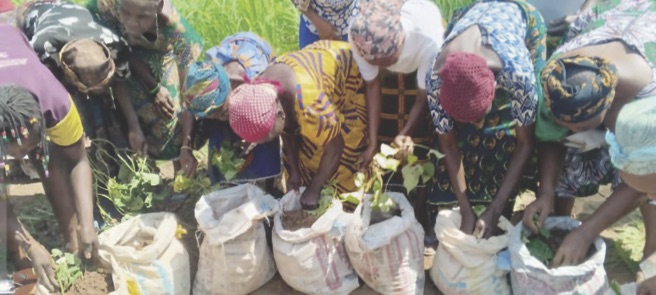
He introduced sack farming, a method of climate-smart agriculture that involves filling sacks with organically mixed soil to grow plants.
Other News
He said: “This technique enables people to cultivate food in areas with limited access to arable land or water.” He took them on a detailed step-by-step approach to sack farming.
Speaking on composting, Kajoh highlighted the materials and equipment required, and took them through the compost manure-making process. He also gave a practical guide on how to make and apply organic pesticides after planting.
The facilitator emphasized that adopting climate-smart agricultural practices would enhance increased food production and food security for households.
While taking the women through hands-on demonstrations about sack filling and seed planting, he explained that the primary objectives of the practical demonstration were to equip participants with hands-on knowledge of sustainable farming practices, promote the adoption of climate-smart agriculture techniques such as sack farming and composting.
He also noted that the aim was to enhance the capacity of local farmers to improve soil fertility and crop productivity and also to encourage environmentally friendly pest control through the use of organic pesticides.
The women were also taught the materials and procedures for organic pesticides preparation, compost making and sack farming. Highlights of the training was having the participants plant at least two seedlings in a sack bag.
Speaking during some of the sessions, other facilitators, including Mr. Moses Diogo and Mr. Nor Iorsoo Damian, lauded the practical demonstrations of compost making, organic pesticide preparation, and sack farming as marking a significant step toward promoting Climate-Smart Agricultural Best Practices in the region.
The participants who showed high level of engagement throughout the demonstrations, asked questions, and sought clarity on various aspects of the practices and appreciated the organizations for the opportunity and knowledge.
Speaking on behalf of the participants, Mrs Regina Abah said the hands-on training equipped them with the necessary skills to adopt sustainable farming methods, contributing to improved plant and soil health.
She expressed hope that, as they put them to use, there would be enhanced carbon and nutrient cycling, biodiversity improvement, increased crop yields and greater resilience to climate change and land degradation.