Follow Us on Google
From Lateef Dada, Osogbo
The Director, Neglected Tropical Diseases (NTDs), Fatayi Oyediran, on Wednesday, expressed worry that over 50 million Nigerians still live at risk of infection from black flies bites called onchocerciasis.
He said the affected people cut across 40,000 communities in 32 states and the Federal Capital Territory.
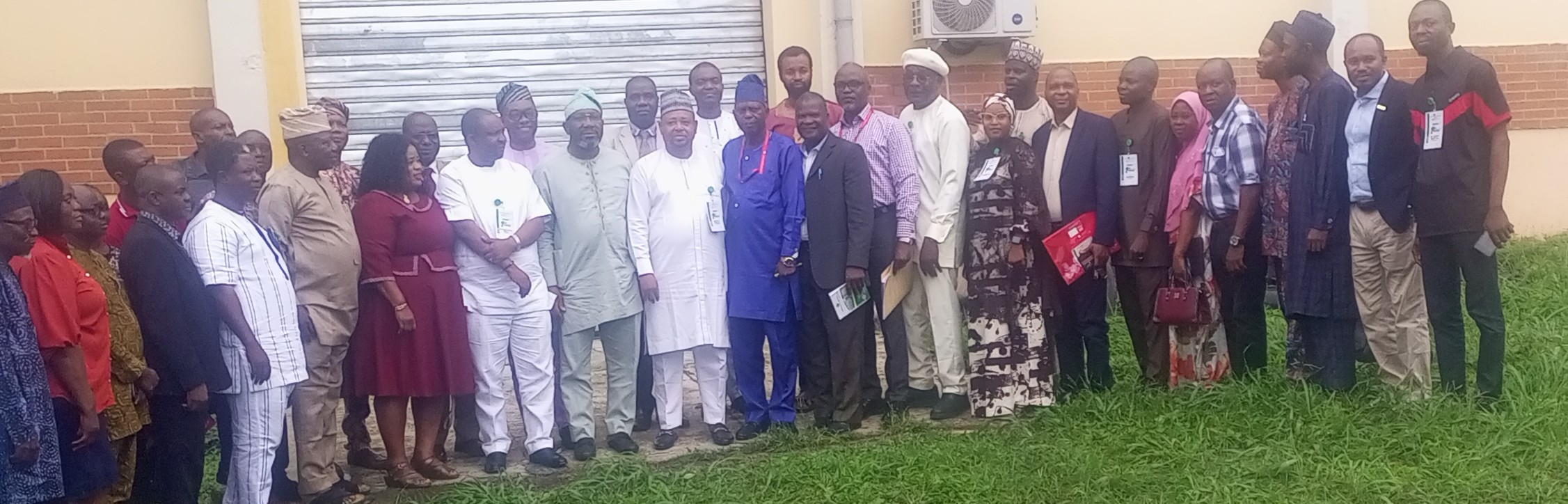
Speaking at Osun State University, Osogbo main campus, during a two-week capacity building training on black fly entomology organized by the Zoology department, it is stated that the infection remains one of the public health concerns.
The Principal Investigator, Prof M. A. Adeleke, stated that Nigeria is currently winning the war towards eliminating onchocerciasis as public health disease, saying “Our studies on the traps, pilot studies on slash and clear and black fly breeding sites validation in the last 5 years have been impressive and prompted more studies to inform policies on vector control in Nigeria.
“We intend to train entomologists/Scientists on critical skills in entomology such as breeding sites prospection, fly catching, slash and
clear and trapping towards retaining active scientists as we are cruising to the elimination of oncho in Nigeria,” he said.
Speaking with Journalists, one of the facilitators, Prof B. E. B Nwoke, explained that the workshop was organized to train young people on how to combat and eradicate onchocerciasis to s barest minimum.
“We have come for the training of young scientists in the study and management of black flies that transmit river blindness and we need them to be trained appropriately so that they will now be used in fighting against the black fly and also help us to control river blindness because these black flies breed in fast flowing waters. From there, the young ones will come out and develop into adults and then fly around and bite our farmers and transmit this river blindness.
“This disease causes the highest blindness in Nigeria after glaucoma. So if we’re able to stop it from transmitting the parasite that causes river blindness, we’ve interrupted the transmission. That is why we’re training these younger ones to know the biology, how they transmit, it, and how we can control them or eliminate them so that they can no longer transmit it.
“In Nigeria, we have already interrupted transmission in Plateau state, Nasarawa, Zamfara, Kebbi, Kaduna, Delta, Imo, Abia, Enugu, and Anambra and more than 39 million Nigerians are no longer taking the drug because the disease has been eliminated or interrupted.
“But in other areas where the disease is still very endemic, we need to train these younger ones to help us evaluate them. We now run through the flies, get them and analyze them and find out whether they’re still carrying the parasite or not. If they are not carrying the parasite, it means they are no longer transmitting the disease,” he said.