Follow Us on Google
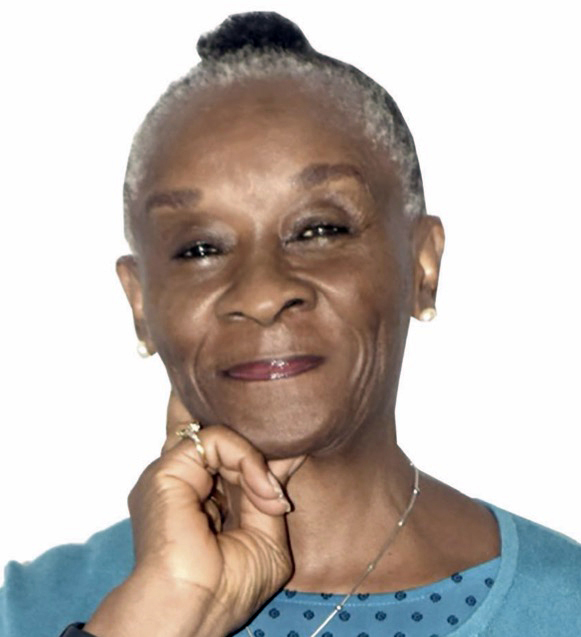
• Most urgent educational challenge Nigeria faces, says Esiri, ZODML co-founder
By FGabriel Dike
Mrs. Ifeoma Esiri is Co-Founder and Chair, Zaccheus Onumba Dibiaezue Memorial Libraries (ZODML). In this interview, she spoke on reading culture, books, out-of-school kids, use of phones, gaps in education sector, library facilities and others
Are you pleased with the reading culture of students in Nigeria?
Pleased is too strong a word, though I am encouraged by what I see when access is provided. The honest answer is that Nigeria’s reading culture is in crisis, but it is a crisis we can reverse. When you look at ZODML’s libraries in 2025, we recorded 90,573 visits, a 48 per cent increase from the previous year, and 36,626 items were borrowed, up 52 per cent. Those numbers tell an important story: the appetite for reading is very much alive. What is broken is not the desire, but the ecosystem that should be nurturing it.
The root causes are multiple and interconnected. Poverty means that for millions of Nigerian families, books are a luxury. Poor school infrastructure means children grow up never having set foot in a functional library. A curriculum that rewards memorisation over comprehension produces students who can pass examinations without ever becoming genuine readers. And then, a reading culture is absent in the home, children who never see their parents read are far less likely to become readers themselves. One of the most telling observations from our Book Talk programme is how surprised pupils are when they actually sit with a book and are asked to engage with it, not to memorise it, but to think about it, and respond to it creatively. We select a book, give it to 34 pupils/students from two public primary or secondary schools, ask them to read it, and then bring them face-to-face with the book’s author. The transformation in those children over the course of that single experience is remarkable. Many of them have never before been asked what they think about something they have read.
We also know that no single organisation can solve this alone, which is why collaboration is central to how we work. In 2024, in partnership with Book Aid International, we donated and distributed 2,596 books to public primary schools. When you open the door to books, Nigerians walk through it. The 48 per cent surge in library visits we recorded in 2025 proves that. Our job, and the country’s job, is to keep opening more doors.
What are the implications of a poor reading culture on the education system?
The implications are troubling and generational. A child who cannot read proficiently by the age of 10 is statistically likely to struggle academically for the rest of their school life. They will underperform in mathematics because they cannot understand word problems. They will underperform in the sciences because they cannot process instructional text. They will underperform in subjects that require comprehension, which is every subject. But the damage extends far beyond examination results. Poor reading stunts the development of critical thinking, empathy, and imagination. It produces adults who are vulnerable to misinformation because they have never developed the habit of interrogating what they read. It produces a workforce that struggles with complex instructions, written communication, and independent problem-solving. At the national level, it undermines governance, because a democracy requires citizens who can read policy, evaluate arguments, and hold leaders to account.
There is also an important personal aspect. A child who does not read well grows up with a narrowed sense of what is possible for them. Books are how we encounter other worlds, other lives, other possibilities. Deprive a child of that, and you deprive them of the ability to imagine themselves in a different future. This is why our Book Talk programme does not stop at reading. After the pupils/students have read their book, we hold a writing competition around the book’s themes. We want children to move from being passive receivers of stories to active creators of them. That journey, from reader to writer, is one of the significant things education can do for a child, and it is almost absent from our public school curriculum. The generational dimension of this crisis is the most troubling. A parent who cannot read well is unlikely to read to their children. A teacher who was never taught to love reading cannot transmit that love to their pupils. A community that has never had a library cannot value what it has never experienced. These cycles reinforce themselves across generations, which is why interventions need to be sustained, structural, and collaborative. Our partnership with Book Aid International, through which we distributed 2,596 books to public primary schools, and our establishment of the Green Library for four to 17-year-olds in collaboration with the National Library of Nigeria, are both deliberate attempts to interrupt those cycles, to plant something in a community that will bear fruit for years to come. A nation that does not read cannot innovate, cannot govern itself well, and cannot compete in the modern world. Poor reading culture is not an education system problem; it is a societal problem, and Nigeria has to wake up and deal with it.
Which one are we facing in Nigeria — lack of authors or lack of books?
The primary challenge is access, not authorship, though both matter and are connected. Nigeria has significant literary talent. The ZODML Poetry Prize received 2,356 entries in 2025, a 63 per cent increase from the previous year, drawing participants from 240 institutions across all 36 states of the federation. That extraordinary response is the evidence. Nigerian writers, both established and emerging, are producing work of depth and quality. The problem is that this work does not reach the people who need it most. The distribution gap in Nigeria is staggering. Books published in Lagos rarely make it to schools in distant states like Kebbi or Borno. Most public school libraries, where they exist at all, hold collections that are outdated. Children in rural areas may complete their entire primary education without ever borrowing a single book. Meanwhile, the books that do exist are often priced beyond the reach of ordinary families.
Our Book Talk programme speaks to this challenge from both ends simultaneously. We put books into the hands of pupils/students from public primary and secondary schools, children who, in many cases, have never owned a book that was not a prescribed textbook. We then connect those children with the books’ authors, because one of the most important things we can do is make authorship feel real and attainable to a Nigerian child. When a pupil/student from these schools sits across from a Nigerian author who grew up not unlike them, and realises that this person made this book, something shifts. And when that same child enters a writing competition built around the book’s themes and wins a prize for their own words, the idea that they, too, could one day be an author becomes conceivable. We’ve seen this journey firsthand: a pupil who first attended a Book Talk in Primary Six returned in secondary school and went on to publish a novel. Nigeria is bursting with voices that want to be heard and minds that want to be fed. What we lack is the infrastructure to connect them. You can have a thousand brilliant authors, but if the books do not reach the children, and the children never meet the authors, the crisis continues.
Are libraries equipped with books to meet readers’ demand?
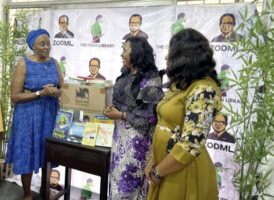
They are not, and I want to be frank about how serious this deficit is. A functional, well-stocked library is not a luxury; it is as essential to a school as a classroom or a teacher. Yet the majority of our public schools either have no library or have one that is so poorly resourced it exists in name only. The collections are outdated, the spaces are neglected, and there is rarely a trained librarian in sight. ZODML operates school libraries, a community library, and a Green Library (established in collaboration with the National Library of Nigeria specifically for young people). That collaboration is significant because it brought together two organisations with complementary mandates and resources: the National Library of Nigeria’s institutional reach and authority, and ZODML’s experience in creating engaging, youth-centred learning environments. The result is a dedicated space where children and teenagers can read, learn, and discover in an environment designed specifically for them. The Green Library’s calendar of 2025 included two particularly memorable occasions. On World Book and Copyright Day, 100 young people at the Green Library were each presented with a book, a moment that captured everything the library was created for. Then, on International Literacy Day (another collaboration with Book Aid International), a further 100 young people received books. On both occasions, the response was everything one would hope for: children absorbed in their new books before they had even left the room, covers being examined, first pages read on the spot, titles compared and discussed with friends. That spontaneous, unselfconscious joy in receiving a book, a joy that children in more book-rich environments might take for granted, is heartwarming and sobering.
But it also exposes how vast the need is. Nigeria has tens of thousands of public schools. A handful of libraries are a drop in an ocean of need. Scaling the establishment libraries requires government commitment, sustained private sector investment, and a network of collaborating organisations working in a coordinated way. In Nigeria, a child receiving a book feels like they have received a gift. That should not be exceptional. That should be ordinary. The fact that it is not tells you everything you need to know about the state of our libraries.
Are students using phones positively to boost their studies?
Some are, but many are not. A phone is a tool, and its value is determined by what’s on its screen. Right now, the pull of social media, entertainment, and gaming is far stronger than the pull of educational content, and that is partly because high-quality, engaging educational content designed specifically for Nigerian students is simply not available at the scale it needs to be. ZODML is working to change that. We are transforming our website into a comprehensive online library because we understand that the phone is where young Nigerians live their digital lives. If we want to compete for their attention, we have to go where they are. We must also build technological skills alongside foundational literacy because, in today’s world, digital literacy and reading literacy are not separate. They reinforce each other.
The Green Library is designed with this reality in mind. It serves young people aged four to 17, a period when digital habit are formed, and the competition between screens and books is most intense. The library provides free Internet access and tablets, enabling us to guide young people in using technology productively for research, learning, and discovery. At the same time, we make a case for the value of reading in a physical space, something a phone screen cannot fully replicate, while demonstrating that the internet, when used intentionally, is an important complement to, not a replacement for, reading.
What our Book Talk programme teaches us is also relevant here. When a child has been engaged by a book, has read it, discussed it with its author, thought about its themes enough to write about them competitively, they develop a relationship with ideas and language that makes them more discerning consumers of everything they encounter, including on their phones. Reading extensively is the best training there is for navigating an information-saturated world critically and confidently. The question is not whether students are using their phones positively. The question is whether we have put quality learning content where they can find it, and whether we have given them the reading skills to engage with that content meaningfully. The entire ecosystem, government, schools, parents, and the private sector, is needed to achieve this.
How can the out-of-school children crisis be tackled?
Other News
This is perhaps the most urgent educational challenge Nigeria faces, and it demands a response that goes far beyond what any single organisation can provide. The causes of the crisis are varied: poverty that forces children to work instead of study, insecurity in the North that keeps children away from schools, distance that makes schooling impractical for children in remote communities, and cultural and gender barriers that still prevent girls in many parts of Nigeria from accessing education. The story of Zaccheus Onumba Dibiaezue, the man who inspires everything we do at ZODML, speaks directly to this. He lost access to formal schooling as a child following his father’s death. He had no institution to fall back on. What he had was determination and access to books and knowledge. Through self-study, he passed civil service examinations, rose to the rank of Inspector in the Colonial Police Service, then went on to study Economics at the London School of Economics and qualify as a lawyer at Lincoln’s Inn. His life is not just an inspiring story; it is a blueprint.
What that means practically is investing in free, open learning infrastructure; libraries, digital platforms, mobile reading programmes, community learning centres, that reach children wherever they are, inside or outside the school system. We must also tackle the root causes: poverty, insecurity, and social barriers, while creating flexible learning opportunities and non-formal education systems. Partnerships across sectors: government, NGOs, and communities are essential and can help bring education closer to children who are currently excluded. Education must be made both accessible and relevant to families’ realities. For a child who is teetering on the edge of dropping out, receiving attention can be an important anchor, a tangible signal that someone, somewhere, considers their education worth investing in. A child’s future does not have to be determined by whether they can afford a classroom, as long as they can access books and the will to learn. We need to make it possible for every Nigerian child to have that experience.
What gaps in education did you notice and are trying to solve?
The most fundamental gap we identified is the gap between schooling and learning; they are not the same thing, and in Nigeria, they have drifted far apart. Too many children attend school without really learning. They memorise content for examinations and forget it within weeks. They graduate without the reading, writing, and critical thinking skills they need to function and thrive as adults. The certificate exists, but the education it is supposed to represent does not. Our Book Talk programme was designed with this gap in mind. It targets public primary and secondary school pupils/students, children in the system that most need strengthening, and gives them an experience that the standard curriculum almost never provides. The 34 pupils/students given a pre-selected book to read are not told to memorise it. They are asked to experience it, to sit with it, to think and form opinions about it. They then meet the book’s author, which immediately transforms the book from an object into a conversation. They compete in a writing exercise built around the book’s themes, where their own voices, perspectives, and creativity are what are being rewarded. That sequence: read, discuss, create, is a complete literary education in miniature.
At the tertiary level, the ZODML Poetry Prize addresses a different but equally important gap: the near-total absence of platforms that celebrate and reward creative expression among students in Nigeria’s public universities, polytechnics, and other tertiary institutions. These are institutions that receive far less attention and investment than their private counterparts, and whose students are rarely given the message that their intellectual and creative lives matter beyond their degree certificates. The Prize is our answer to that silence. In 2025, it received 2,356 submissions from 240 institutions across all 36 states, a 63% increase from the previous year, which tells us two things: that the creative hunger among public tertiary students is immense, and that it has been waiting for somewhere to go. We also noticed a gap in dedicated learning spaces for young people at the most formative stage of their reading lives. This is what drove us to establish school libraries, the Green Library, and a children’s library within our community library. These libraries serve the age when a love of reading is either nurtured or lost, when a child either develops the habit of reaching for a book or decides that books are not for them. Having spaces that belong to young people, that are designed around their needs, stocked with books that speak to their lives, and staffed by people who understand how to engage with them, addresses a gap that even well-intentioned general libraries often miss.
The gap in book access is equally stark. When we make book donations to public schools, we are addressing something foundational: you cannot build a reading culture without books, and millions of Nigerian school children do not have them. We also noticed a gap in how education engages with Nigerian identity. Part of ZODML’s work is championing Nigerian and African literature that speaks directly to our children’s lives and experiences. During our celebration of World Kid Lit Month in 2025, we took 50 children on a journey through Igbo, Hausa, and Yoruba stories. The books we select for our Book Talk are deliberately chosen to reflect Nigerian realities and experiences. We are trying to make learning something children fall in love with, not something they endure. Every child who reads a book, meets its author, and then picks up a pen to write their own thoughts is experiencing what education is truly supposed to feel like. That shift, from passive student to active thinker, is the most important gap we are trying to close.
Is the private sector doing enough to support the education sector?
The gap between what the private sector could do and what it is actually doing is one of the most frustrating realities in Nigerian education today. The argument that education is the government’s responsibility is both technically true and dangerously complacent. Government alone has never educated a nation, and it will not educate ours. The countries with the most successful education systems are those where government, civil society, and the private sector work in genuine, sustained partnership. The picture, however, is not entirely bleak. There are organisations and individuals in Nigeria’s private sector who are doing meaningful work in education, and ZODML’s own experience has brought us into contact with some of them. Our donors, patrons, and supporters have made our work possible year after year, and we do not take that for granted. The commitment of those who have chosen to invest in ZODML is, in a very direct sense, the reason thousands of Nigerians have access to books and learning today.
But collaboration does not only happen at the institutional level, and this is something I want to say clearly and with gratitude: some of the most valuable contributors to ZODML’s work are individuals who give not money but something equally precious — their time, their knowledge, and their presence. The authors who participate in our Book Talk programme do so as volunteers. They receive no fee. They give up their time to sit with 34 public school pupils/students, to discuss their book, to answer questions from children who may never have spoken to a published author before, and to inspire the next generation of Nigerian readers and writers. However, the overall level of private sector engagement with education in Nigeria remains far below what the scale of the crisis demands. The infrastructure of giving, the culture of seeing education investment as a strategic, long-term priority rather than an occasional act of corporate social responsibility, is still underdeveloped. The model exists. The partners exist. The need is beyond question. What is still missing is the breadth of commitment, enough organisations and individuals deciding, at the same time, that Nigeria’s education crisis is their problem to help solve.
One of our library users told us, “The impact of ZODML on my life has been significant, fostering my reading and writing skills and enhancing my vocabulary. The past 13 years have been wonderful.” A law student studying for the bar finals said her time at ZODML was “insightful and nothing short of amazing.” These are real people whose trajectories changed because someone invested in a library. If one non-profit, working with committed partners, can change thousands of lives over two decades, imagine what a mobilised private sector could achieve. The return on investment in education is not just social, it is economic. Every child who becomes a capable, literate adult is a future contributor to the economy. The private sector needs to start seeing education as its business, because ultimately, it is.
Briefly tell us what ZODML is all about.
ZODML, the Zaccheus Onumba Dibiaezue Memorial Libraries, is a Lagos-based non-profit built on a single conviction: that access to knowledge transforms lives. We provide free libraries, learning materials, and educational programmes, with a particular focus on children, youth, and communities that have the least access to these resources. We have established a community library, 34 school libraries, and 19 libraries in correctional service custodial centres across Nigeria because we believe that the right to learn belongs to every Nigerian, regardless of circumstance. This commitment is recognised by the Lagos State Government’s “Support Our Schools” Initiative award and the Nigerian Prison Service Award of Excellence to ZODML. Collaboration is fundamental to how we work, because we understand that the scale of Nigeria’s educational challenges exceeds what any single organisation can address. In partnership with Book Aid International, we have donated and distributed 2,596 books to public primary schools. We established the Green Library, a dedicated space for young people aged four to 17, in collaboration with the National Library of Nigeria. These partnerships reflect our conviction that the most effective interventions happen when organisations with complementary strengths work toward a shared purpose.
Our work spans the full arc of a young Nigerian’s educational journey. At the primary and secondary school levels, our Book Talk programme places pre-selected books in the hands of pupils/students from public schools, who then meet the book’s author, a volunteer giving their time and knowledge freely, to discuss it, and compete in a writing competition built around its themes. It is a complete literary experience, reading, conversation, and creative expression that the standard school curriculum rarely if ever, provides. For students in public tertiary institutions, the ZODML Poetry Prize is our national annual poetry contest, a platform that in 2025 received 2,356 submissions from 240 institutions spread across all 36 states of Nigeria. That a poetry competition for public university, polytechnic, and other tertiary institution students could draw that level of participation, from every corner of the country, tells you something profound about the creative energy that exists in Nigeria’s young people, energy that is too rarely acknowledged, celebrated, or rewarded.
Our current focus is the redevelopment of ZODML’s flagship Lagos library into an EDGE-certified green facility, a space designed to provide books while instilling in the young people it serves a lasting respect for the environment. We are inspired by the life of our eponymous figure, Zaccheus Onumba Dibiaezue, born in 1914 in Anambra State to a humble family. He lost formal schooling as a child but educated himself through determination and access to books, eventually studying at the London School of Economics and qualifying as a barrister at Lincoln’s Inn. ZODML exists to give every Nigerian child the chance that Zaccheus gave himself, the chance to read, to think, to write, and to become more than their circumstances suggest they should be. And we know that achieving that at scale requires partnerships, collaboration, and a shared national commitment to the power of knowledge.
What has been the impact of ZODML in schools?
The data from 2025 is exciting. Library visits grew by 48 per cent and borrowing by 52 per cent in a single year. Our Book Talk programme connected 204 pupils/students from 12 public schools with six authors who brought their books to life in conversation and inspired young writers through themed competitions. We celebrated International Literacy Day in partnership with Book Aid International and the National Library of Nigeria, bringing together 100 pupils/students from seven public schools for a full day of learning and book gifting. Our Poetry Prize drew 2,356 entries from 240 institutions across all 36 states — up 63 per cent from the year before.
The foundation for much of this was laid in 2024, when two landmark collaborative initiatives significantly expanded ZODML’s reach and impact. Our partnership with Book Aid International resulted in the donation and distribution of 2,596 books to public primary schools — an intervention that got books to schools. And our collaboration with the National Library of Nigeria produced the Green Library, a purpose-built space for four to 17-year-olds that has since become a notable centre of young readers’ activity. On World Book and Copyright Day in 2025, 100 students at the Green Library and 58 at the community library received books to mark the occasion, a scene that captures everything ZODML is about.
But what the numbers cannot fully capture is the change in how pupils/students see themselves in relation to knowledge and creativity. The Book Talk model is particularly revealing in this regard. When public school pupils/students sit with an author, the author is no longer a distant, abstract figure. They are a real Nigerian person, answering real questions. And then those same children are challenged to write, to enter a competition where their own ideas, expressed in their own words, could win them a prize. We have seen children who arrived shy and hesitant leave with a different bearing. We have seen children submit high-quality competition entries.
Our truest impact is not in the statistics, it is in the children who read a book and discover for the first time that their mind is capable of something more than the ordinary. In a country where so much conspires to make children feel small and limited, that discovery, made possible through libraries, partnerships, and programmes built on the belief that every child deserves access to knowledge, is everything.
Who is Mrs. Ifeoma Esiri?
Ifeoma Esiri is from Dunukofia Local Governemnt Area in Anambra State. She is a legal practitioner and social entrepreneur. As the Co-Founder and Chair of Zaccheus Onumba Dibiaezue Memorial Libraries (ZODML), she has spent over 25 years building the infrastructure for literacy in Nigeria, moving beyond book donations to establish free library systems in public primary schools, correctional facilities, and underserved communities.
Her work is rooted in the legacy of her father, a self-taught man whose family could not afford formal schooling, but whose determination to learn established a multi-generational belief in the power of books. Beyond ZODML, Esiri serves as a Trustee for Child Life Line, advocating for vulnerable young people.