Follow Us on Google
-
Says quality minds, not infrastructure alone, will drive future
-
Onwualu warns weak libraries threaten Nigeria’s tech ambition
__________________________________________________________________________
From Juliana Taiwo-Obalonye and Francis Onyedikachukwu, Abuja
Abia State Governor Alex Otti has warned that neglecting libraries would weaken Nigeria’s collective memory, stressing that the country’s future would depend not only on physical infrastructure but on the quality of minds it develops and the knowledge it preserves.
Otti said roads, power, and other infrastructure remained essential to development, but argued that Nigeria’s ultimate strength would depend on the quality of human capital and opportunities created for citizens to acquire and apply knowledge.
“Roads and power will remain essential, but the ultimate strength of our country will depend on the quality of minds we develop, the knowledge we preserve, and the opportunities we create for every child to learn,” he said.
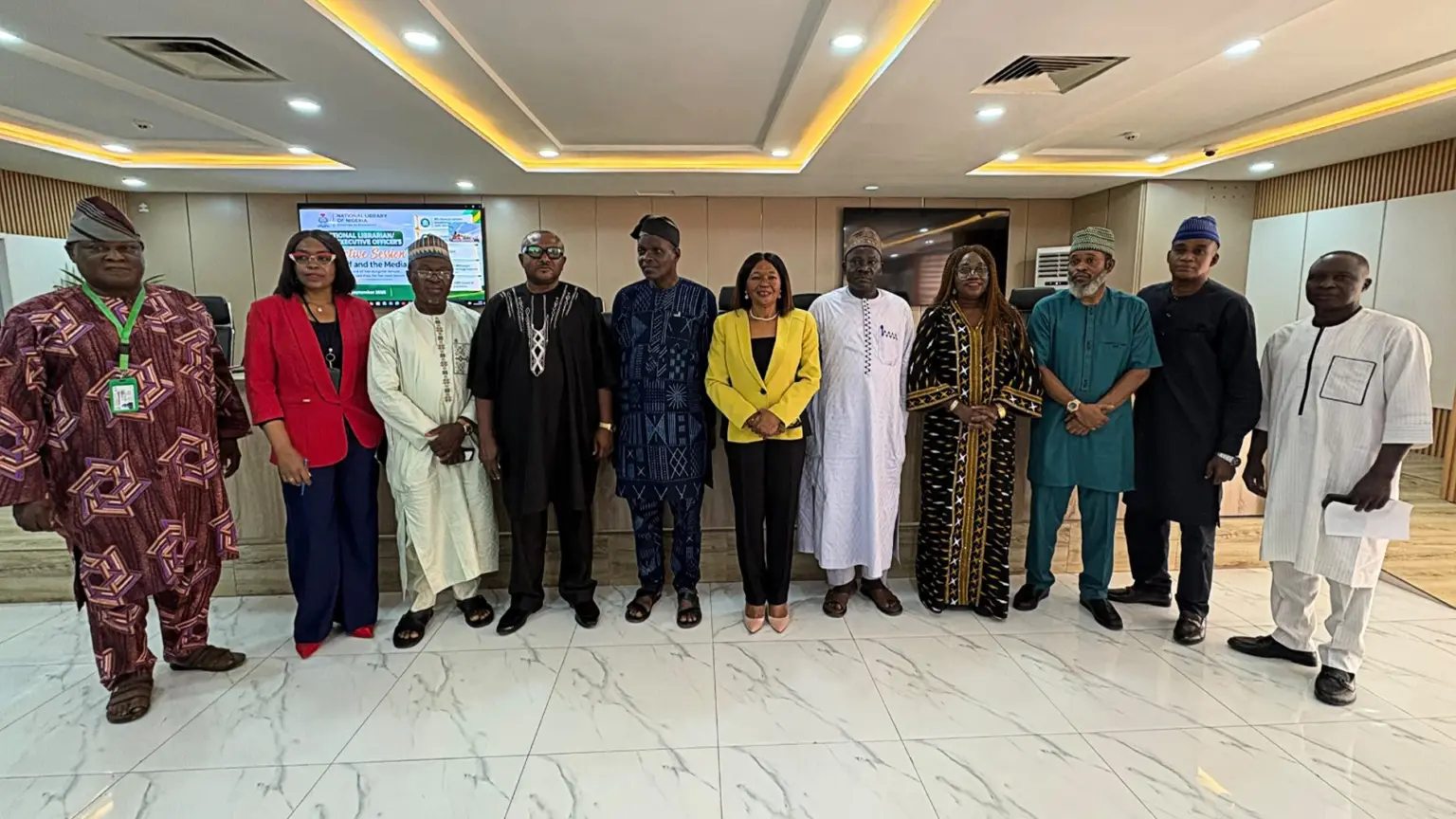
The governor spoke on Thursday in Abuja in a goodwill message delivered on his behalf by his Special Adviser on Monitoring and Evaluation, Ugochukwu Okoroafor, at the launch of the National Library of Nigeria Endowment Foundation (NLNEF), held at the TETFUND Auditorium, Maitama.
“A nation that neglects its libraries weakens its memory. A nation that strengthens them gives its people the tools to think, to innovate, and to build,” Otti said.
He said the importance of libraries had become even more urgent in the digital age, particularly as artificial intelligence and other emerging technologies transformed how knowledge was produced, assessed and applied.
“As artificial intelligence rapidly changes how knowledge is produced, assessed, and applied, digitisation can no longer be treated as an optional modernisation project,” he said.
Otti urged Nigeria to urgently digitise its documentary heritage and ensure that its intellectual resources were preserved in forms that were secure, searchable and accessible to present and future generations.
“Our libraries should connect the wisdom of the past with the technologies shaping the future,” he said.
The governor stressed that government alone could not provide the resources required to build and sustain a modern library system, calling for stronger collaboration among the public sector, businesses, academic institutions, philanthropists and citizens.
He said the Endowment Foundation provided an important platform through which stakeholders could work together to expand access to knowledge and sustain the country’s library institutions.
Otti, who also highlighted his administration’s investment in education, said Abia had consistently allocated 20 per cent of its budget to education since 2023.
He said the state had recruited 5,394 teachers, renovated school facilities and begun rolling out technology-enabled smart schools.
“We are making these investments because the Nigeria ahead will come with true knowledge,” he said.
The governor reaffirmed his support for the NLNEF, expressing hope that the initiative would establish a lasting partnership for protecting Nigeria’s intellectual heritage, broadening access to knowledge and preparing citizens for a rapidly changing world.
The National Librarian and Chief Executive Officer of the National Library of Nigeria, Chinwe Anunobi, said the NLNEF was established in response to funding and infrastructure challenges confronting the institution.
Anunobi said the National Library faced inadequate and unpredictable funding, ageing infrastructure, rising digitisation and digital preservation costs, as well as increasing demand for access to information.
“The Foundation was born out of an urgent reality, which is the fact that the National Library of Nigeria cannot preserve the nation’s memory with the prevailing funding realities,” she said.
She said the National Library currently operated a network of 35 branches requiring sustained investment in infrastructure, power, information and communications technology and service delivery.
Other News
Anunobi also said the National Library headquarters under construction in Abuja represented a major national investment that would require sustained funding beyond its completion.
She said the Foundation would complement government efforts to safeguard the country’s knowledge assets, strengthen its branches and ensure that the new headquarters became a vibrant centre of knowledge for generations to come.
“Our aspiration is clear: to ensure that no Nigerian generation inherits a library weakened by neglect, but rather a National Library strengthened by collective ownership, innovation and sustained investment,” she said.
Delivering the keynote address, the President of the African University of Science and Technology, Abuja, Azikiwe Onwualu, warned that Nigeria’s technological ambitions could be threatened by weak knowledge infrastructure.
Speaking on the theme, “Functional Library as Key to Securing the Future of Knowledge and Springboard for Technological Advancement,” Onwualu said libraries should evolve beyond traditional repositories of books into strategic centres for research, digital literacy, innovation and collaboration.
“A functional library is much more than a building containing books and journals. It is an organised ecosystem of knowledge,” he said.
Onwualu said technological advancement was rooted in accumulated knowledge and that investments in laboratories, innovation hubs and digital infrastructure would be constrained if students, researchers and innovators lacked access to current scientific literature and global scholarly databases.
“Technological advancement does not begin with machines. It begins with knowledge,” he said.
According to him, engineers need scientific literature, medical researchers depend on previous discoveries, artificial intelligence relies on data, while entrepreneurs require market and technical information to develop viable solutions.
“A student who has access to a modern laboratory but cannot access current scientific literature is disadvantaged. A researcher who has brilliant ideas but cannot access international scholarly databases is constrained,” he said.
The AUST president expressed concern that many Nigerian libraries struggled to subscribe to global scholarly databases, saying the situation could constrain researchers and innovators who needed access to international knowledge resources.
He called for the transformation of Nigerian libraries into modern knowledge centres equipped with electronic journals, research databases, institutional repositories, e-books and digitised archives, as well as spaces for collaboration and innovation.
Onwualu also advocated a national network of modern libraries through which knowledge generated in one institution could be discovered and used by researchers and students across the country.
He said libraries should host research seminars, digital literacy programmes, entrepreneurship sessions and technology demonstrations while providing support for students, researchers and entrepreneurs.
The AUST president also highlighted the challenge posed by the explosion of information in the digital age, saying libraries must help users distinguish credible knowledge from misinformation.
“The challenge of the modern library is therefore not simply to provide access to information. It is to help society distinguish credible knowledge from misinformation, evidence from assumption and scholarship from noise,” he said.
Onwualu said artificial intelligence would further transform the role of librarians, requiring them to acquire new skills to guide users through an increasingly complex information environment.
He advocated AI literacy programmes in libraries to help students and researchers understand not only how to use AI tools but also issues surrounding accuracy, bias, intellectual property, privacy, authorship and academic integrity.
“The librarian of the future may therefore become much more than a custodian of books. The librarian can become a knowledge navigator who helps users move through an increasingly complex information environment,” he said.
He stressed that investment in library transformation must include investment in human capacity, calling for continuous training of librarians and information professionals.