Follow Us on Google

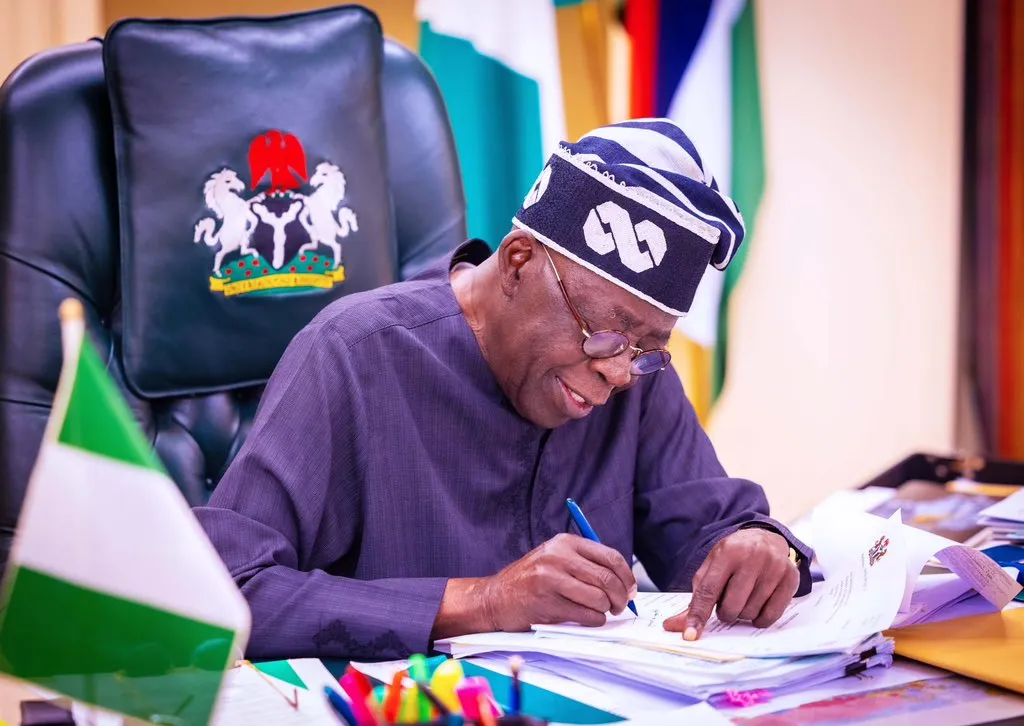
Nigeria’s external debt stock rose to $145.02bn at the end of 2025, a 6.6 per cent increase from the previous year, as the World Bank warned that high borrowing costs and rising debt-service obligations are putting pressure on developing economies.
The figure, contained in the World Bank’s International Debt Report 2026, represents an increase of about $61.8bn from the $83.21bn recorded in 2015. It highlights the expansion of Nigeria’s external financial obligations over the past decade.
The report, released on Thursday, puts Nigeria’s total external debt at $145.015bn as of December 2025. This comprises $62.4bn in public and publicly guaranteed debt, $54.476bn in private nonguaranteed debt and $28.139bn in short-term obligations.
The breakdown shows that government and government-guaranteed borrowing accounts for less than half of the country’s external debt. Private sector obligations without public guarantees and short-term liabilities make up the remainder.
The World Bank defines public and publicly guaranteed debt as external obligations owed by government institutions and other public entities, including borrowing by private organisations backed by government guarantees. Private nonguaranteed debt covers external loans obtained by private borrowers without such guarantees.
Beyond the size of the debt stock, the report drew attention to Nigeria’s debt-service indicators, which show that servicing external obligations became more demanding in 2025.
Nigeria’s external debt-to-exports ratio stood at 212 per cent, while its external debt-to-gross national income ratio was 51 per cent. The debt-service-to-exports ratio was 19 per cent, and debt service as a share of gross national income stood at five per cent.
Although the debt-to-exports and debt-to-GNI ratios declined by 4.3 per cent and 6.6 per cent respectively from their 2024 levels, the debt-service-to-exports ratio increased by 9.6 per cent. Debt service relative to GNI also rose by 6.9 per cent.
The figures indicate that the country’s external debt declined relative to export earnings and national income, but the cost of meeting repayment obligations increased during the year.
The World Bank said debt-service payments among low- and middle-income countries reached $1.4tn in 2025, marking the fifth consecutive year of increases. Payments rose by 1.9 per cent, driven largely by obligations to private creditors, particularly international bondholders.
Between 2022 and 2025, the countries covered by the report paid approximately $436.1bn more in debt servicing than they received in new financing. However, the trend reversed in 2025, when long-term debt flows recorded a net inflow of $45.4bn, compared with a net outflow of $118.4bn in 2024.
In the report’s foreword, the World Bank’s Chief Statistician, Haishan Fu, described the situation as a troubling paradox in which developing economies were securing more international financing but paying increasingly high costs for it.
“Low- and middle-income countries are borrowing more, paying more, and, in many cases, leaving less for long-term development,” Fu said.
He warned that rising debt-service obligations were reducing the resources available for infrastructure, employment, education, healthcare and other development priorities.
“The objective should, therefore, not be more debt. It should be better financing that is affordable, transparent, sustainable, and capable of supporting investment and growth,” he added.
Nigeria’s return to the international bond market in 2025 also featured in the report. The country raised $2.3bn through a dual-tranche sovereign bond issuance, making it the third-largest issuer among Sub-Saharan African countries eligible for International Development Association financing.
The issuance comprised a 10-year bond with an interest rate of 8.625 per cent and a 20-year bond carrying an interest rate of 9.125 per cent.
The World Bank noted that developing economies returned to international bond markets in 2025 amid elevated borrowing costs, particularly for countries with weaker credit profiles.
Across IDA-eligible countries, the average interest rate on new commitments from private creditors rose to 8.2 per cent in 2025, the highest level since the late 1980s. In contrast, the average rate on new official creditor commitments remained at 2.7 per cent between 2024 and 2025.
The difference between private and official borrowing costs widened to 5.5 percentage points in 2025, compared with 3.4 percentage points in 2016.
For Nigeria, the report put the average interest rate on new official external debt commitments at 1.9 per cent, compared with 9.6 per cent for private creditors.
It also showed that Nigeria’s new official borrowing commitments had an average maturity of 25 years and a five-year grace period. Private creditor commitments, however, had an average maturity of 12 years and an eight-year grace period.
The figures underline the substantially higher interest costs associated with Nigeria’s borrowing from private international lenders.
Another financing arrangement highlighted in the report was Nigeria’s use of a Total Return Swap, a financial transaction that allows a borrower to obtain foreign currency liquidity using government securities or other assets as collateral.
The World Bank listed Nigeria alongside Angola, Argentina, Colombia and Senegal among countries that had entered into such arrangements since 2024.
According to the report, Nigeria entered into a $5bn Total Return Swap transaction in 2026, with a three-year maturity and a collateralisation ratio of approximately 133 per cent. This means the country pledged domestic securities worth about $6.7bn to secure the financing.
While the arrangement can provide governments with quick access to foreign currency and potentially lower short-term financing costs, the World Bank warned of risks linked to collateral requirements, margin calls, refinancing and transparency.
It stressed that governments should disclose the amounts borrowed, maturity periods, collateral values, margin requirements and repayment obligations associated with such transactions.
The bank also warned that inadequate disclosure could make it difficult to determine the full extent of a country’s financial exposure.
Nigeria’s debt position reflects a wider increase in external borrowing across developing economies, with several African countries also recording significant growth in their debt stocks in 2025.