Follow Us on Google

Before last Saturday’s governorship election in Osun State, political pundits could not stick out their necks and confidently predict victory for Governor Ademola Jackson Adeleke. Most projections tilted towards the All Progressives Congress (APC) candidate, Bola Oyebamiji. Indeed, one analyst reeled out the odds against the governor, arguing that the strength of the APC in the caliber of politicians in the party and national support would most likely deliver victory to it in the election.
What was striking about those analyses was that they did not necessarily suggest that the APC had a better candidate or that it was better organised on the ground. Rather, the perceived advantage was largely political: the APC controls the Federal Government; President Bola Tinubu has deep political roots in Osun and the wider South-West; the President has demonstrated considerable political influence in the region; and there was a widespread fear that the enormous powers of incumbency at the centre could once again be deployed to “snatch victory and run with it.”
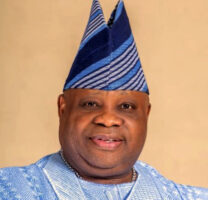
In the election, Osun spoke. It spoke loudly enough to puncture the growing perception that the 2027 presidential election is already a foregone conclusion in favour of the APC. Governor Adeleke won decisively, defeating the APC candidate with 511,067 votes against 444,815, with a margin of 66,252 votes. In doing so, he demonstrated that the APC can be defeated even in an election held in the heartland of President Tinubu’s political base.
That is the real message of Osun. The people did not merely vote for Adeleke. They demonstrated the power of the ballot to defy political calculations, incumbency and seemingly overwhelming odds. In the streets and at the polling units, the message was unmistakable: “Osun is not Edo State,” as Osun indigenes shouted to taunt Edo State governor, Senator Monday Okpebholo, who turned out to be a meddlesome interloper in the election.
For the opposition in Nigeria, that message should be both encouraging and sobering. It should be encouraging because it destroys the dangerous assumption that the APC is invincible. It should be sobering because victory against the ruling party requires more than wishful thinking, loud speeches, social-media activism and the mere gathering of prominent politicians.
For the avoidance of doubt, the significance of the Osun election goes beyond the personality of Adeleke or the politics of the state. Its real importance lies in its symbolism. The APC had every reason to expect a strong showing in Osun. It is the ruling party at the centre. It controls the Presidency and a large number of state governments. It has enormous political structures and resources at its disposal. Its candidate was backed by the full weight of a formidable national political establishment. Yet it lost. This should reduce the growing sense of inevitability surrounding President Bola Tinubu’s bid for another term in 2027.
Of course, it would be reckless to suggest that Osun has already determined the outcome of the 2027 presidential election. It has not. One governorship election cannot predict a national presidential contest involving 36 states and the Federal Capital Territory. However, Osun has demonstrated something important: the APC can suffer defeat. That alone is a powerful message.
The narrative before 2027 has increasingly suggested that the APC’s control of the Federal Government, its dominance among governors and its political machinery make President Tinubu’s re-election almost inevitable. The belief that President Tinubu, out of office, overcame formidable opposition in 2023 and, therefore, cannot be stopped in 2027 as a sitting President has further strengthened that perception. Osun has deflated that confidence. The APC was not just edged out by a handful of votes but Adeleke secured more than half a million votes and substantially improved on the 403,371 votes he obtained in the 2022 governorship election.
The lesson is simple: political power does not automatically translate into electoral victory. Voters belong to nobody. The most important lesson from Osun is that voters do not belong permanently to any political party. Political parties may have governors, senators, members of the House of Representatives, state legislators, ministers and other government appointees, but voters belong to themselves. They can support a party today and reject it tomorrow. They can reward performance, punish failure, respond to economic hardship, follow personalities, reject arrogance or simply decide that it is time for a change.
This is why the opposition should study Osun carefully. It should not lazily interpret the result as merely an anti-APC vote. It must examine why voters chose Adeleke, how his campaign was organised, how his political alliances were constructed, how his administration connected with the electorate and what persuaded voters to return him to office.
Other News
For the APC, the Osun result should compel it to reconsider the assumption that it has permanently secured the South-West. Osun is in the South-West, a region central to President Tinubu’s political strength. Yet, the Osun election demonstrated that the APC’s electoral dominance in the region can be challenged. The political significance becomes even more interesting when viewed alongside Oyo State, where Governor Seyi Makinde, now of the Allied Peoples Movement (APM), remains a formidable political force outside the APC. Two states in the South-West, not belonging to APC, cannot simply be dismissed as insignificant exceptions.
At the same time, the opposition should not deceive itself. Anti-APC sentiment alone will not win the presidency. Nigerians will not vote for an opposition party merely because it wants President Tinubu or the APC out of office. They will want to know what the alternative is. They will demand competence. They will demand credibility. They will demand a realistic programme for tackling insecurity, unemployment, inflation, poverty, poor infrastructure, declining living standards and the deep anxiety about Nigeria’s future.
This is where the real challenge begins. Whether the African Democratic Congress (ADC), the Nigeria Democratic Congress (NDC) or any other opposition platform emerges as the principal challenger to the APC, it will not be enough to assemble prominent politicians in Abuja, parade vociferous youths or produce impressive manifestos. Nigerians must believe that the opposition represents something larger than the personal ambition of whoever wants to occupy Aso Rock. They must see ability to perform creditably in office. They must see seriousness. They must see unity. They must see a credible plan for rescuing the country. The opposition must also understand that Nigerians are not necessarily looking for another political family of recycled politicians. They are looking for hope, leadership and a believable alternative.
There is an interesting irony in all of this. Governor Adeleke has indicated his support for President Tinubu in the 2027 presidential election. That is his political choice. Ultimately, the votes belong to the people. The people will decide. This is precisely why political parties should never confuse the allegiance of individual politicians with the political preferences of the electorate. A governor may support a presidential candidate. A senator may support another. A party leader may defect. Political alignments may shift overnight. But when Nigerians enter the polling booth, they are sovereign. Osun has reminded everyone of that fundamental truth.
For Governor Adeleke himself, however, victory at the polls is only the beginning. He has fought his political battles, survived the storms and won the confidence of the people of Osun State once again. The truth is that the people did not re-elect him merely to dance, celebrate and entertain them. They re-elected him to govern. Governing is serious business.
Make no mistake about it: There is nothing inherently wrong with a governor who dances. A governor is human. He has the right to celebrate, enjoy music, relax and show his lighter side. Adeleke’s dancing has, in fact, helped humanise him and made him unusually popular with Nigerians. However, there is a point at which entertainment must give way to responsibility. This is where Governor Monday Okpebholo’s criticism contained an important point: Osun needs a governor who can dance when the occasion demands it, but who can also sit down, think, plan, execute and deliver. That is the challenge before Adeleke now.
Adeleke must resist the temptation to allow the “dancing governor” identity to become bigger than the office he occupies. Osun is not a dancing stage. It is a state with millions of citizens whose lives are affected by government decisions every day. They need jobs. They need good roads. They need functional schools. They need quality healthcare. They need water. They need security. They need investment. They need economic opportunities. They need an environment where young people can build meaningful lives without being forced to leave the state in search of opportunities. These are not matters for entertainment. They require serious leadership.
Adeleke must therefore consciously transform from the “dancing governor” to the “delivering governor.” He should ensure that the dancing does not become the defining achievement of his administration. There is a difference between being a governor who dances and becoming known primarily as a dancing governor. The former humanises leadership. The latter risks trivialising it.
When the history of the Adeleke administration is eventually written, Osun people should remember more than the governor’s dance steps. They should remember schools that were built, roads that were reconstructed, hospitals that were improved, investments that were attracted, jobs that were created, businesses that were supported and institutions that were strengthened.
The ultimate is that when the music eventually stops and the political curtains come down, the people of Osun should have something far more enduring to applaud than Adeleke’s dancing. They should be able to applaud his visible achievements, in terms of deliverables, not his dancing.