Follow Us on Google
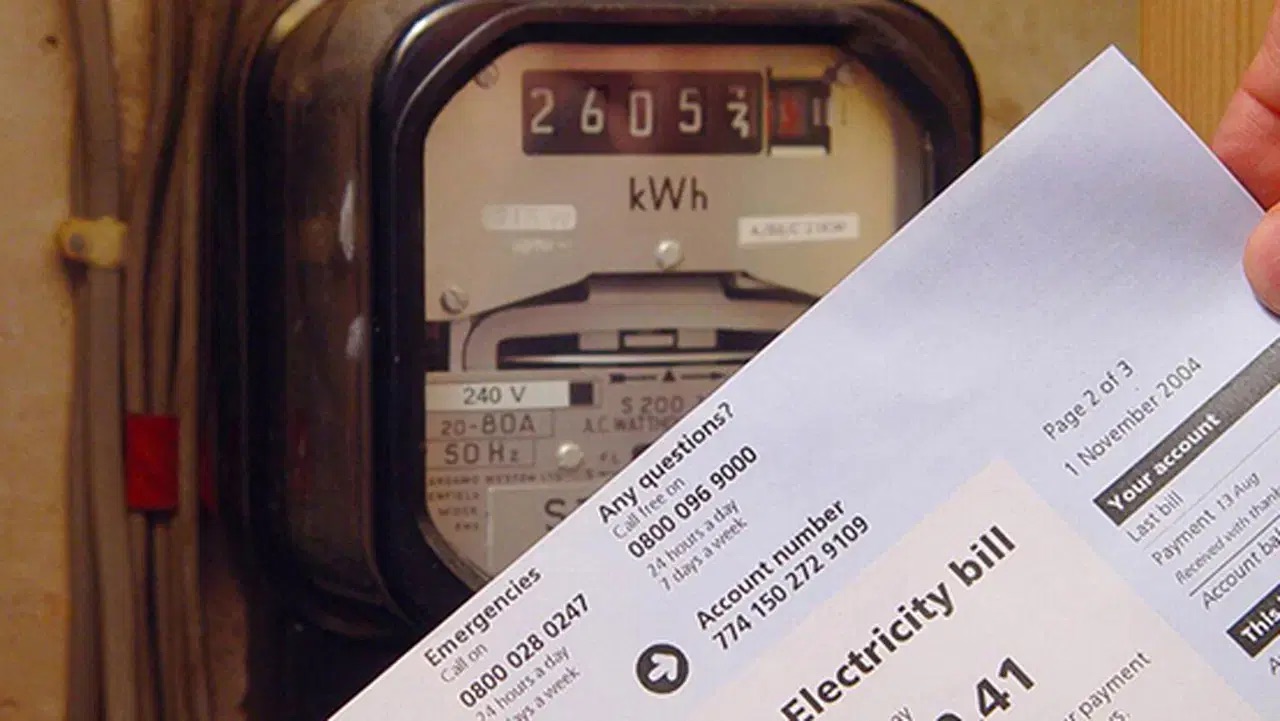
Just as suggested by the International Monetary Fund (IMF), the Organised Private Sector of Nigeria (OPSN) has called for targeted interventions to cushion households and businesses against the global energy crisis.
It also warned the federal government against policy reversals that could undermine economic stability and investor confidence.
The Centre for the Promotion of Private Enterprise (CPPE), Lagos Chamber of Commerce and Industry (LCCI) and Alliance for Economic Research and Ethics (AERE) urged the government to combine temporary relief with sustainable measures to reduce petrol prices, transportation costs and the cost of doing business.
Chief Executive Officer of CPPE, Dr Muda Yusuf, in a policy brief on temporary fuel price relief, said the Federal Government’s intervention through the Nigerian National Petroleum Company (NNPC) Limited should not be mistaken for a reversal of petroleum subsidy removal.
He attributed rising petrol prices to geopolitical tensions and disruptions in the global energy market, which have pushed crude oil prices above $100 per barrel.
“This is an external shock affecting both oil-producing and oil-importing economies. It is neither a consequence of Nigeria’s subsidy removal policy nor peculiar to the Nigerian economy,” he said.
Yusuf argued that exceptional economic circumstances required pragmatic responses to protect citizens and businesses without abandoning market-oriented reforms.
He noted that the former subsidy regime placed a substantial burden on public finances, supporting nationwide petrol consumption estimated at between 50 million and 90 million litres daily at various times.
According to him, the current NNPC intervention, which reportedly covers about 70 million litres monthly, is significantly narrower than the former nationwide arrangement.
“Extraordinary economic circumstances sometimes require exceptional policy responses,” he said, adding that interventions must be transparent, proportionate, time-bound and financially sustainable.
The CPPE boss warned that reinstating a broad-based petrol subsidy would recreate fiscal vulnerabilities and divert resources from infrastructure and other development priorities.
Instead, he called for affordable mass transportation through high-capacity buses powered by compressed natural gas (CNG), electricity and other viable alternatives.
He also advocated targeted support for farmers through access to fertilisers, agricultural machinery and other productivity-enhancing inputs to reduce food production and distribution costs.
The LCCI welcomed the Federal Government’s proposed petrol price-stabilisation mechanism, including a proposed ceiling of ₦1,350 per litre on ex-gantry or landing costs, subject to monthly reviews and public disclosure.
However, the Chamber warned that stabilising prices at elevated levels would not adequately address the challenges facing Nigerian businesses.
It therefore proposed a six-month Petrol Price Reduction Programme targeting a 15 to 20 per cent reduction in pump prices from the prevailing national weighted-average price.
The programme, it said, should be implemented in collaboration with domestic refiners, marketers, regulators and other stakeholders, subject to independently verified costs and market conditions.
The Chamber called for more predictable crude oil supplies to domestic refineries, improved distribution infrastructure, reduced illegal charges and greater investment in alternative transportation.
It also stressed the need for exchange-rate stability and transparent arrangements for recovering costs absorbed by refiners and importers during periods of high prices.
Other News
The LCCI warned that without clear recovery limits, deferred costs could eventually put renewed upward pressure on petrol prices.
It said the ultimate objective should be to reduce operating costs, improve competitiveness and protect jobs.
Meanwhile, Chairman of AERE, Dr Dele Kelvin-Oye, warned the government against allowing NNPC’s ₦66-per-litre petrol discount to become another unsustainable subsidy burden.
In a policy brief titled “Relief without relapse: How to cut petrol prices without rebuilding the subsidy monster,” he described the discount as a temporary intervention that could provide limited relief but reduce NNPC’s commercial returns if prolonged.
Introduced on October 1 as part of the Independence anniversary promotion, the discount is scheduled to end on October 31. The Finance Ministry said it was being funded through reduced retail margins rather than direct payments from the Federal Budget or the Federation Account.
Kelvin-Oye, however, maintained that the arrangement still carried economic costs.
“The N66 discount is creative because it uses a retailer’s margin, not a budget line. It is fragile because a state company’s margin cannot be treated as a bottomless public wallet,” he said.
He urged NNPC to honour the expiration date and disclose the costs and conditions of any extension.
The AERE chairman also called for weekly publication of data on participating outlets, sales volumes, discounts and the scheme’s impact on retail margins.
“The public does not need a press release every week. It needs a scorecard,” he said.
According to figures cited in the brief, average petrol prices have risen from about N830 per litre before the recent escalation to approximately N1,400. At the prevailing price, the ₦66 discount represents savings of about 4.7 per cent for eligible customers.
Kelvin-Oye argued that the discount alone could not adequately address rising transportation costs and inflationary pressures. He recommended verified cash transfers and transport vouchers for vulnerable households.
He also called for accelerated CNG deployment, dependable domestic refining, the removal of illegal levies and improved fuel distribution to reduce costs sustainably.
On the proposed N1,350-per-litre price ceiling, he warned that allowing refiners and importers to recover costs later could create hidden liabilities if the terms were not transparent.
“’Recover later’ can smooth a shock. It can also hide an obligation,” he said.
Kelvin-Oye urged the government to publish the costs, beneficiaries and recovery mechanisms of the proposed arrangement and subject them to independent scrutiny.
He maintained that Nigeria could protect consumers against global energy shocks without returning to a blanket subsidy regime.
“Relief is wise. Relapse is ruinous. The difference is not a slogan. It is a sunset clause, an open ledger and the discipline to let temporary relief remain temporary,” he said.