Follow Us on Google

The proposed opposition coalition ahead of the 2027 general elections is already showing signs of internal division, particularly over fuel subsidy policy and the question of which region should produce its presidential candidate, election observer Austin Aigbe has said.
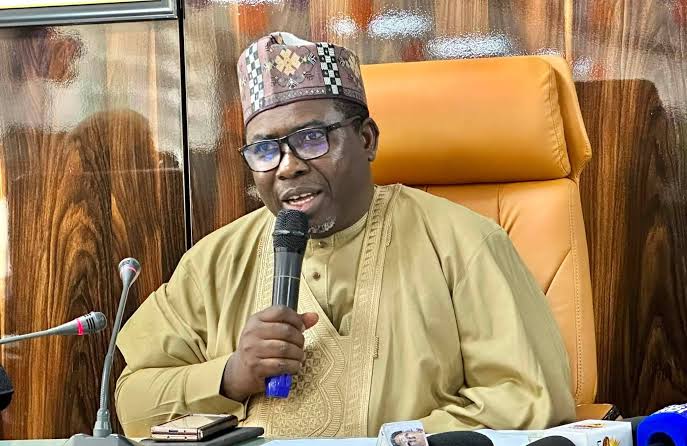
Aigbe, an Advocacy Officer of the West Africa Democracy Solidarity Network (WADEMOS), said opposition leaders had yet to establish sufficient agreement on the major policy and political questions that would be critical to sustaining a united front against the ruling All Progressives Congress (APC).
Speaking in an interview on ARISE NEWS on Wednesday, he said the movement involving several opposition figures had already become fragmented, despite ongoing efforts to bring the different political interests together.
“We know what has happened with ADC, the rest is history. And that the movement of Peter Obi and etc. then created another nuance to this opposition fragmentation. It is already fragmented. I think it’s fragmented. They should go into the election.”
Aigbe identified the proposed four-year presidency arrangement as one of the issues capable of creating further disagreements among the opposition leaders.
He questioned how such an arrangement would accommodate the ambitions of other major figures within the coalition, particularly Peter Obi, former Vice-President Atiku Abubakar and former Kano State governor Rabiu Kwankwaso.
“What I think is even though the convergence is nice to say, ‘We do four years alone.’ And the only person that is speaking about four years is Peter Obi, who has gone into coalition with the former governor of Kano State. I’m sure the former governor of Kano State says, ‘Okay, after your four years, then it gives me an opportunity to become president.’ Now you are bringing Peter Obi to a conversation for one term. Or are you telling Atiku to once again wait for another eight years, or are you telling Atiku to go now while Peter Obi waits until when it’s time for Kwankwaso?”
He argued that the opposition should first develop common positions on major national issues before attempting to finalise an electoral alliance.
“The opposition needed is to converge around isues, and their postulation should be agreement on critical areas like fuel subsidy removal.”
According to Aigbe, the disagreement over fuel subsidy policy became particularly evident during the G100 summit, where opposition leaders expressed different views on the controversial policy.
Other News
He also described the coalition-building effort as coming late, noting that Atiku had reportedly begun efforts to bring opposition forces together about two years ago.
“I feel even though Honorable Nnenna said it is better late than never, I actually think it is late. Late because the presidential candidate of the ADC today began something about two years ago for some form of opposition connection. They were expected to have come with a political party called the AGA, that failed, and they moved on to the ADC to try to use the ADC as the platform for that convergence.”
Aigbe further cautioned against assuming that combining the 2023 votes of Atiku and Obi would automatically give the opposition enough support to defeat the incumbent.
He said the individual electoral strengths of the major political figures, as well as the advantages enjoyed by an incumbent president, must be considered in assessing the coalition’s prospects.
“The math, I understand that some pundits agree that if you add those two numbers, it will give you 13 million or thereabouts votes, then it would have beaten the 8 million votes. If you look at Atiku’s number, it’s real, don’t undermine it. If you flip to an incumbent, an incumbent also has a number because of his appointments across the country. Peter Obi also has a convergence which you don’t also have to undermine.”
The election observer said zoning could present another challenge because of Atiku’s argument that the South has held the presidency for a longer period since the return to democratic rule in 1999.
“By Atiku’s own mathematics that since 1999, the South has produced number one leader of this country. By the time Bola Ahmed Tinubu will be ending his regime or re-contesting in 2027, the South would have completed about 18 years or thereabouts. He’s saying, if you flip the coin to the North, we’ve only had two years of late Yar’Adua, eight years of Buhari, that’s 10 years. So, there is banking on that number. So, there are many numbers that exist in the landscape. And don’t forget, the major candidate from the North, presidential, is Atiku.”
Aigbe said the coalition would also have to determine how the interests and electoral bases of other presidential contenders would be accommodated.
“About the representation of other candidates. Is it right to undermine these other candidates? We agree that there are 22 of them. But if you go to the public, the court of public opinion… Because we started taking 2019, many candidates in the race, few weeks to election, they are adopting other candidates.”
He maintained that opposition parties would need to resolve their differences on policy, zoning and the distribution of political opportunities if they hope to present a credible alternative to the APC in 2027.