Follow Us on Google

By Daniel Kanu
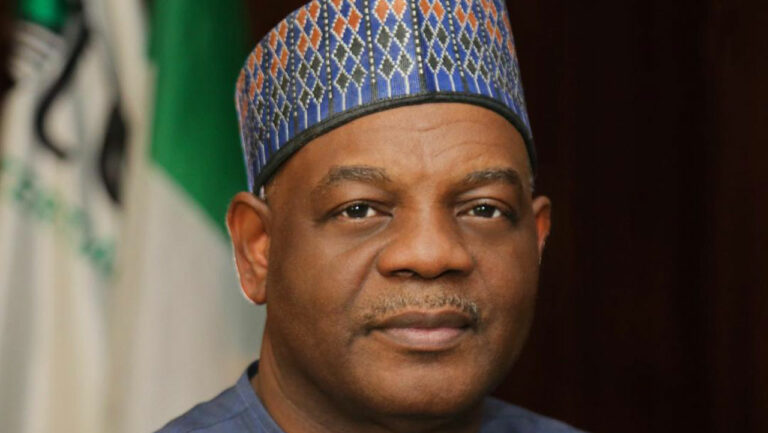
Dr. Ossai Edmund Ndudi, a medical practitioner with specialty in public health, is an international consultant, activist and public analyst, who like most other Nigerians is worried about the situation of the country at the moment.
On the sidelines of a research conference he attended in Lagos recently, he spoke with Sunday Sun, to share his thoughts on key issues regarding Nigeria, and expressed optimism that the country will overcome the current challenges.
How do you feel about the path Nigeria is treading on? Do you have any fears…?
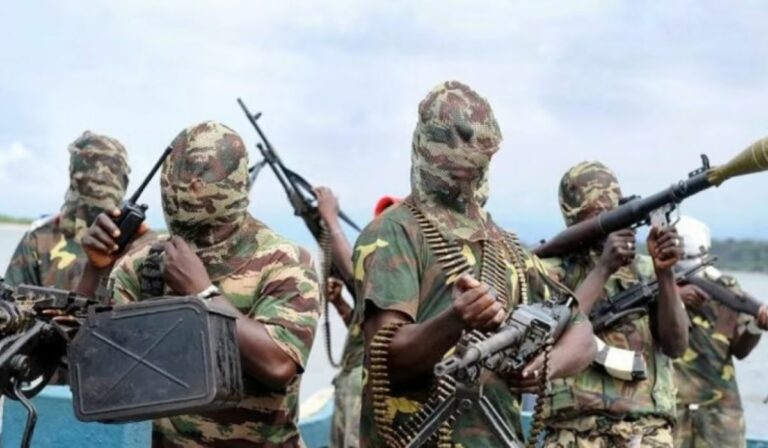
What is on our hands is worrisome. I may not say fear but for sure the state of insecurity in the country is alarming, it is disturbing. It appears no one is safe and the earlier the government knows this reality the better for all of us. University students are kidnapped and killed, secondary school students are kidnapped in hundreds all at a go, travelers are kidnapped and murdered, clergymen are kidnapped and people are murdered while sleeping and right there in their homes. These are indeed very trying moments and do you know the worst, the perpetrators of these crimes walk away free. This is not good hence the need for collective action to tackle this menace.
What do you think then is the problem with Nigeria?
I always have a different view on the problem with Nigeria. Fundamentally, I see it as a fight between good and evil. We must understand that we have good men in all corners of Nigeria just as we have people we may describe as being bad. This is important for what I may refer to as the ‘preservation of sanity.’ Seeing any problem in Nigeria from ethnic or religious colouration always evokes anger and bitterness. I do my best to refrain from that. Another issue to consider in the affairs of Nigeria is the disposition of the political elite. Anytime it appears that there are cracks in the relationship of the ruling class, it trickles down to the common people who unfortunately may not understand the dynamics of the power game. Permit me to say that the so-called common people overreact. Sometimes, the rush to be included in the so-called ruling class is also a source of conflict. That is why you may see some recognized political leaders being denigrated by some people from their own section of the country. One good thing about the ruling class is that they know when to come together and ensure that whatever crisis that may be prevalent at a point in time does not go out of hand. This is why I am optimistic that we will overcome the challenges we have at hand presently.
Some Nigerians have called for restructuring. What is your take on it?
I think Nigerians are good with semantics. Some time ago, the focus was on the national confab, Constitutional confab or sovereign national conference. Perhaps everybody was saying the same thing; the need for a talk-shop. Interestingly, the Muhammadu Buhari administration has initiated some forms of restructuring, (perhaps without being aware of that). Remember the judiciary and legislative autonomy which is the basis for the current strike among Judiciary workers in the country. I think some changes or adjustments are needed from time to time in a kind of federation that we have, especially when we see that one plan or agreement is not working. Under the circumstances that we have it at present, there is no harm in trying plan B if plan A is not working. I think the problem is the use of words and the way other individuals perceive and interpret such words. Remember there was a time the State Houses of Assembly in the country worked against Local government autonomy. I am convinced that any form of re-arrangement in the way the affairs of the country are administered is necessary. Whatever name we assign to it does not matter but certainly, ours should be a dynamic society. There seems to be a concentration of power at the centre and this is not working out well for our genuine development. In any democratic system, we choose to practice, we must consider justice, fairness, and equity among other fundamentals. But above all, the challenge of leadership is critical. There is the need for some sort of devolution of power rather than the over-concentration at the centre. What we have now does not seem to be working for the good of the majority, given its exploitation by the leadership we have had over the years.
Do you think it is fair for southern governors to insist on ban on open grazing?
That meeting in Asaba was historic. I am not aware of any other time southern governors came together to deliberate and take decisions on urgent and crucial national issues. Remember the governors are from different political parties. There is no need to start inferring whether it is fair or not. The governor of Kano State has consistently made it known that open grazing may not be necessary for the Nigeria of today. Bear in mind that this open grazing has been the source of conflicts between the herders and the farmers. In line with international best practices and for the good of everyone including the herders and farmers there is the need to ensure that open grazing becomes history in Nigeria. Members of the PDP Governors Forum have met and I think the 36 governors will soon meet. It is necessary we reach a consensus on this and have it implemented. The various levels of government and the Central Bank of Nigeria may have to step in and look at ways to support both the herders and the farmers in one form or the other to establish and improve their businesses so as to improve yield.
How do you analyze the recent degeneration of security in the Southeast?
This I must say is most unfortunate as I am convinced that it should have been nipped in the bud. In any case, insecurity in any part of the country is a source of concern. I think it is important we make good use of our intelligence reports and for the various security agencies to work together for our common good. There is need for synergy among all intelligence groups and the people must also provide intelligence as those perpetrating the dastardly acts are not spirits. They live among us. It is important that our security agencies should go back to the drawing board and come out with well-thought out strategies that will guarantee the return of peace in all corners of Nigeria. This is doable and should be done.
How can the incessant strikes between the academic staff and government be put to an end permanently?
The most permanent solution to the incessant strikes by the Academic Staff Union of Universities is ‘complete university autonomy’. The problem is whether we are ready for that now but somehow it will come by one day. We must not forget the fact that the government is heavily subsidizing university education in Nigeria. At the level we are at present, this is good and should be continued. The Academic Staff Union of Universities is directly involved in the day-to-day activities of the universities so their opinion on the state of the universities is very important. In effect, all their actions are in good faith. So I think it is important that the government and academic union see themselves as great stakeholders and adopt a workable formula on how to run our universities. If the two parties realize this fact, agreements will be signed in good faith and implementation of such agreements will be smooth. With this, the incessant strike actions by university lecturers will come to an end until we are ready to adopt a different formula in the running of our universities.