Follow Us on Google

Charity Nwakaudu, Abuja
The Federal Government’s target to end open defecation in the country by 2025, has been described by stakeholders to be a race against time.
While they agree that it is an achievable feat, experts and stakeholders are concerned that time was running faster than expected, as 2025 is just about five years from now.
Agreeing that Nigeria could join the league of nations where free open defecation has been achieved, experts however, said the race should not be a marathon where one person at a time runs for the medal.
Their argument was that it would be more result oriented if government would make it a relay race, where more people are recruited to run for the medal.
In their words, open defecation has become a deeply entrenched culture – though in some communities across the country, with many saying that only government efforts can conquer the menace.
To dismantle the bizarre strongholds of open defecation, many insist that there must be well marshalled out strategies orchestrated by multiple foot soldiers who must be motivated to fire their arsenal from all fronts.
Stakeholders said that it was good that the Federal Government had declared a state of emergency on open defecation.
They also applauded the efforts of the Minister of Water Resources, Suleiman Adamu, who has inaugurated the Clean Nigeria website. Such effort, they noted, would help to track action plans meant to end open defecation by 2025.
While the race to end open defecation is said to have begun in earnest, experts said there was the need to take seriously a recent survey released by Water, Sanitation and Hygiene National Outcome Routine Mapping.
The survey asserted that the menace of open defecation in many parts of Nigeria had made people in 32 states vulnerable to outbreak of diseases.
Another dimension of survey that calls for more concerted efforts is the fact that about one per cent of the nation’s Gross Domestic Product, representing N455bn, was lost yearly due to poor sanitation.
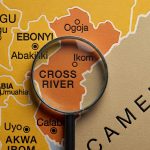
A specialist on sanitation at the United Nations Children’s Fund (UNICEF), Bioye Ogunjobi, said only 11 local government areas (LGAs) in four states in Nigeria had achieved open defecation-free status, leaving 763 LGAs vulnerable to diseases. According to him, the states are Bauchi with two LGAs, Cross River with seven, , Jigawa with two and Benue with one local council.
Ogunjobi said UNICEF had taken up the campaign against open defecation in Nigeria with the support of the United Kingdom Department for International Development (DFID) and the European Union (EU).
He said: “Open defecation has health, economic and social impact on a nation. About 122,000 Nigerians, including 87,000 children under the age of five die each year from diarrhoea and other preventable sanitation-related diseases.”
Ogunjobi said the Federal Ministry of Water Resources, with support from UNICEF and United Purposes, helped the 11 LGAs to achieve the feat.
The local governments that have allegedly achieved open defecation include Daas, Warji in Bauchi State; Birnin Kudu and Buji in Jigawa State; Ikom, Yala, Obanliku, Yakur, Boki and Berkwara in Cross River State and Logo in Benue State.
Ogunjobi said this was achieved with the implementation of a programme called Community-Led Total Sanitation (CLT).
He noted that CLT was conceptualised to help communities realise the dangers of open defecation and to take collective decision to stop the act.
“This has happened in a total number of 17 communities in Nigeria, but this is a drop in the ocean. Because we are talking about 774 LGAs and we have been able to address open defecation in only 11 LGAs. That is 764 LGAs left,” he said.
But the Federal government has reaffirmed its commitment to eliminating open defecation by the 2025. The government has also acknowledged that about 47 million people who still defecate in the open while 33 million using unimproved toilets were a national embarrassment that won’t be allowed to continue.
While the Ministry of Water Resources said it has intensified its drive for strategic partnership towards elimination of open defecation in Nigeria, the need for behavioural change has been suggested as being paramount.
Proponents of this argue that since open defecation has stayed long in many communities as part of their lifestyle, attitudinal change campaign must be made an integral part of the blueprint.
The campaign, they said, would help in achieving quality access to basic sanitation and hygiene, health, education attainment, productivity and socio-economic well-being of the people as well as development of a nation.
The Minister of Water Resources, Suleiman Adamu, while presenting a lecture on ‘Stopping Open Defecation’ at the first public lecture organised by the Faculty of Engineering, University of Abuja, said there was need for attitudinal change so as to attain Open Defecation Free (ODF) by 2025 since the habit was affecting everyone.
Adamu noted: “Achieving a clean Nigeria devoid of open defecation and its attendant negative impacts requires all hands to be on deck. It requires everyone propagating the message and championing the cause.
The minister has also stated that the Department of Water Quality and Sanitation in the period under review undertook many activities, foremost among which was the issuance of the Executive Order No. 009 by President Muhammadu Buhari entitled “The Open Defecation-Free Nigeria by 2025 and other related matters Order.”
Adamu said the Executive Order mandates the Federal Ministry of Water Resources to coordinate all activities towards ensuring an open defecation free Nigeria by 2025 through the National Clean Nigeria Secretariat, and directs all ministries, departments and agencies (MDAs) to join the campaign.
“The order mandates the secretariat to ensure that all public places have accessible toilets within their premises and to enforce compliance. The order also calls for legislation against open defecation by both federal and state legislatures.”
The Ministry of Water Resources has said that 15 LGAs have now been freed of open defecation across the country, a slight improvement from the 11 announced by UNICEF.
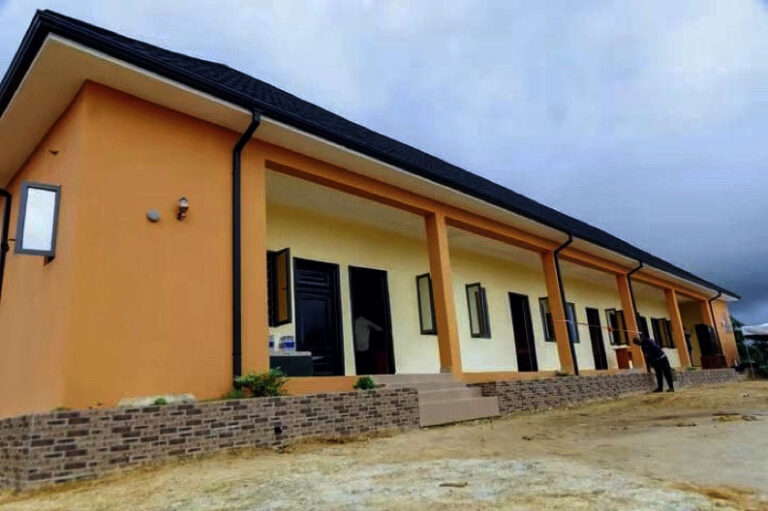
Adamu noted: “We have constructed 106 sanitation and hygiene facilities in the North East, North Central and South West regions. We have also domesticated the production of Hydrogen Sulphide vials at the National Water Quality Reference Laboratory.”