Follow Us on Google
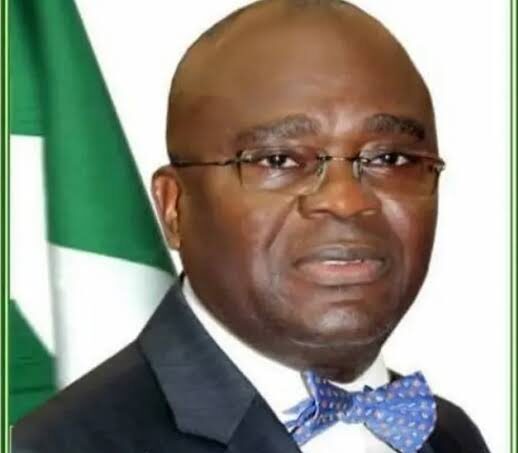
The Nigerian Railway Corporation (NRC) has embarked on an ambitious programme to revive and reactivate several old narrow-gauge rail lines that have been dormant for decades, with the aim of reconnecting neglected communities and boosting local economies.
Managing Director, Dr Kayode Opeifa unveiled this plan on The Exchange Podcast, hosted by Femi Soneye.
Dr Opeifa stated that part of the corporation’s optimization strategy is to ensure that the over 4, 500 km of track built over the last century is put to productive use. This includes lines that were effectively abandoned, such as the Idogo line in Ogun West and the Kaduna-Zaria line.
The reactivation, he said, will be achieved through the “rail in with the states” initiative, where the NRC grants state governments access to these dormant assets. The states can then take the lead in rehabilitating the tracks and operating local passenger or freight services, tailored to their specific needs.
Opeifa argued that this approach provides a cost-effective solution for states to introduce rail transport without the prohibitive expense of new construction. It also brings immediate benefits to communities that have been cut off from the national rail network for a generation, he added.
Dr Opeifa cited the example of the Port Harcourt to Maiduguri narrow-gauge line, whose rehabilitation required the temporary removal of tracks from Port Harcourt to Enugu. This action, he noted, inadvertently isolated communities in Makurdi, Maiduguri, and Lafia, creating a vacuum that led to vandalism.
“The planned revival of these lines is, therefore, also a security measure. By restoring active train services, the corporation and state governments can re-establish a presence in these areas, discouraging the vandalism that thrived during periods of inactivity,” he said.
Other News
The NRC is concurrently refurbishing old coaches and locomotives that have been out of service. Dr Opeifa was quick to clarify that these assets are “not too old, they are just not used,” indicating that with proper refurbishment, they can still have many years of serviceable life.
Analysts have noted that this initiative demonstrates a pragmatic approach to national development. While the government pursues the grand vision of a new national standard-gauge network, it is also leveraging its existing, underutilized assets to deliver tangible improvements in transportation today.
The programme acknowledges the historical importance of these old lines, which were the lifelines of commerce and social interaction for many towns and cities across Nigeria. Their revival is set to restore a sense of connectivity and economic opportunity to these areas.
For the NRC, it is a strategy of inclusivity, ensuring that the benefits of rail transport are not only reserved for major cities on the new standard-gauge lines but are also extended to smaller towns and rural communities.
The success of this revival programme will depend on strong collaboration between the NRC and the state governments, as well as the availability of funding for the necessary rehabilitation works. However, the political will appears to be present, driven by the new legal framework that encourages state participation.
The plan to bring old rails back to life is a powerful symbol of a broader national renewal, suggesting that Nigeria’s path to the future may well be built on the solid foundation.