Follow Us on Google
From Taiwo Oluwadare, Ibadan
The Endometriosis and Adenomyosis Foundation (EAF) has concluded a weeklong endometriosis awareness survey in Ondo Town, with findings revealing significant gaps in public knowledge and diagnosis of the condition among women of reproductive age.
The survey, conducted under the leadership of c, adopted a mixed-methods research approach, combining quantitative data from 50 respondents with qualitative field observations to assess awareness levels and behavioural patterns.
Speaking at the conclusion of the exercise on Friday, April 20, 2026, Fapohunda said the findings highlight an urgent need for intensified grassroots health education and policy attention.
“Our data shows that awareness of endometriosis in Ondo Town is critically low. About 82 per cent of respondents had never heard of the condition prior to this survey. That is a serious public health concern,” she said.
Endometriosis, a systemic condition in which tissue similar to the lining of the uterus grows outside the uterine cavity, is known to cause chronic inflammation, severe pain and, in many cases, infertility. Globally, it affects about 10 per cent of women of reproductive age, but in Nigeria, its prevalence remains obscured by cultural silence and low awareness.
According to the report, none of the respondents who reported symptoms had received a formal clinical diagnosis, despite about 34 per cent indicating experiences consistent with severe menstrual pain and related complications.
Fapohunda noted that delayed diagnosis remains a major challenge, with many patients in Nigeria waiting between seven and 10 years before receiving accurate medical evaluation. “Too many women are normalising pain that should never be ignored. Severe menstrual pain that disrupts daily life is not something to endure quietly, it is a signal that something is wrong,” she said.
Other News
The survey also revealed that 95 per cent of participants had never undergone pelvic scans or laparoscopic evaluation, underscoring what the foundation described as “diagnostic inertia” within the healthcare system.
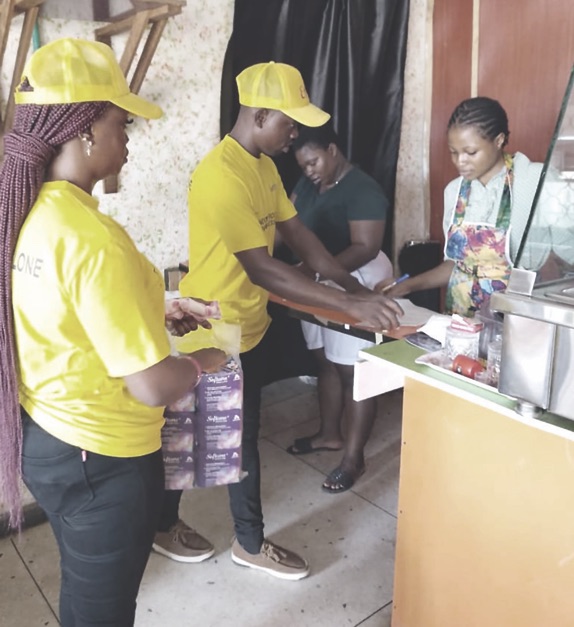
Field observations further showed that initial reluctance among participants largely due to privacy concerns and cultural stigma gradually eased through face-to-face engagement and community interaction. The distribution of hygiene products alongside educational materials was noted as an effective strategy in building trust and encouraging participation.
“The moment people understood that this was about their health and wellbeing, the hesitation reduced. It shows that community-based engagement is far more effective than passive awareness campaigns,” Fapohunda added.
The foundation explained that the triangulation of data integrating statistical findings with real-time behavioural insights provided a more comprehensive understanding of the awareness gap and the social factors sustaining it.
EAF emphasised that the findings would guide future interventions, including targeted awareness campaigns, improved advocacy for early diagnosis and stronger engagement with healthcare providers and policymakers.
Fapohunda called for urgent investment in menstrual health education, noting that societal taboos around menstruation continue to suppress open conversations and delay help-seeking behaviour. “If we are serious about addressing endometriosis in Nigeria, we must start by breaking the silence around menstrual health. Awareness is not optional, it is the foundation for early diagnosis, effective treatment and better quality of life,” she said.
While acknowledging that the sample size was limited, the foundation maintained that the survey provides a critical snapshot of the situation in Ondo Town and reflects broader trends across many communities in Nigeria.
EAF reaffirmed its commitment to advocacy, research and community outreach, stressing that sustained grassroots engagement remains key to improving awareness, diagnosis and care for women living with endometriosis.