Follow Us on Google
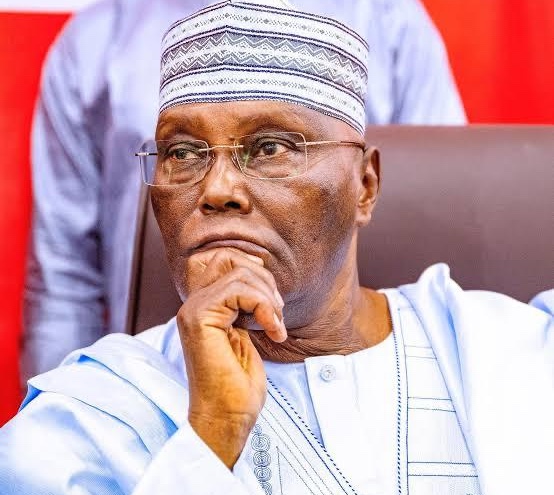
Former Oyo State Commissioner for Education and former Chairman of Ido Local Government, Professor Adeniyi Olowofela, has criticised what he described as selective morality in the political debate surrounding President Bola Ahmed Tinubu and former Vice-President Atiku Abubakar.
Olowofela, who also served as Commissioner representing Oyo State at the Federal Character Commission (FCC), made the position known in an opinion piece titled “Saint Atiku vs Sinner Tinubu.”
He argued that efforts to portray Tinubu as permanently defined by controversies surrounding an alleged narcotics-related forfeiture more than three decades ago amounted to an attempt to demonise the President over an issue from his distant past.
According to him, Tinubu has been subjected to criticism over the alleged forfeiture of $460,000 to the United States Government, reportedly linked to proceeds of heroin.
“This is a huge sin!” Olowofela wrote, while stressing that drug abuse should be condemned in its entirety.
He, however, cited former United States Presidents Barack Obama and Bill Clinton, as well as George Washington, in making the broader argument that historical associations with drugs or substances should not necessarily define a person’s entire life or leadership record.
Olowofela said Obama had acknowledged using marijuana and cocaine during his younger years, while Clinton admitted trying marijuana as a student in England. He also noted that Washington cultivated cannabis on his plantation, although historical records indicate that it was grown for industrial purposes.
“The above great leaders fraternised with drugs in their early age, just like Tinubu,” he stated.
The former commissioner also referred to the historical use of coca-plant extracts in the original formulation of Coca-Cola, arguing that substances that are regarded differently today have had complicated historical relationships with society.
Olowofela, however, maintained that he condemned drug abuse, particularly its prevalence among young Nigerians.
“I condemn in totality the abuse of drugs in our society, which is prevalent among the youth this day,” he said.
He argued that Tinubu should not be permanently demonised over an alleged offence said to have occurred more than 30 years ago, insisting that the same standards should be applied to all political leaders.
Turning his attention to Atiku, Olowofela raised questions over controversies that have surrounded the former vice-president over the years.
He referred to a 2010 US Senate investigation into millions of dollars in wire transfers involving Atiku’s former wife, Jennifer Douglas, and offshore corporations.
Olowofela noted that the transactions attracted scrutiny but stressed that Atiku was never formally charged, indicted or prosecuted by US law-enforcement agencies over the matter.
Other News
He also referred to an investigation involving an alleged transfer of more than $2 million from Siemens AG into an account controlled by Douglas, while noting Siemens’ subsequent guilty plea over violations of the Foreign Corrupt Practices Act and payment of substantial penalties.
“Saint Atiku has no case to answer. Up Atiku!” he wrote.
Olowofela further questioned the controversy surrounding Tinubu’s names and certificates, noting that Atiku’s own historical records had also featured different names.
He cited Atiku Kojoli as the name on Atiku’s primary school certificate and Siddiq Abubakar as the name on his 1965 secondary school certificate, adding that the names were subsequently regularised through a magistrate court proceeding in Apapa, Lagos, in 1973.
“Up Atiku!” Olowofela added.
The former Oyo commissioner also recalled allegations raised by Nigerian senators in 2007 concerning Atiku’s alleged diversion of more than $100 million in public funds to private interests.
He stated that some of the money was allegedly converted into loans for companies connected to Atiku, while noting that Atiku rejected the allegations as politically motivated.
Olowofela’s strongest criticism, however, centred on former President Olusegun Obasanjo’s assessment of Atiku in his book, My Watch.
He argued that despite the serious criticisms contained in Obasanjo’s account, Atiku had not instituted a libel action against the former president.
Quoting from Obasanjo’s book, Olowofela highlighted allegations concerning Atiku’s background, corruption, disloyalty, judgment, transparency and alleged willingness to place personal interests above national interests.
The former FCC commissioner said the political debate should therefore not be reduced to portraying one politician as a “saint” and another as a “sinner.”
His central argument was that political leaders should be judged by consistent standards and that allegations should not automatically be treated as established facts.
Olowofela maintained that while Nigerians have the right to scrutinise Tinubu and demand accountability, the same scrutiny should apply to Atiku and other political actors.
He concluded that the country’s political discourse would benefit from less selective morality and a more consistent standard of accountability.