Follow Us on Google
•Elders decry youth’s drift to fetish practices, push to revive Igbo values
From Jude Chinedu, Enugu
Recently, unimaginable get-rich-quick stunts emanating from so-called prophets and native doctors, dominated the social media. Many of the promoters were from Anambra State and parts of Delta State while their clients came from within and outside the region.
Unconfirmed reports indicated that the criminal activities of this mindless set of people spiralled cases of kidnapping, missing persons and organ harvesting in the South East.
Governor Chukwuma Soludo of Anambra State descended on them. The House of Assembly also legislated against their nefarious activities.
Three native doctors: Onyebuchi Okocha, aka Onye Eze Jesus, Chidozie Nwangwu (Akwa Okuko) and Ekene Igboekweze (Eke Hit), were arrested in February following Soludo’s crackdown on the activities of traditional spiritualists in the state. The trio is in custody facing trial.
In Enugu, government went after a billionaire native doctor. His alleged involvement in burying a kidnapped pregnant woman alive in his house in Ezeagu Local Government led to the revelation of horrible scenes of decomposing bodies in his compound.
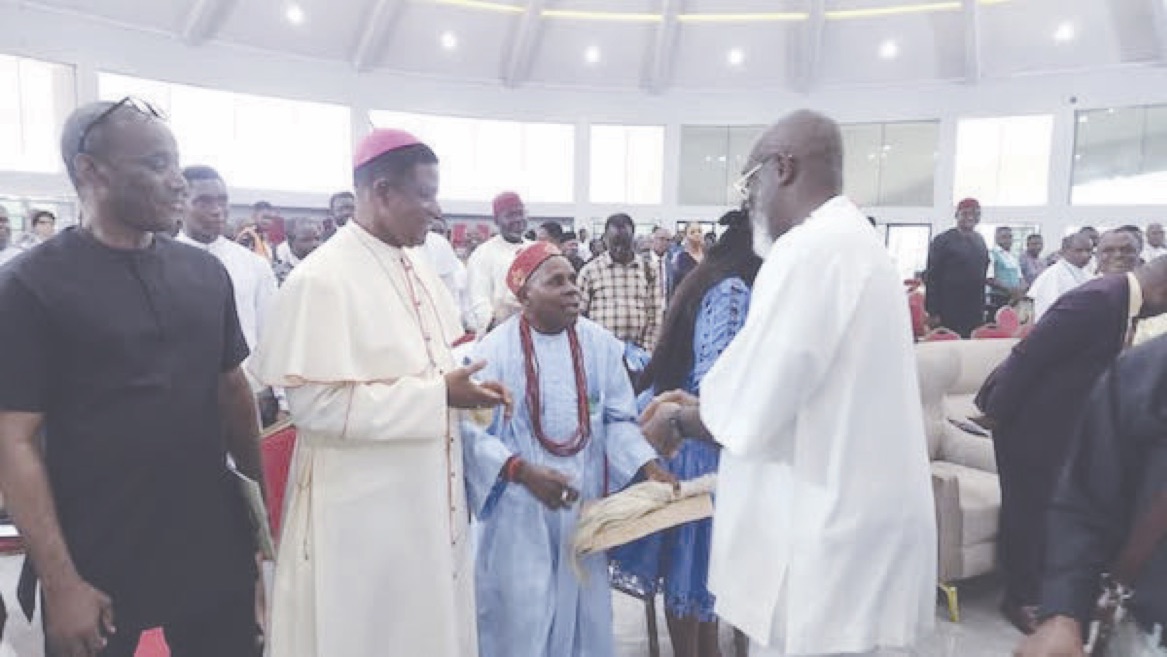
On September 5, 2025, youth in the area were mobilised to discuss the issue at the International Conference Centre, Enugu. From clerics to scholars, government officials and other participants, the message was clear: Igbo must return to the cultural and Christian values that once defined their progress and dignity.
The event was the 2025 South East Colloquium on “The rise of neo-religious practices, self-acclaimed prophets, ndi Eze-Nwoke and ndi Eze-Nwanyi; Their effects on Ndi Igbo, their faith and traditional ethos,” organised by the Methodist Church Nigeria, Enugu Archdiocese.
Though tagged a colloquium, the gathering felt like a family assembly, an intervention of sorts, where everyone admitted that something had gone wrong and pleaded for a reset.
Catholic Bishop of Nsukka Diocese, Most Reverend Godfrey Onah, set the tone with an unflinching diagnosis. He blamed the surge of money rituals, popularly called “Okeite,” on government’s failure and the complicity of religious leaders: “These guys kidnapping us along the road are victims of manipulation by their own religion.
“Bad governance creates the misery upon which manipulative religion thrives. And manipulative religion provides false assurances to the miserable people and, of course, flatters the leaders of bad governance.”
He accused some religious leaders of reducing Christianity to endless “casting and binding,” until members become frustrated and disillusioned: “These Pentecostal prosperity gospel preachers, before they knew it, their members had left them, disappointed. These exploited and frustrated people go back and invent their own idols.
“For as long as it has not encountered God in His fullness, the human soul will be restless. That is why we, Christians who have revelation of God in Christ, have a responsibility to present our experience and knowledge of God to the world. And then government must manage our common resources judiciously, because poverty is the breeding ground of deception.”
Prelate of the Methodist Church Nigeria, Dr. Oliver Aba, was even more direct. He took aim at the disturbing trend of leaders, religious and traditional, handing out blessings and chieftaincy titles without questioning the source of wealth: “Religious leaders must rise to responsibility and know when to say yes or no. We must have courage to say no to evil and bring sanity to churches, because if we fail, tomorrow is in trouble.”
Prof Sam Amadi framed the issue differently. For him, Okeite, a brand of money ritual, and neo-religious practices were symptoms of a deeper social collapse: “It is a disruption and destruction of how Igbo people relate and govern themselves, mostly in informal ways.
“The new neo-paganism is universal but more peculiar with us here because the church has lost its central role in human education and socialisation. Igbo culture must be protected and nurtured to discourage people from respecting ill-gotten wealth but stigmatised it.”
That observation drew a ripple of agreement across the hall. Older participants nodded, recalling the days when men who flaunted suspicious wealth were shunned, not celebrated.
Secretary to the State Government (SSG), Prof Chidiebere Onyia, who represented Governor Peter Mbah, said: “One of the key things we did was to set out core values to guide our governance model. Anybody involved in things that undermine the values of our state and our government, and also fall within the ambience of breaking the law, will be held accountable.”
He cited on going legal cases as proof of seriousness: “The young man that was involved in the process of money ritual is going through the legal framework. The state is very determined to make sure we do not allow things like this to fester.”
But it was Archbishop Christopher Edeh, the host and Methodist Archbishop of Enugu Archdiocese, who captured the sense of the alarm in the region: “These practices undermine the cultural values and Christian principles that had long guarded communities. They have led to religious confusion, enthroned insecurity, kidnappings, ritual murders, and all sorts of evil in the society.”
The weight of his words drew silence across the hall. For many, it was personal, stories of neighbours lured into ritual practices, youths lost to crime, and communities fractured by fear.
Yet, despite the analysis, the colloquium was not without hope. The air was thick with determination, with participants whispering about a return to the values of honesty, hard work and communal pride that once made the South East thrive.
Some of them shared memories of a time when success was measured by integrity, not flashy cars or overnight wealth. Ukamaka Uzoigwe said: “We cannot continue like this. Our parents built this region with discipline and values. We must return to that path. Otherwise, we have no future.”
Some of the participants were seen in groups huddled together, debating and agreeing: the road back to Igbo greatness lay not in money rituals or manipulative prophets, but in reviving the ethos that once shaped the region into a beacon of enterprise and dignity.
The colloquium, which also marked the 50th anniversary of the Methodist Archdiocese and Diocese in Enugu, ended like a wake-up call. A reminder that the battle for the future of Igbo land is a battle for its values.