Follow Us on Google
By Okorie Uguru
On the morning of December 26, the bell of the iconic Ugwumba Age Grade tower, Amaekpu, Ohafia, steadily rang. It was not just informing the community of the time of the day, it was also, with pomp and fanfare, announcing to Amaekpu a new set of community elders. Here being called an elder or an old person (onye ichin) comes with dignity and reverence. A day like this is what every Ohafia native prays for. However, not all live to mark the day. So, it calls for celebration.
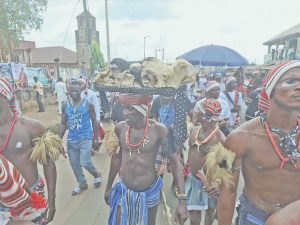
The age group system in Ohafia is a traditional conveyor belt that relentlessly works to create societal cohesion, and celebrate meaningful communal impact. It helps to preserve the communal ethos of respect and builds bonds amongst people of the same age group. and create a sense of purpose and responsibility.
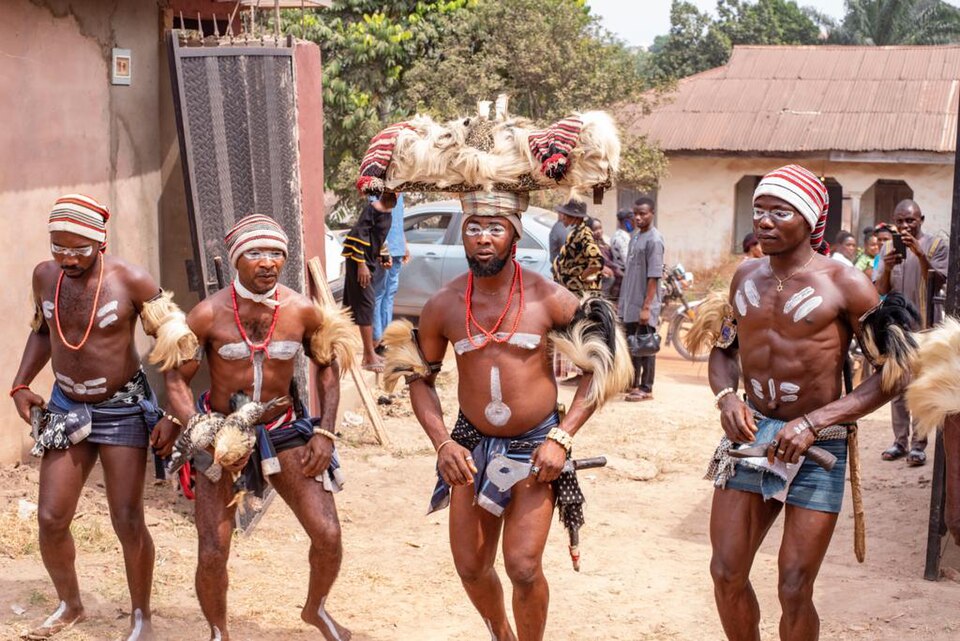
Event starts with the age group bedecked in their uniformed traditional attire assembled at the designated point. The Ifuruaku Age group procession kicked off. The age group sang and danced walking close to 10 kilometres. It passed through the Elu community, the ancestral capital of Ohafia to the boundary with the Ebem community before it returned to Amaekpu.
There the age group was led by the President General, Chief Ibe Anaga Ojo. It was his task to present the age group’s project to the community’s leadership, after which each member of the age group was given a certificate.
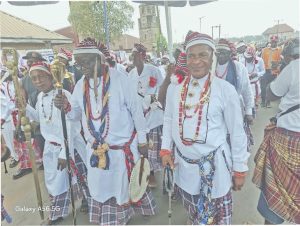
Chief Anaga Ibe Ojo, the President General of the Ifuruaku Age Group also spoke on the showpiece: “It took a lot of efforts and commitment, as well as dexterity by members of the age group to ensure that we were able to complete our project which is an estate, the first of its kind in the entire Ohafia. No age grade has ever built an estate project for traditional retirement, but by God’s grace, we were able to complete it. Also, right from the word go, we believe that whatever is worth doing is worth doing well.
“Also, being the president general of the age grade made up of about 450 persons made up of intellectuals, politicians and so on, you can imagine the kind of group it is. But along with my executive members, we were able to work to ensure we had one mind set and one mission, which was to build and hand over a befitting project to the community. It also involved a lot of resources. We spent close to 150 million naira to execute our project.”
Other News
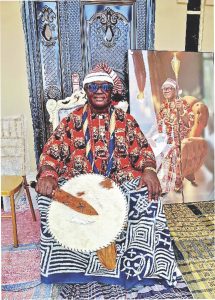
On the reason for the choice of project by the age group, Chief Ojo said, “If you look at the whole of Ohafia in general, infrastructure projects are built by the age groups. So, we saw that there was a gap in the area of accommodation. We have many people, not from Ohafia but working here. They have issues of befitting accommodation. So, we decided to put up something close to what is obtainable anywhere in Nigeria. It is also a source of revenue for the community to take care of expenditures like issues of security, salaries of workers and so on. We believe it will help to further develop the community.”
Ojo said they are hoping to grow the festival to the level of festivals like Ofala, Ojude Oba and so on. “We feel it could be made better to attract sponsors,” he said.
The second day’s traditional showpiece saw the members of the age group stay at home to receive their visitors in a temporary house specifically constructed with wrappers. They receive gifts, dance and entertain their visitors.
Chief Charles Nkata, a businessman and a prominent son of Ohafia, is also a member of the age group that just retired. He believes it is a traditional legacy worth celebrating. His case is a little peculiar, having parents from two Ohafia communities: Okagwe and Amaekpu. It is to show the importance that people attached to the ceremony that he decided to perform the retirement ceremony in both his paternal home in 2018, and now in his maternal home. He said: “It was fundamentally key for me to do it. Though I live in Okagwe, I have to come and do my Otaomu in Amaekpu, and in my old house in Amaekpu. It is very symbolic. The significance is that it shows you have grown up, you have matured, and you are retiring from active service from society. It does not mean that you forget what happened thereafter, but you are now an elder statesman. So, when this Otaomu took place, I participated fully in the planning, executing and implementation, I was very glad to be part of the celebration. It shows you are fully matured, and recognized as elder in your community. We presented an estate to the community which should be generating revenue for community. That is the essence and it was done.”
The festival attracted visitors from far and near with most of the hotels in the Ohafia operating at 100 per cent occupancy.
Umeh Okpan, a local tourist who came from a neighbouring community described the ceremony as impressive. “It is a spectacle our people should be proud of. The colour, the liveliness, drumming and merriment are contagious. The age group should be commended for putting up a spectacle for the people to see.
“I used the opportunity to visit some tourists sites in Amaekpu like the Ibwobwo River and also the village centre to look at some of the traditional architecture and houses that are close to 100 years or more.”
He called on the traditional institutions in Ohafia to look at how to promote the festival more extensively to attract both local and inbound tourists.
Speaking on this, Chief Ibe Ojo said: “Now that we are very close to the traditional institution, we would advise that let us make the event a programme that will attract sponsors like the other festival. If possible we can bring together three communities to showcase the rich culture of Ohafia people. People are also apprehensive that it might affect traffic, but for that day we could just shut down the town for the festival. We see it happen in Calabar during the carnival. We can showcase it like a traditional carnival.”