Follow Us on Google
By Lukman Olabiyi and Bianca Iboma-Emefu
In the heart of Ogun State, where the green fields of Itele Awori stretch under open skies, lies Ifelagba Isunba, a quiet rural settlement in Ado-Odo/Ota Local Government Area.

To the casual visitor, it may appear as just another peaceful village, framed by nature’s calm. But beneath its tranquil surface is a community carrying the weight of a long-standing struggle.
For over a decade, residents here have battled a daily reality shaped by deteriorating road, which is threatening the safety of schoolchildren, the survival of small businesses and the lifeline of local farmers.
This year marks the 12th anniversary of the Ifelagba Isunba Community Development Association (CDA), a milestone meant for celebration, but one shadowed by frustration.
Instead of merely commemorating progress, the anniversary has become a renewed call to action for the state government to come to their rescue.
“We’re not just celebrating; we’re crying out; 12 years of building this community together and still we struggle to get to hospitals during emergencies. Our children walk through muddy, dangerous roads to school,” one of the residents lamented.
Over the years, the community has pooled resources, grading roads, digging gutters and setting up makeshift solutions but their efforts didn’t go far.
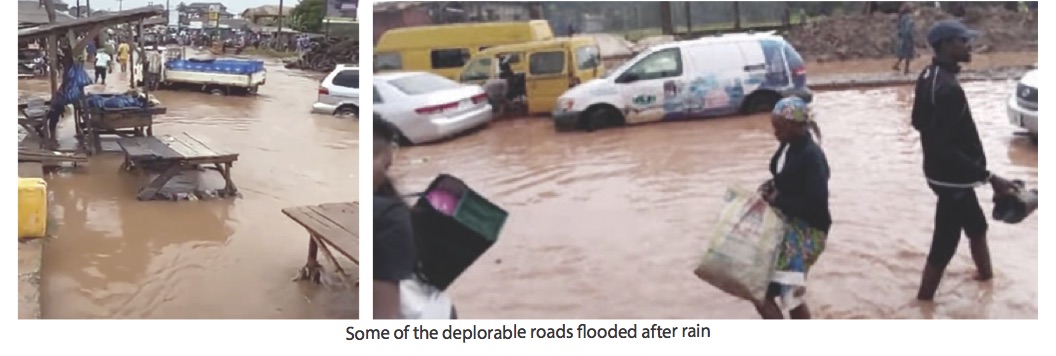
Rainy seasons often undo their progress, turning roads into muddy traps that isolate residents and stall movement.
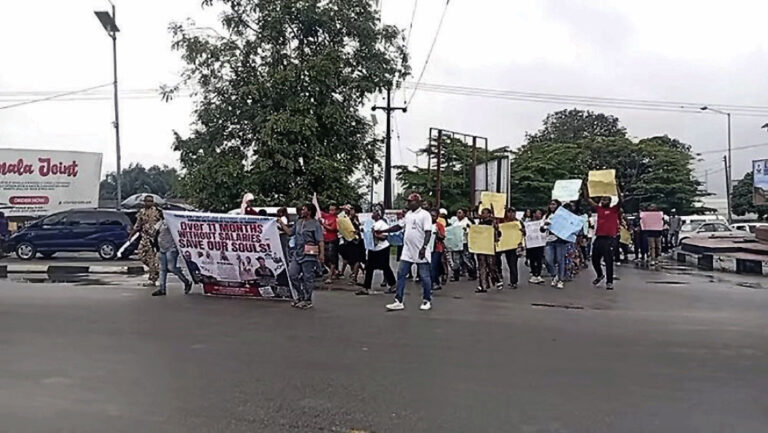
“We have written letters, met with local representatives and even organized peaceful protests. We’re not asking for luxury—just passable, safe roads. That’s all,” the outgoing chairman of the CDA, Mr. Emmanuel Adewale Banjo, said.
He painted a bleak picture of the situation while giving account of his stewardship.
“When it rains, the roads are completely flooded, vehicles can’t move, and people are stranded. I took over the leadership of this community with no financial resources. Within one month, I opened a bank account and used personal funds in the first two months of my administration to kickstart development, though it was later refunded,” he said.
Banjo said, under his leadership, the CDA erected two security gates, one at the Moyinoluwa Street entrance and another near the MTN Bus Stop, which later inspired neighbouring communities to do the same.
Again, he disclosed that the CDA installed 21 floodlights and six solar-powered streetlights to improve visibility and deter crime at night and also constructed a security house, ensuring regular salary payment for security personnel.
Banjo also revealed how the CDA was able to replace its stolen transformer armoured cables. It also fenced the transformer house with the fund raised from the residents.
According to him, the root of the problem of bad roads in Itele Aworiland dated back to the administration of former governor Gbenga Daniel.
“Over time, the roads fell into disrepair, slowly isolating the community and stifling trade, education and access to healthcare. Though promises have been made by successive administrations, including former Governor Ibikunle Amosun, and current Governor Dapo Abiodun, none has materialized.
“We’ve written letters, published reports in the newspapers, broadcast on radio and television, even a peaceful protest was staged, and several meetings held with government officials but there have been no meaningful response,” Banjo lamented.
His successor, Olufemi Mathew Owoade, echoed his concerns, saying: “This road connects to Lagos State and is essential for our development.
We’ve done our part, electrification, security architecture, community engagement but we cannot build roads by ourselves. It’s time for the Ogun State government to act”.
Mufutau Fatunbi, chairman of Binukonu Itele Awori ACDC, praised Ifelagba Isunba CDA for its progress and unity.
He said: “They are one of the most cooperative communities under my watch. The outgoing chairman, Mr. Banjo, has done an exceptional job, but the flooding and the state of the roads overshadow much of that progress. We’ve been waiting since 2015 for the government to fulfill its promises to reconstruct roads linking Koro Otun to MOPOL Junction and from Oko Obasanjo to Ota, but nothing has been done.”
He expressed frustration over government neglect and also shared various efforts to make their environment better.
“We cannot keep waiting. While we expect the government to play its part, we will continue doing what we can to push our community forward,” Fatunbi said.
Also speaking, the community’s women leader, Mrs. Ayodele Ayedun said the deteriorating infrastructure in the area has far-reaching consequences: businesses suffer as customers avoid the area, emergency response is slowed, and quality of life remains poor.
“Each time we reach out, we are promised that help is coming, but we’re still waiting.
“Residents’ vehicles are damaged daily. Children wade through muddy paths to get to school, and emergency healthcare becomes nearly impossible during heavy rains.
“We will not stop until we’re heard. We are determined to keep pressing for what is rightfully ours. Our roads are more than just passageways, they are the lifelines of our future,” she declared.
Area Officer in Itele Awori, under Ado-Odo local government area, Akintola Olusegun, commended the CDA for embarking on developmental projects that have significantly contributed to the growth and progress of the community.
He said: “For the past 12 years, they have operated as a CDA without feeling the presence of the government. This might be because the CDA is often considered the fourth tier of government. They have been recognized as a CDA based on the meaningful contributions they have made to effect positive change and bring development to their area.
“CDAs are meant to support the government through community service and collective effort. The government cannot do everything or be everywhere at once. Although it is the government’s responsibility to cater for its citizens but financial constraints have hindered its ability to meet the expectations of residents and communities.
“That is why we are in partnership with CDAs, government and CDAs are partners in progress. Unfortunately, allocations have not been forthcoming. As you can see, we are still working towards achieving local government autonomy.
“Once autonomy is fully granted, communities will begin to feel the government’s presence more tangibly.
“The construction of roads, for example, is the responsibility of the local government, but at the moment, we are limited by capacity and funding. Financial constraints have affected our developmental efforts, and allocation delays have crippled progress.
However, once autonomy is granted, the local government will be better positioned to meet the needs of its people.
“I urge and appeal to the communities to continue working with the government. They should come forward, present their needs, and the government will look into them. Some CDAs are already being supported through grants. The funds might not be substantial, but they will go a long way in assisting developmental efforts.
“In this local government alone, we have 67 Area Community Development Committees (ACDCs), each overseeing about 40 CDAs.
The local government cannot attend to all of them at once. It has to be done in phases. I appeal to them to be patient, remain consistent in their efforts, and continue contributing to community development.”
As Ogun State continues its push for development, the residents of Ifelagba Isunba ask only to be included in that vision.
Their resilience has kept them going, but without roads, their progress remains stuck in the mud.