Follow Us on Google

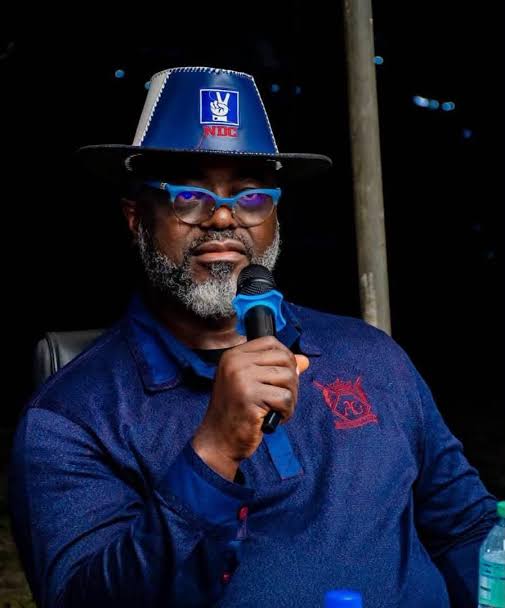
For Ifeanyi Chukwuma Odii, the development of Ebonyi State begins with a question that extends beyond the construction of roads and public buildings: how can infrastructure become a foundation for jobs, investment and long-term economic growth?
Odii, the Peoples Democratic Party’s candidate for governor of Ebonyi State in the 2027 election, has placed infrastructure, industrialisation and private investment at the centre of his proposed “Anyi G’emeya” development agenda.
The agenda identifies infrastructure development as one of four principal areas of focus, alongside economic development and industrialisation, youth and human capital development, and institutional reform. Odii has said the objective is to create an environment in which businesses can invest, agricultural communities can reach markets and young people can find economic opportunities within the state.
Infrastructure as an Economic Strategy
Odii’s infrastructure proposals go beyond roads.
He has spoken of constructing and rehabilitating strategic roads connecting farming communities, industrial clusters and markets. He has also proposed working with neighbouring South-East states to advocate for an extension of the standard-gauge railway to Abakaliki and the development of a wider regional railway network to improve the movement of people and goods.
For a state whose economy has a significant agricultural base, infrastructure can determine whether farmers can move products efficiently, whether manufacturers can obtain raw materials and whether investors can reach production centres.
The same approach extends to technology. Odii has proposed digitising government services and establishing an innovation and technology incubation hub where young people could develop digital skills and technology-based businesses.
Connecting Investment With Development
A significant element of Odii’s economic proposition is the role of private capital.
He has said his administration would seek to improve the ease of doing business, develop industrial clusters and create conditions that could attract domestic and international investors. His proposals also include investment in agriculture, solid minerals, manufacturing and other productive sectors.
For Ebonyi, the objective is to create an environment where businesses can establish operations, expand production and contribute to employment and economic activity.
Roads, industrial facilities, agricultural processing plants, energy projects and logistics infrastructure all require different financing structures, risk assessments and implementation frameworks. The success of such an investment strategy would therefore depend on project preparation, financing, regulatory approvals and the terms ultimately agreed between investors and government.
From Agriculture to Industrialisation
Agriculture is another area where Odii has sought to connect infrastructure with investment.
His proposals include mechanised farming, irrigation, agro-industrial processing zones and improved access to finance. He has also proposed allocating between 400 and 500 hectares of arable land to attract commercial agricultural investors.
The proposed model is designed around moving beyond the production of raw commodities toward processing and value addition inside Ebonyi.
That could mean roads connecting farms to processing facilities, reliable power for industrial operations, storage and logistics infrastructure, and access to regional markets.
Odii has also pointed to Ebonyi’s geographical position and the Trans-African Highway as potential avenues for expanding trade, including connections toward neighbouring Cameroon.
The Measure of the Vision
The scale of the infrastructure and investment ambitions also raises a practical question: how would they be financed and implemented?
Odii has publicly spoken about attracting significant private investment into Ebonyi. A recent report in The Guardian quoted criticism from a youth group calling for documentary evidence behind a claim that more than ₦2 trillion in private investment could be attracted within six months of taking office. The same report noted that Odii has linked his proposed investment programme to job creation, infrastructure and improvements in the business environment.
For investors and citizens alike, the eventual test would be measurable: projects completed, capital deployed, businesses established, jobs created, infrastructure maintained and economic activity generated.
Building for Tomorrow
The broader proposition behind Odii’s infrastructure agenda is that public infrastructure should serve as an economic platform rather than exist as an end in itself.
A road can connect a farm to a market. A processing facility can turn agricultural production into manufacturing. Reliable power can make an industrial project viable. Digital infrastructure can connect young entrepreneurs to markets beyond the state.
Whether these proposals can be delivered would depend on financing, institutional capacity, project preparation, partnerships and the priorities of any administration that takes office in 2027.
But the investment conversation around Ebonyi is increasingly being framed in terms of what can be built — and how government and private enterprise can potentially work together to build an economy capable of creating jobs, attracting investment and expanding opportunities for its citizens.