Follow Us on Google

•Tinubu blaming opposition for hardship is corporate dishonesty
•Wike’s Rainbow Coalition recipe for political anarchy
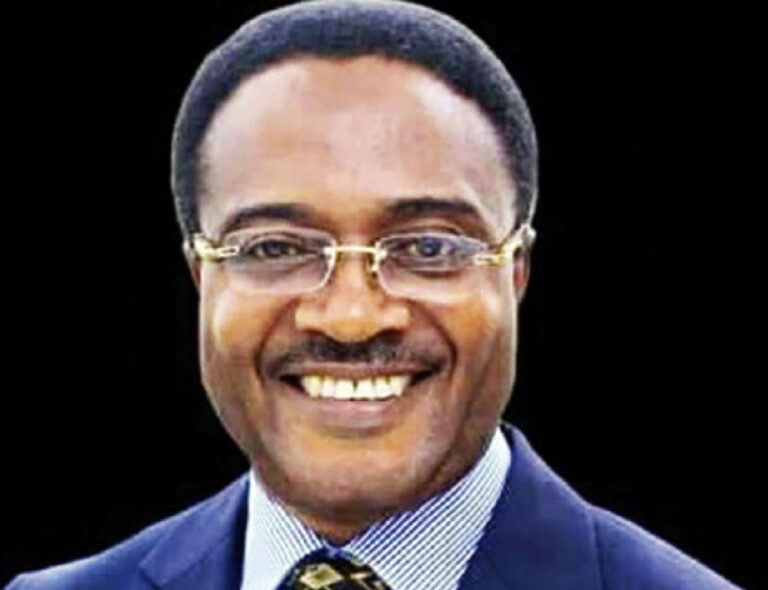
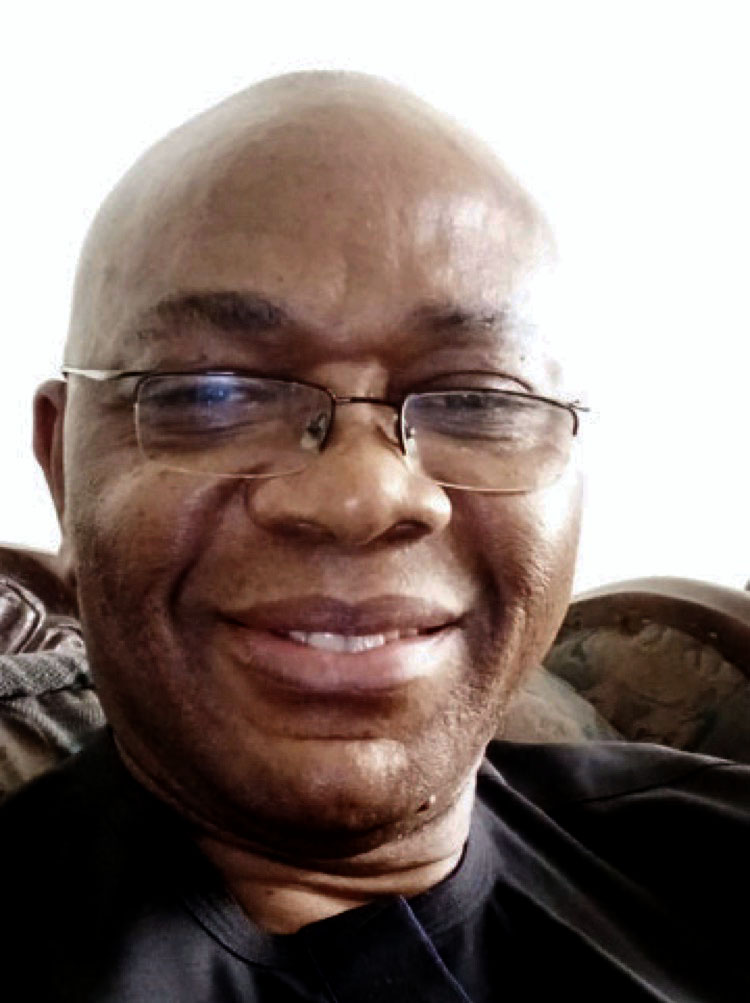
The South East Coordinator of Kwankwaso National Network (KNN), and a chieftain of Nigeria Democratic Congress (NDC), Dr Ukpai Iro Ukpai, has said that the premise that governors completely control the electoral choices of their states is a flawed, outdated political assumption. According to him, if governors truly controlled votes, the dramatic political shifts Nigeria witnessed in the 2023 elections would never have occurred.
In an interview with Vincent Kalu, the 2023 governorship candidate of the New Nigeria Peoples Party (NNPP), for Abia State, noted that the All Progressives Congress (APC) governors are realising too late that in trying to secure the presidency, they have compromised their own kingdoms with the presence of Nyesom Wike’s Rainbow Coalition.
What is your view on the 2027 elections campaigns?
The campaigns, especially presidential campaigns, so far, have become a spectacle of money, intimidation, and political arrogance, rather than a serious engagement between candidates and the electorate.
We are witnessing thugs and thuggery, smashed cars and buses, blood, and deaths, from Asaba to Katsina, and in between. We are seeing lavish displays of affluence by the tiny clique of rulers, backed up by state-funded machinery, expensive cars and buses paraded by the ruling party, especially during their presidential campaigns, for public view and review.
We are seeing rented crowds. Frequently, you see those rented crowds openly mocking the renters/sponsors, on camera, that they have only delivered their physical presence to complete the transaction, and that they have neither delivered their consciences nor their convictions.
So, the campaigns are largely characterised by a ruling party trying very hard to buy its way back into relevance, while the opposition works tirelessly to channel the raw energy of, mostly the youths, unadulterated pain of everyday Nigerians.
On one side, you have the heavy, state-funded machinery of the incumbent trying to force consent and acceptance by the citizens/voters. With the ruling party, we are witnessing a transactional sprint rather than a transformational campaign.
On our side, we are leading an organic movement of a populace demanding their country back. The alliance between Peter Gregory Obi and Rabiu Musa Kwankwaso, both astute politicians, bringing with them their Obidient Movement and Kwankwasiyya Movement/Kwankwaso National Network, respectively, has really energised the campaign space positively.
Nigeria has never seen such energy and passion before from the electorate. Social and mainstream media (online) roars, the campaign grounds (offline – on the streets) bustle whenever Obi-Kwankwaso visits any city. This contrasts with the ruling party’s campaign rallies so far.
The state of the main political parties just two months to voting indicates that all is not well with them. Even the once ‘untouchable’ ruling APC has started unravelling. Internal frictions and contradictions within the ruling party, and leading opposition aggrieved party members who feel cheated out in the mostly transactional party primaries parties exacerbated by have come to the surface.
The proxy war between Nyesom Wike and the APC governors has already escalated into a public structural battle, causing significant fractures across some APC controlled states, notably Imo, Kwara, and Gombe. Wike’s Rainbow Coalition has exposed a fundamental contradiction: a political arrangement designed to secure presidential support for the ruling party may simultaneously weaken the ruling party’s control over governorship and legislative contests. The ruling APC built a house of cards by forcing governors into their fold, but by unleashing a ‘Rainbow Coalition’ to police those same governors, they have set fire to their own foundation and it is disorganising their campaigns badly. I expect the opposition parties to be alert and take advantage. Opposition must learn to sing ‘as e dey sweet us e dey pain them.’
Are you satisfied with the way the campaigns are going on?
Absolutely not. We are seeing a deliberate attempt to drown out substantive policy ideas with political noise. Nigerians want a debate on ideas, but the ruling party is giving us a circus. I hope the opposition doesn’t get distracted because Nigerians want change.
The 2027 electioneering campaign may go down as the most frivolous, transactional, and tissue-based campaign in Nigeria’s history.
If I were to draw a Nollywood type – metaphor to make myself clearer to you, it would go like this: Political campaigns in a democracy should be like the last part of the rituals before the coronation of the king (winner) at the central village square. Properly understood, and well-practised, political campaigns are like the libations that are poured for, and kola nuts broken with the people; it is the rituals that deify and sanctify the throne before the coronation.
Trifling with campaigns is usually a dangerous thing because the contestant, even if he /she wins and is crowned, did not successfully complete the rituals in all the traditional posts. In our 2026 case, some contestants have refused to visit the important village posts where they should meet the villagers. When they did, instead of trying to pacify the people who are suffering from the economic and insecurity plague that their administrations inflicted on them (at the federal and sub national levels), are allegedly offering them cash as inducements, taunting them with lavish displays of affluence, and arrogance to boot.
What we are witnessing from the ruling party, especially in their presidential campaigns, is: Imakwa ndi anyi wu (Do you know who we are?) politics. If we go by my metaphor, in our case, the minimum state posts any serious presidential contender should visit during campaigns is 24 plus FCT. Like they say in this clime, if you know, you know.
Some other contestants running to be president make the whole thing like it is a joke given that they and their parties are nowhere to be seen. They make their party’s presidential ticket seem worthless. One begins to wonder whether the electoral act should not be revised to ensure that only political parties who meet certain criteria can enlist candidates at the presidential level. It is my considered view that only the NDC presidential campaign, and to a lesser extent the ADC presidential campaign, has so far, by their comportments, candour, and presentations, shown respect to the Nigerian people (their potential employers) and put out the right campaign messages. Nigerians still expect more from them, though. What I am saying, in effect, is that in a democracy, campaigning is a democratic obligation, an opportunity for scripting a covenant between the candidate and the people.
Political hostilities, violent attacks, threats, intolerance have characterised the electioneering. What’s your take on this?
When the ruling party cannot defend their economic and security record; when they cannot justify the astronomical cost of living and multidimensional poverty ravaging the land amidst windfall from removed subsidy plus excessive borrowing, weaponised desperation becomes the only campaign strategy.
But it’s not all gloom and doom. Very touching is the trending video showing NDC Presidential candidate, Peter Obi and the NDC National Leader, Senator Seriake Dickson in a boat ride joined by the sea horses in a typical Ijaw boat regatta. They were travelling from Yenagoa to meet with the people, to campaign to the people in the creeks of Ijaw land. It is encouraging and it shows respect for the people. That video depicts ‘we are in it together’ politics or what I call ‘Ubuntu’ politics.
If all things were equal here in our politics, the electorate would find it very easy to choose those who govern them from 2027.
What should be the campaign messages?
The messages from the campaigns give me no joy at all. Except in a few cases, we are not seeing issue-based campaigns but tissue-based campaigns. You see too much personality, too much money, too much spectacle; too little policy, too little conscience and accountability, and too little respect for the electorate. We are witnessing politicians, especially from the ruling class, not taking the people seriously.
President Tinubu, contestant from the ruling party, told his party, by extension the Nigerian people, bluntly, that he will not present himself to them in some sections of the country. The ruling party’s only defence for the pain they have inflicted on the Nigerian people is to blame the opposition. That’s more like rubbing insults into injury. The only campaign message that matters to a hungry Nigerian is a roadmap to affordable food, safe streets, and stable jobs. Everything else is gibberish.
President Tinubu during the flag-off campaign for his re-election in Kaduna, recently, said the hunger and hardship in the country were caused by the opposition. What’s your position on this?
To stand before thousands of Nigerians and blame the opposition for the current unprecedented economic hardship is the height of intolerance and insensitivity. The All Progressives Congress (APC) has been in power at the centre for over a decade. They have, since then, been in full control of the levers of power. To look backward and blame the opposition is corporate dishonesty. I am consoled that Nigerians are no fools.
The parties are shouting over the discovery of AI-generated photographs in the INEC voters register, which the electoral umpire has admitted. What does this portend for the elections?
I find the discovery of AI-generated photographs in INEC’s preliminary Register of Voters deeply troubling. And we must understand why this is more than a technical or administrative error.
The admission by INEC that artificial photographs and questionable registration records entered its system, reportedly through the actions of some registration officers, raises very serious questions about the integrity of its internal controls.
An electoral register containing improperly created identities is a serious threat to the integrity of the process. It creates a serious integrity question that must be investigated before those records can be trusted.
When the authenticity of the register is in question, the credibility of the election itself is put under suspicion. It lays a red carpet for election riggers. INEC is therefore not merely managing a database. It is safeguarding the sovereignty of the Nigerian people. Removing suspicious photographs is not enough. Nigerians deserve to know who inserted them, how they got in, and whether they were ever used to compromise the electoral process in previous elections.
How should INEC handle this matter?
In the first, INEC must initiate an immediate, transparent, and independent forensic audit of all 103 million entries before the December 15 database cleanup deadline.
Secondly, the internal registration officers must be investigated, and if found guilty, they must be publicly named, stripped of their institutional authority, and prosecuted under the law.
Finally, the Bimodal Voter Accreditation System (BVAS) must be technically configured so that on election day, it will only recognise living Nigerians, with blood and flesh not the digital footprints of fake Nigerians.
The five South East governors have endorsed President Bola Tinubu as the region’s presidential candidate. What is your opinion on this?
But, Governor Alex Otti, has distanced himself from Governor Hope Uzodimma’s declaration. Let’s separate the political survival of a few privileged individuals from the democratic will of millions of suffering South East electorate. The South-East electorate is highly sophisticated, you know, independent, and notoriously anti-establishment.
A governor possesses only one vote on election day; mark that very well. But the delicious irony is this: while these APC governors are busy endorsing the president, the president’s own federal actors are busy undermining the governors back home. Take a look at the serious tension in Imo State right now. Governor Hope Uzodimma is supposedly leading the charge for the President in the South East, yet Wike’s ‘Rainbow Coalition’ is actively entering Imo, bypassing the governor’s structure, and organising aggrieved politicians who have an axe to grind with the State chief executive. This is happening nationwide. The ruling party wants to have it both ways—they want the governors’ state machineries, but they also want Wike’s aggressive, cross-party coalition to absorb the rebels. It is a recipe for political anarchy.
When you see a ruling party generating this level of internal friction in its own strongholds just 64 days to an election, it tells you that their dominance is nothing but a grand illusion.
An endorsement means nothing when the candidate you are endorsing is funding a shadow coalition to destabilise your home base. The APC governors are realising too late that in trying to secure the presidency, they have compromised their own kingdoms.
Since the governors are in control of their states, what is the fate of Peter Obi and the NDC?
The premise that governors completely control the electoral choices of their states is a flawed, outdated political assumption. If governors truly controlled votes, the dramatic political shifts we witnessed in the 2023 elections would never have occurred.
Peter Obi’s political fate does not rely on the blessings of South East governors or any state governor for that matter; it rather rests on his ability to sustain an organic, anti-establishment movement across Nigeria and on the conscience of the suffering masses who desire a Nigeria that is possible. And, he and his deputy, Senator Kwankwaso, are doing very well as they move around the country identifying with suffering Nigerians.
Obi is the darling of the suffering masses and the youths of Nigeria who have been orphaned by the ruling establishment, who want a new Nigeria. You can see that all over the country. No other Nigerian politician has the organic movements he and Kwankwaso have, from South to North and from West to East – their political bases. Obi has transcended regional politics as he is seen as a statesman and politician.
Many have wondered why some Igbo leaders continue to attack Peter Obi?
Our silence is not a sign of weakness; it is a deliberate refusal to participate in a coordinated distraction. The public spat between figures like Governor Soludo, Minister Umahi, and Peter Obi is exactly what the ruling class in the ruling party wants.
We don’t want to reduce the national conversation to a regional civil war. They have tried to make Obi look like an Igbo politician or a President for the South East. We did not fall for their distraction. If you allow them, they will trivialise and tribalise the election so that Nigerians stop focusing on the issues that unearth their incompetence and corruption and ask for change.
As leaders, our responsibility is to keep our people focused entirely on the main issue: the failure of the federal government to secure our borders and fix our economy, the marginalisation of the South East, the absence of a seaport in Igboland, the diversion of railroads and pipelines from the South East, the injustice meted out to one of us, and the absence of other meaningful federal infrastructure in Igboland. These people attacking Obi, by their positions, have the opportunity to ask questions about these, but they selfishly refuse to.